Police have launched a manhunt for 26 individuals linked to the importation of substandard fuel as investigations into the scandal that forced
top energy officials to resign gather pace.
Investigators said on Tuesday that the individuals were
adversely mentioned during the grilling of senior energy officials, who were
released on Sh100,000 cash bail on Sunday.
Most of those being sought are members of the Vessel
Alignment Committees (VAC), technical teams that coordinate fuel imports and
maritime logistics.
Their role places them at the centre of cargo sourcing and
vessel scheduling decisions.
“We have not gotten most of the persons of interest. For
instance, one of the officials who resigned is a key person in this issue and
is yet to record a statement,” an official familiar with the probe said.
Those who resigned include Petroleum PS Mohamed Liban, Kenya
Pipeline Company (KPC) director Joe Sang, EPRA director general Daniel Kiptoo,
KPC logistics manager Joel Mburu and petroleum director Joseph Wafula.
Fresh details have also emerged pointing to possible
breakdowns, or deliberate circumvention, of procedures within government
agencies.
Sources indicate the Energy ministry may have been sidelined
in critical correspondence leading to the importation of the consignment.
A letter by Trade Cabinet Secretary Lee Kinyanjui
recommended waiving fuel quality standards for the shipment.
While the letter referred to earlier communication from the
petroleum department—PS Liban’s March 26 and March 27 letters—ministry sources
say no physical copies reached the Energy CS’s office.
“The physical letters never reached the CS’s office, and
there are mechanisms to verify that. It must have been deliberate, and the CS
was just copied for cover-up,” a source familiar with the matter said.
Notably, the Kenya Bureau of Standards (Kebs) did not
respond directly to the waiver request initiated by the Petroleum PS, Liban.
Instead, Kinyanjui wrote to inform Wandayi of the
recommendation to waive the standards (KS EAS 158:2025).
A copy of the letter shows it was dated March 28 but
received at the Energy ministry on March 30, days after the first vessel had
already docked and its cargo discharged.
It is understood that upon receiving the letter, Wandayi
ordered the second shipment halted, although by then the first consignment had
already reached the dock.
“The letter was being received when the first ship had
already been discharged. It was useless since it related to cargo that had
already been offloaded,” the source said.
Investigators are now grappling with how the cargo was
discharged without formal approval, given that Kebs had not responded to the
waiver request.
“The question we are grappling with is: where did they get
approval from to discharge the ship? How was the waiver conveyed?” the source
posed.
In his communication, Kinyanjui indicated the waiver was
conditional. He said the fuel would be subjected to inspection at the destination.
He further directed that the consignment be blended with
existing stock to dilute excess manganese. EPRA and the Kenya Pipeline were to
oversee controlled distribution.
This was to be done pending the arrival of another
consignment that would further mitigate the quality concerns.
In a statement on Tuesday, Wandayi said the government had
directed One Petroleum Ltd, the company that imported the product, to
immediately withdraw its invoices.
Oil marketing companies were also instructed not to pay for
or uplift the product from the consignment. The firm was ordered to re-export
the fuel.
“One Petroleum Ltd is directed to exit this product out of
Kenya as soon as possible,” the Tuesday, April 7 statement read.
The Energy ministry has also directed EPRA to exclude the
consignment from this month’s price review.
“The government will remain vigilant to ensure that no
individual, company, or stakeholder engages in artificial shortages or
unjustified price increases,” Wandayi said.
He maintained that the controversial 60,000 tonnes
consignment was imported in contravention of G2G procedures.
“This action posed a risk to the integrity of a system that
has consistently safeguarded supply security and pricing stability,” he said.
The G2G framework involves international suppliers,
including Aramco Trading, Fujairah FZE, ADNOC Global Trading Limited, and
Emirates National Oil Company.
Meanwhile, ODM leader Oburu Oginga defended Wandayi and
Kinyanjui, saying they are not accounting officers. However, he said they
should not be spared if investigations establish responsibility.
“Attempts at public lynching of Cabinet Secretaries will
only derail investigations and politicise the scam,” Oburu said.
“This is a time when the nation must close ranks and support
the full slaying of the dragon of graft, and not for scoring points through
public rallies, pressers and name-calling.”
Preliminary findings show that officials at the Ministry of
Energy raised concerns on March 18, 2026, over a possible fuel shortage linked
to the Iran conflict.
The concerns were escalated to the VAC, which facilitated
the sourcing of a fuel shipment priced at $110 per barrel outside the
Government-to-Government (G2G) framework, raising red flags over cost and
procedure.
An earlier ministry statement revealed sharp pricing
discrepancies between two fuel shipments delivered in March.
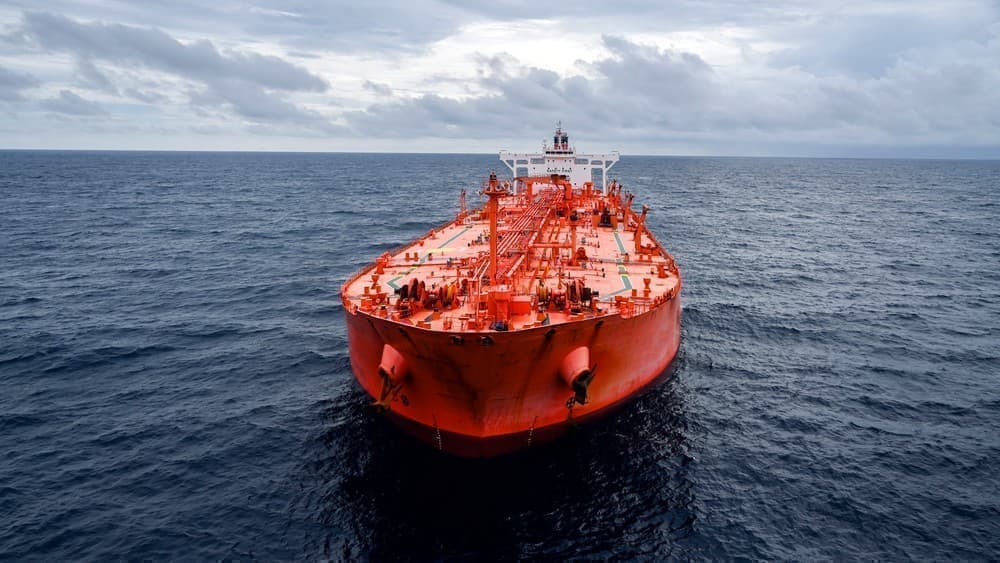
Petrol supplied by One Petroleum aboard MT Paloma landed in
Mombasa at Sh198,855 per tonne. Fuel under the G2G arrangement, supplied by Gulf
Energy via MT FOS Mercury, cost Sh140,111 per tonne.
The Sh58,744 difference per tonne would have pushed pump
prices up by about Sh14 per litre, making the G2G cargo significantly cheaper.
Investigations are ongoing as authorities pursue the
remaining suspects and seek to establish accountability for the irregular
importation.
INSTANT ANALYSIS
President William Ruto has promised to crush cartels in the
oil sector, drawing comparisons with the sugar and coffee sectors. His
administration believes the officials involved manipulated figures to justify
the controversial imports.




![[PHOTOS] The new Ngong –Naivasha Road viaduct](https://cdn.radioafrica.digital/image/2026/06/64d4f771-4432-4aee-ba3c-2f304c4436ec.jpg)