Joy as nurse converts lorry, container into a mobile dialysis unit
Kenya has about 220 units in urban areas, yet most patients are in rural areas
by JOHN MUCHANGI
Audio By Vocalize
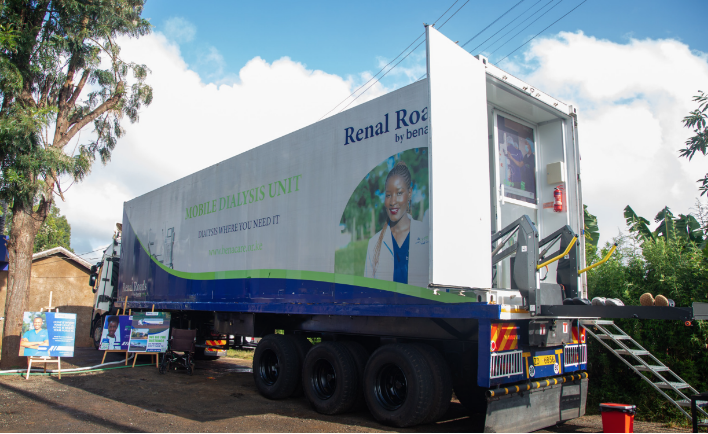
The 40-foot shipping container mounted on a traier to create a mobile dialysis clinic
Imagine a lorry that travels from village to
village offering dialysis to patients with kidney failure. That is the idea a
Kenyan nurse turned into reality after seeing how far people must travel just
to stay alive.
Kenya has about
220 dialysis units concentrated in urban areas, yet most patients are in rural
areas.
Most of these patients have to take long,
exhausting journeys just to stay alive. Some travel up to 200km one way, twice every week, for years. Missing a
session can quickly become life-threatening.
It is this gap that Naom Monari set out to close.
Monari, a trained nurse, says distance should not
determine who lives and who dies.
She responded by building Renal Roads, sub-Saharan
Africa’s first mobile dialysis unit.
“Renal Roads is a mobile dialysis unit that is
delivering life-saving renal replacement therapies to patients with kidney
failure in rural and hard-to-reach areas of Kenya,” she said.
“We developed it from a repurposed shipping
container and put all the critical considerations like dialysis machines and
reverse osmosis systems, making it a technological marvel that can function
off-grid and deliver life-saving care.”
Working with Jua Kali artisans, biomedical
engineers, statisticians and university partners, she converted a 40-foot
shipping container into a fully equipped clinic mounted on a trailer.
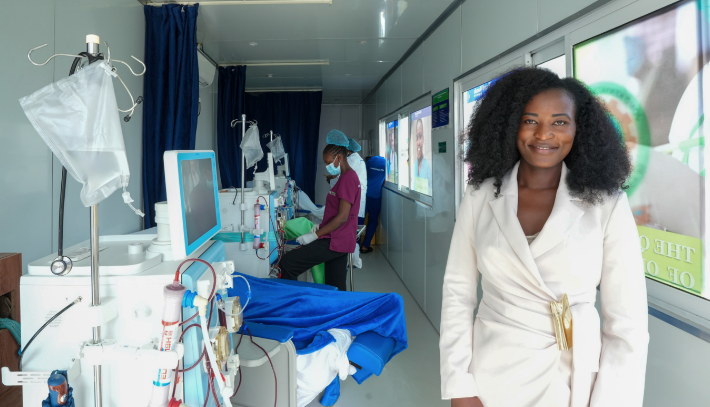
The unit looks like a small hospital ward from the
inside. It has four dialysis machines, reclining chairs for patients and a
dedicated emergency area. The walls and floors meet strict infection control
standards.
Because dialysis requires large amounts of clean
water, the unit includes a reverse osmosis system, proper plumbing and
controlled drainage. It also runs on solar power, with backup systems to ensure
services continue even in off-grid areas.
While the dialysis machines themselves are
standard, the real breakthrough is making the whole system mobile and safe
during transport. The machines are secured in place, and the design is
protected under a utility patent.
“Our goal is simple: bring life-saving care closer
to people who need it. The first version has worked, but three years from now
it will be more compact and efficient,” Monari said.
The truck follows a fixed weekly schedule, rotating
between rural communities and operating from local government health
facilities.
Each patient receives two four-hour sessions per
week. Up to 12 sessions can be done in a day. A county nephrologist oversees
care, while trained nurses handle treatment on site.
The innovation has now earned global recognition
after Monari, who is now
the CEO of Renal Roads, was shortlisted for the 2026 Africa
Prize for Engineering Innovation, the continent’s largest award dedicated to
engineering solutions.
“The Africa Prize gives us visibility and access to
networks that can help us scale,” she said.
Naom Monari inside the container
Her journey began in 2017 when she
founded Bena Care, a service that offered home-based nursing. The aim was to
reduce the financial and emotional burden of hospital visits.
Then came the Covid-19 pandemic.
After it eased, Monari and her team noticed a sharp rise in patients needing
dialysis. She wanted to understand why.
With support from the International
Development Research Centre, she partnered with a local university and carried
out a year-long study between 2022 and 2023 in a county heavily affected by
kidney disease.
The findings were stark. Many
patients were travelling long distances for dialysis. Work and family
responsibilities meant some missed appointments yet missing dialysis even once
can be fatal.
An early rollout in Murang’a county showed strong results. Patient travel distance
dropped by 76.6 per cent. Treatment adherence improved by 100 per cent, meaning
patients attended sessions and completed the full four-hour treatment.
Today, Renal Roads serves more than
100 patients every month and delivers about 700 dialysis sessions. Demand
continues to grow, with more than 200 people currently on the waiting list.
“I applied for the Africa Prize
because I would like to refine the design of the RenoRoads model and winning
this prize would be deeply symbolic as a non-engineer because it will show that
there is space in engineering for other careers or other fields to make better
solutions for the world,” Monari said.
For patients and families, the
impact is deeply personal. One 26-year-old mother of two, who used to travel 70km each way for dialysis, described the arrival of
the mobile unit near her home as an answered prayer.
The sessions are covered through
the Social Health Authority so patients do not pay out of pocket.
Monari now plans to expand to more
counties and refine the design further. A second unit is already ready for
deployment.
Her innovation is one of three from
Kenya shortlisted for the 2026 Africa Prize, alongside Alice Muhuhu’s MoyoECG,
an AI-powered heart screening device and Royford Mutegi’s automated
vermicomposting system.
The Africa Prize, created by the
Royal Academy of Engineering, supports innovators tackling major challenges
across the continent. Since 2014, it has backed 165 businesses across 22
countries, creating more than 40,000 jobs and benefiting over 11 million people.
This year’s shortlist features 16
innovators from 11 African countries, working on solutions ranging from
healthcare and clean energy to agriculture and education. They will undergo
eight months of training, mentoring and networking before a final pitch in
October.
This is premium content
Subscribe to Continue Reading
Help us continue bringing you unbiased news, in-depth investigations, and diverse perspectives. Your subscription keeps our mission alive and empowers us to provide high-quality, trustworthy journalism. Join us today to make a difference!





![[PHOTOS] The new Ngong –Naivasha Road viaduct](https://cdn.radioafrica.digital/image/2026/06/64d4f771-4432-4aee-ba3c-2f304c4436ec.jpg)