It is said that all politics is local, and this is more of a Kenyan
parlance. Kenyan politics has been influenced by international strategic
interests since Independence. Its strategic positioning within the Horn of
Africa has always made the country a key player in geopolitics.
Independence in
1963 came at the height of the Cold War. Kenya had a strong presence and
extensive business investments of the settler community. The colonial heritage
tied the newly independent state to her former master, the British.
The UK was already in an alliance with the US and other western powers
through the NATO. It is therefore not a coincidence that independence
arrangement talks were negotiated at Lancaster House in London and the
constitution writing chaperoned by the iconic American lawyer and Supreme Court
Justice Thurgood Marshall.
The linkages had been established through the efforts of local
independence leaders and international human rights activists and liberal
political leaders. At the same time, the East as led by the USSR was making
inroads into the hearts of the new leaders.
They sought to portray the US and its allies as imperialists and
neocolonialists. The USSR and allies came along as liberators from colonial
oppression. Both sides therefore spared no resources to entice and keep close
their agents on the ground.
Tom Mboya through his labour movement organisations and the Kennedy
Airlift (1959-1963), or Airlift Africa was the leading champion of the
interests of the West. Jaramogi Odinga, on the other hand, leaned East. He entered into agreements for military
assistance with the USSR and arranged similar student airlifts to eastern
European and east Asian universities.
The first president of the country, Jomo
Kenyatta, initially cut the image of neutrality and sought to be nonaligned.
However, over time he cast his lot with the Mboya-led wing. While formal
agreements were entered into between the counties for development projects, a
lot of resources were channelled directly but
discreetly to the leading political players.
The covert support for political activities in favour of partisan
leaders amounted more to espionage than institutional capacity building.
History records that the meddling by the international actors led to political
careers jeopardised and instances of assassinations. The jettisoning of
Jaramogi and allies from Kanu in the1966 Limuru Conference, together with the
gruesome killings of Pio Gama Pinto, Mboya and JM Kariuki, must be seen in this
light.
Even so, the country moved firmly to the West under Kenyatta, parties
and lobbyists from the West continued to play ping-pong games with local
politics. The right- and left-wing political cleavages sought to influence the
outcome of elections and social civic processes.
The country’s political
orientation would then be forced to align with the governing party in
Washington and London together with Brussels.
The ideological standing of the
party in power influenced how it designed its foreign policy and thus international
development agenda. Each of the parties would then have different priority
areas for projects in developing nations, Kenya included.
The collapse of the Berlin Wall in 1990 dramatically altered the
dynamics of global politics and international relations. The West united in
demanding more open societies as opposed to propping up stooge dictatorial
regimes. Kenya, like many other developing countries, had a one-party political
system.
The clamour for pluralistic politics and more democratic space gained
momentum. Political parties and civil society organisations in the West openly
supported civic activism to return to the country multiparty democracy. Local
civil society and political activists benefited generously from funding by
their NGO benefactors from the metropoles.
Political careers were built on the
backs of civic activism. The West therefore had a
heavy bearing on the content, process and outcome of the politics. President
Daniel Moi endured heat and survived by the skin of his teeth in the first two
multiparty elections of 1992 and 1997.
While the opposition forces received lavish resource support from
foreign sources, Moi had to rely solely on his personal wherewithal and local
lobby networks.
The civil society became a fledging sector employing thousands
of young people and putting food on many tables. These organisations had
linkages with Kenyans who had fled the country in search of greener pastures or
out of fear of repression, or both.
At the height of single-party tyranny, many Kenyans left the country
clandestinely to escape political persecution. Many found themselves in the
capitals of European countries and set up bases there.
They would later on
provide easy conduits to channel foreign aid to civil society actors. They
fundraised from international organisations and individual philanthropists to
bankroll local activist movements. They also leveraged their close ties with
influential leaders and organisations to lobby for diplomatic action against
bad governance.
The resources that they amassed in foreign lands was very
impactful in financing political activities on account of the comparative
strength of the foreign currencies against the Kenya shilling. They also organised publicity and fundraising events in the major
cities of Europe and the US.
The caucuses in their many forms also sponsored candidates for various
other positions, including parliamentary and local government seats. The
endorsement by the Kenyan citizens leaving and working outside the country went
a long way in guaranteeing legitimacy for a presidential or any other candidate
in the general elections.
Serious candidates therefore pulled out all stops to
secure the public approval of their quest from their compatriots away from
home. Kenyans abroad christened the diaspora that wielded real influence on
local politics. They also used their advantage to stake claims to strategic
positions within the anticipated government.
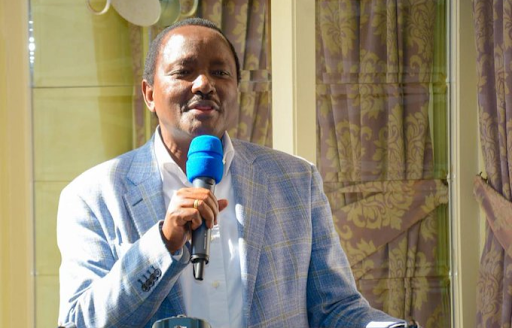
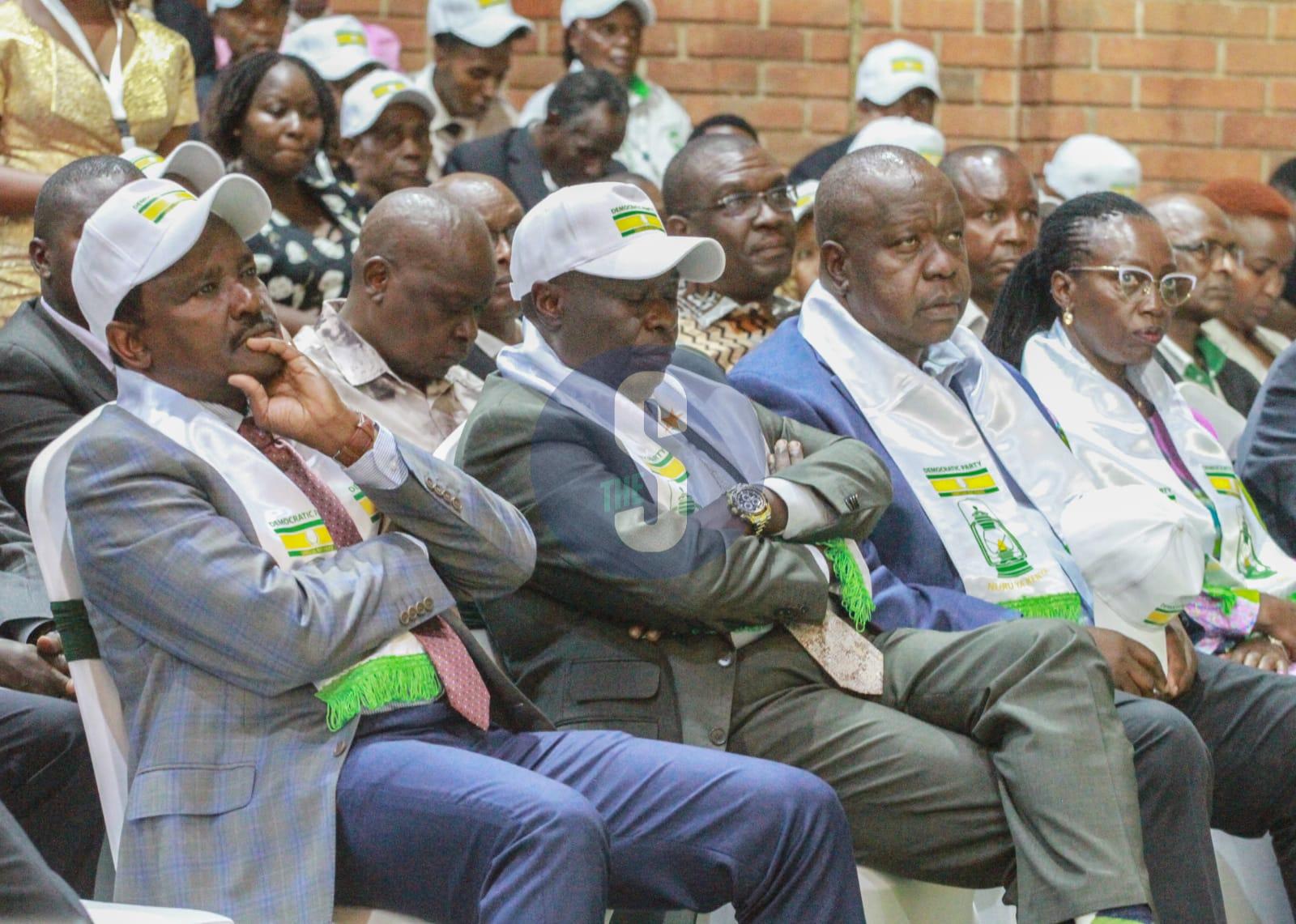
Opposition leaders headed by Rigathi Gachagua, Fred Matiang’i and
Kalonzo Musyoka are seeking to replay Raila Odinga’s effectiveness in
mobilising foreign support. In the run up to 2007 general elections, then Orange Democratic
Movement leader established the
most elaborate campaign network that has ever been at play in Kenya’s history.
Having benefitted from the referendum momentum of 2005, he formed the
broad-based nationalist political party, ODM. He brought in regional leaders
from across the country to establish what became the pentagon.
This collegial leadership style enabled him to draw support from the
grassroots with a lot of ease. Therefore, local resources and volunteers were
easily mobilised. Through these leaders, Raila was also able to tap into their
leaders’ community networks abroad. Funds thus streamed in from many sources
and channels.
Many donations flowed in from governments, lobbyists and
individuals with interests in the future government. This international network
would come into play in resolving the disputed presidential election results.
They exerted pressure on both the ODM leader and President Mwai Kibaki to agree to share power
in the grand coalition government.
However, after the enactment of the 2010 Constitution, the diaspora got fatigued with the endless whining of
the opposition forces. Many of the Kenyans abroad also joined the government
and became prime movers of the government agenda.
Foreign governments and
international civil society organisations chose to channel their resources
through government agencies. They established frameworks whereby development
projects were jointly designed and financed together.
There also emerged China
as a strong economy with abundance of cash to support developing countries.
Kenya became an early beneficiary of these loans that came with no strings
attached.
The global politics shifted from pro-democracy to pro-trade. Trade was negotiated bilaterally or
multilaterally among governments. The opposition therefore lost crucial access
to foreign support for their political activities.
Concurrently, the local
economy grew and the Kenya shilling
strengthened against foreign currencies. Digital space suddenly emerged as
labour and trade markets greatly reduced and therefore dependence on diaspora remittances.
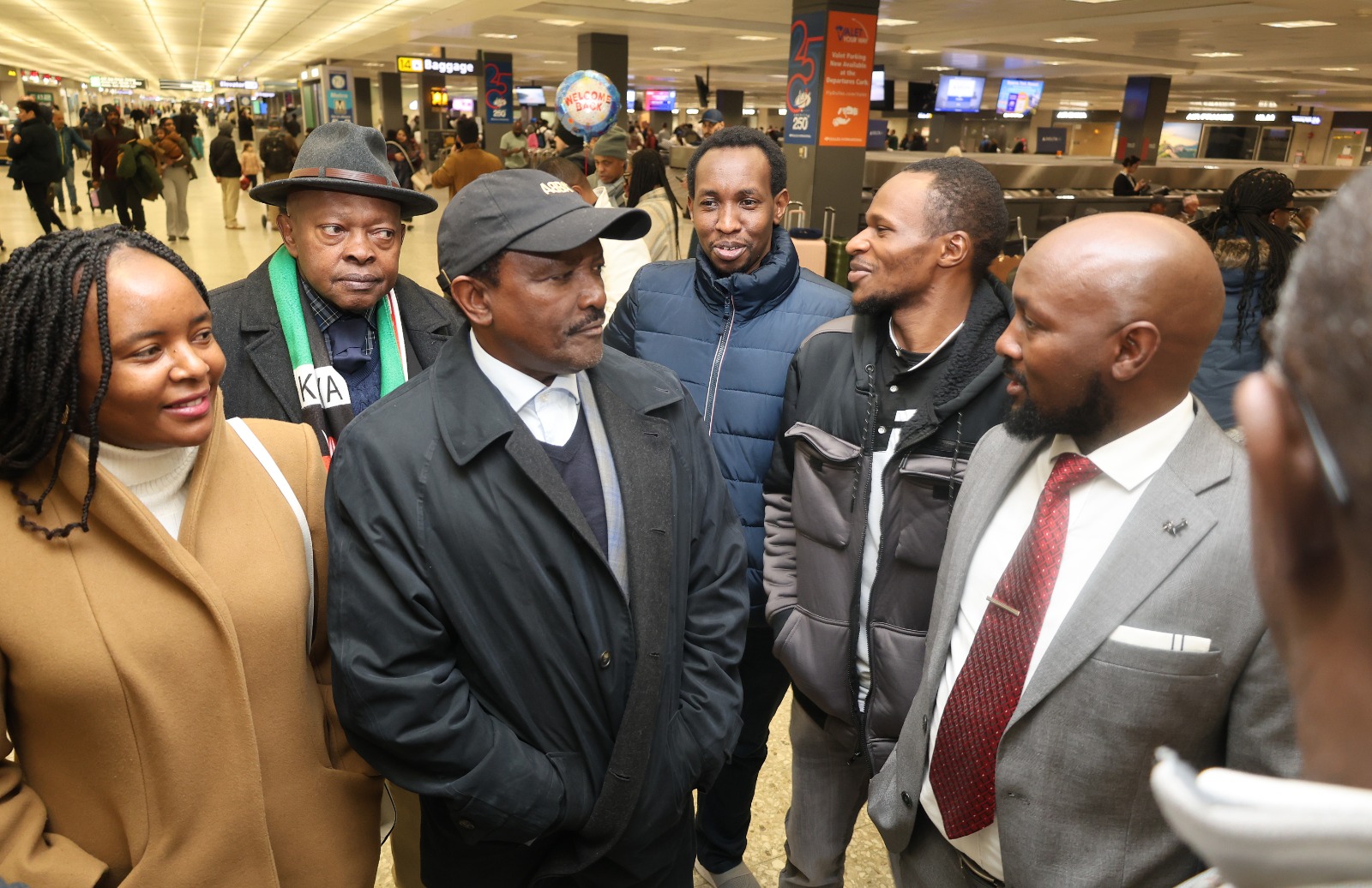
The influence of the diaspora has been significantly eroded. The efforts
of the opposition to woo Kenyans living abroad for endorsement is an exercise
in futility. They cannot successfully replicate Raila’s international networks.










![[PHOTOS] Red carpet in Pretoria as Ruto begins South Africa visit](https://cdn.radioafrica.digital/image/2026/06/abe3e750-6e5a-4394-a45c-899768be6240.jpeg)