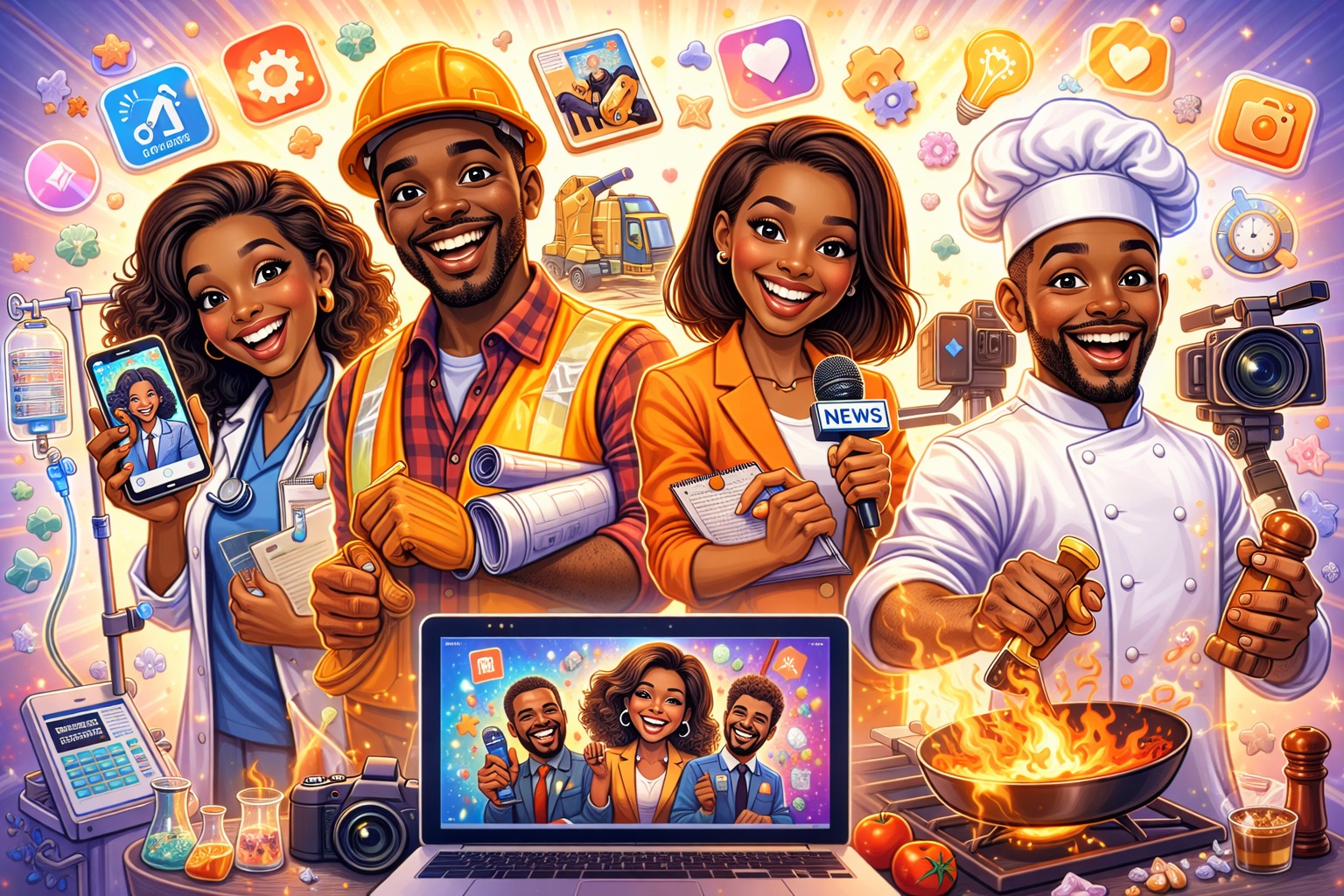
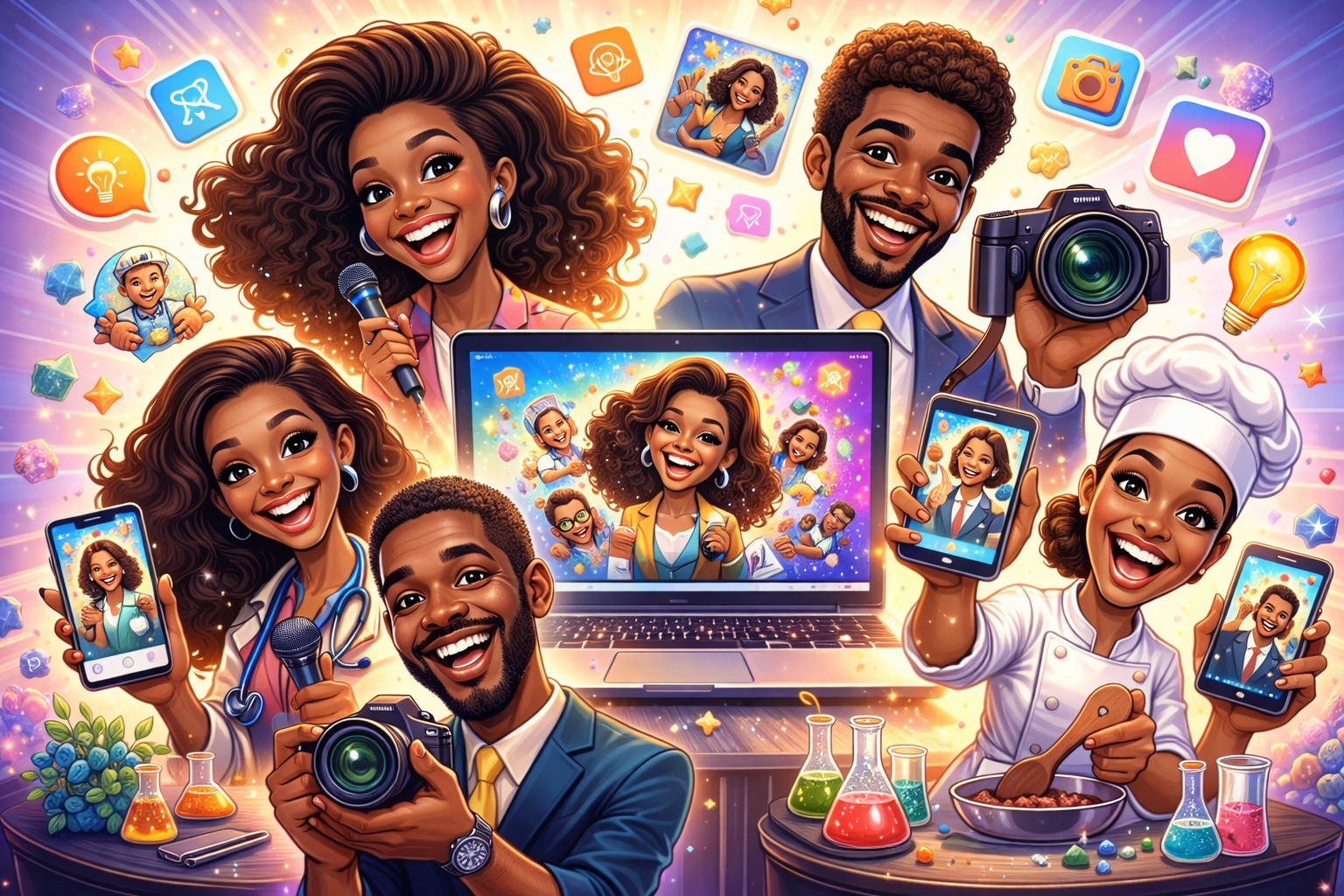
 Artificial Intelligence (AI) illustrations of caricatures
What started as a playful experiment has quickly become one of the most talked-about digital trends of 2026: AI-generated caricatures.
The caricatures transform ordinary selfies into exaggerated, cartoon-style portraits reflecting people’s jobs, personalities, and lifestyles.
For many participants, the attraction is simple: the results are fun, flattering and instantly shareable.
‘’I have been using AI for a while now, feeding it different prompts, and after seeing different AI-crafted images being posted online, I couldn’t resist the urge to want to have my own experience," Linda, a journalist by profession, narrates how she got hooked into it all.
‘’Many of my friends kept sharing their well-made images on their WhatsApp status; the more I saw, the more I wanted mine too. Curiosity had me asking how I can get my own, my first discovery being they are specifically referred to as AI caricatures.’’
Social media feeds are now filled with AI caricatures being used as profile photos, branding images, and conversation starters.
“Seeing myself reimagined in the caricature, the playfulness, creativity, and most of all, attention to detail put a stamp on it all,” Linda added.
Culturally, the trend signals a shift in how people interact with technology.
What once required an artist’s time can now be done in seconds with a smartphone and a short prompt.
The results range from journalists surrounded by notebooks and microphones to doctors in lab coats, creatives at cluttered desks, and entrepreneurs juggling laptops and coffee cups.
Generative AI systems achieve this by analysing images and text prompts and drawing on large datasets to produce scenes aligned with user input.
It's said that everything has a flip side to it; what about the AI caricatures?
According to Digital Watch Observatory (Dig.watch) a neutral online platform that tracks and explains developments in digital policy — including issues like AI and data protection, the growing AI caricature trend is prompting renewed concern among cybersecurity experts who warn that users may be unknowingly handing over sensitive personal information in exchange for entertainment.
The platform notes that these AI systems rely heavily on user-provided data, which can be stored, analysed or reused depending on platform policies.
The risks are not abstract.
According to Global Cybersecurity Advisor at ESET, Jake Moore, users are increasingly eager to join viral trends without fully understanding what happens to their data once it enters an AI system.
In an article published by Forbes, Moore cautions that this behavior can expose individuals to long-term privacy risks, especially when personal images and identifiable details are shared freely.
The concern intensifies when users attempt to “correct” AI outputs.
According to Roya News, people often add more personal context when results fall short, effectively feeding AI tools with increasingly precise data.
Privacy specialists quoted by Forbes explain that while many AI platforms promise safeguards, users rarely read the fine print.
Data submitted may be retained for model training, shared with third-party partners, or stored indefinitely, with limited options for complete deletion once uploaded.
The caricatures themselves fade quickly, buried under the next viral trend.
The data, however, does not disappear as easily.
According to data-protection analysts cited by Roya News, users should avoid uploading real photos, limit personal details, and review privacy settings before engaging with AI tools.
Treating AI platforms like public spaces rather than private studios is increasingly seen as a necessary mindset.
What began as harmless digital fun now serves as a reminder of a larger truth in the AI era: personal data is the real currency.
The caricature may raise a smile, but the information behind it carries value far beyond the screen and once shared, control is hard to reclaim.
AI caricatures remain a playful intersection of technology and creativity: entertaining, visually striking, and loaded with questions on privacy, ethics, and the future of digital expression.