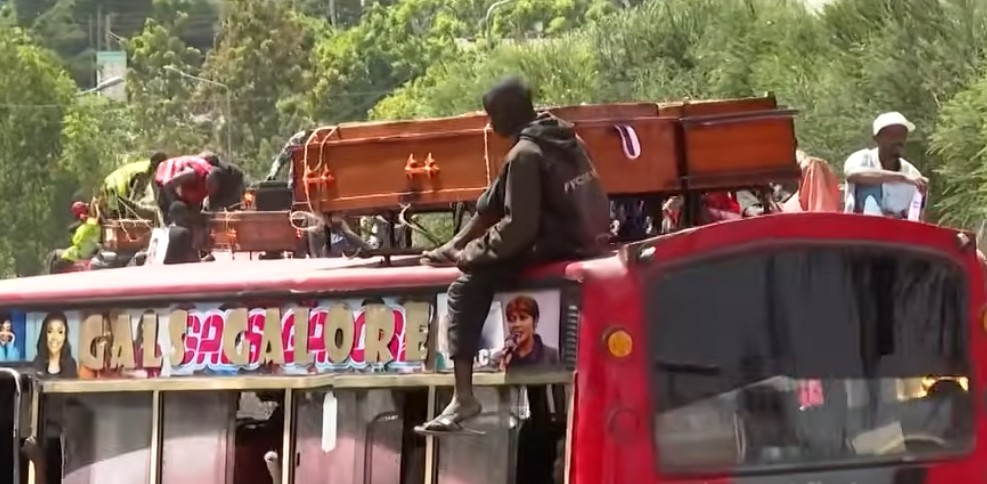
The postmortem also blamed starvation and bodily injuries
on some of the victims, officials said.
Some of the children were killed in mob injustice incidents
after being accused of, for instance, stealing.
Police said they collected some of the bodies from alleys
and streets in the past month and took them to the mortuary.
Ten of the bodies were buried at the Langata Cemetery in an
emotional ceremony on Thursday.
Pathologists said most of the bodies had lung infections
linked to pneumonia. This caused the deaths.
There were concerns about the deaths of the about 15 street
families in the city in the past month alone.
One of them had drowned, the autopsy said.
The postmortem was conducted at the City Mortuary on
Thursday before the bodies were buried.
The other street families joined the event.
The air at Langata Cemetery was heavy with grief and
unasked questions as Nairobi bid a tearful farewell to the ten of its street
children, their young lives cut short by the harsh indifference of the city.
In scenes that would break the hardest of hearts, fellow
street families served as the pallbearers.
They carried the small coffins, some containing bodies of
infants as young as three months old.
The burial, coordinated by philanthropist Agnes Kagure, was
a rare moment of dignity for a community that lives and dies in the
shadows.
The most disturbing aspect of this tragedy is the silence
surrounding the deaths.
The bodies were collected from various city mortuaries,
including City Mortuary and Mama Lucy Hospital.
Causes of death remain vague—pneumonia, malnutrition and mob
justice—euphemisms for the brutal reality of street life.
There were no government officials present, no speeches
from the Children’s Department.
The sight of a tiny coffin for a three-month-old baby
brought the gathering to its knees. Born on the pavement, died on the pavement.
Kagure called for a systemic overhaul of how Nairobi
handles its vulnerable children.
The burial highlights the exploding crisis of homelessness
in Nairobi, exacerbated by the demolitions in informal settlements.
Street families in Kenya, numbering over 46,000 as of 2018 with significant populations in Nairobi, Mombasa, and Kisumu, face severe challenges including violence, malnutrition, and exposure to harsh weather.