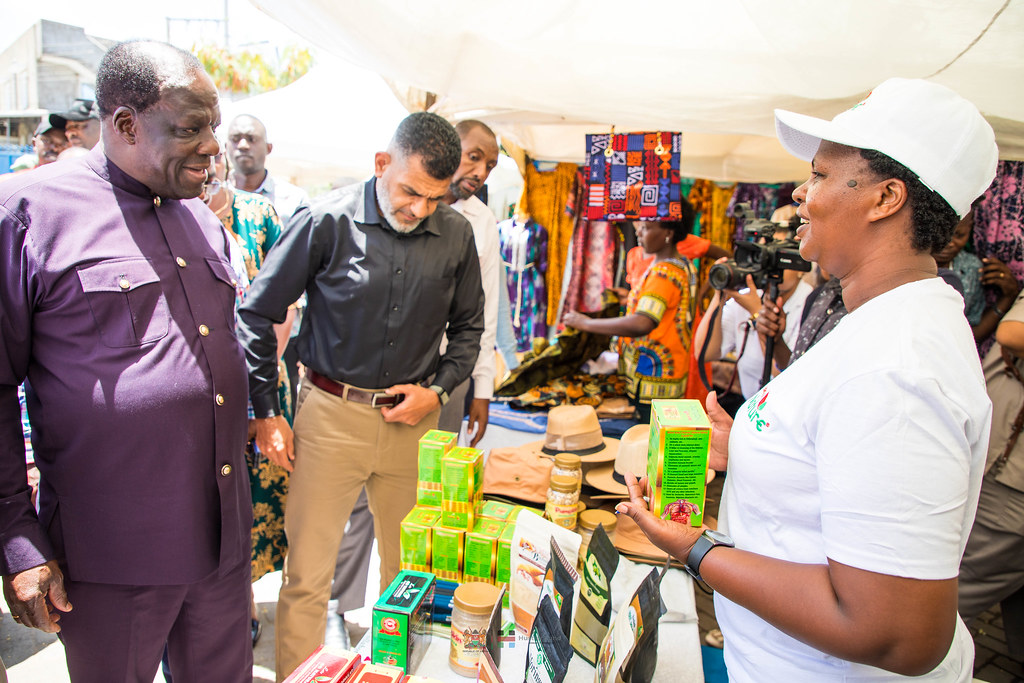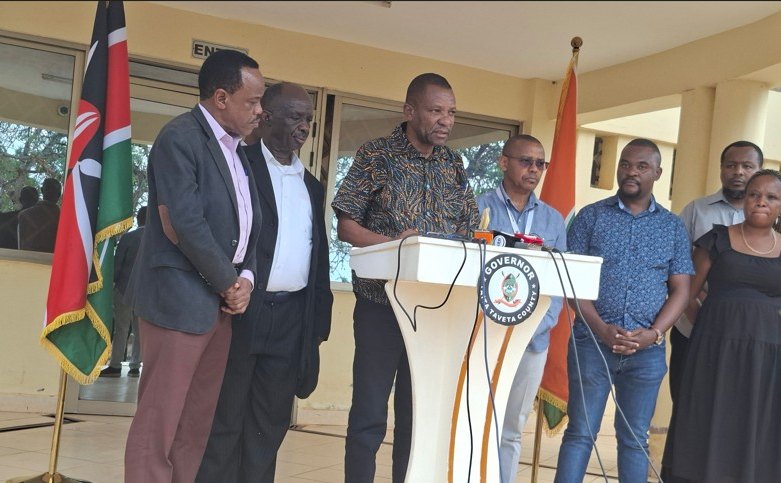

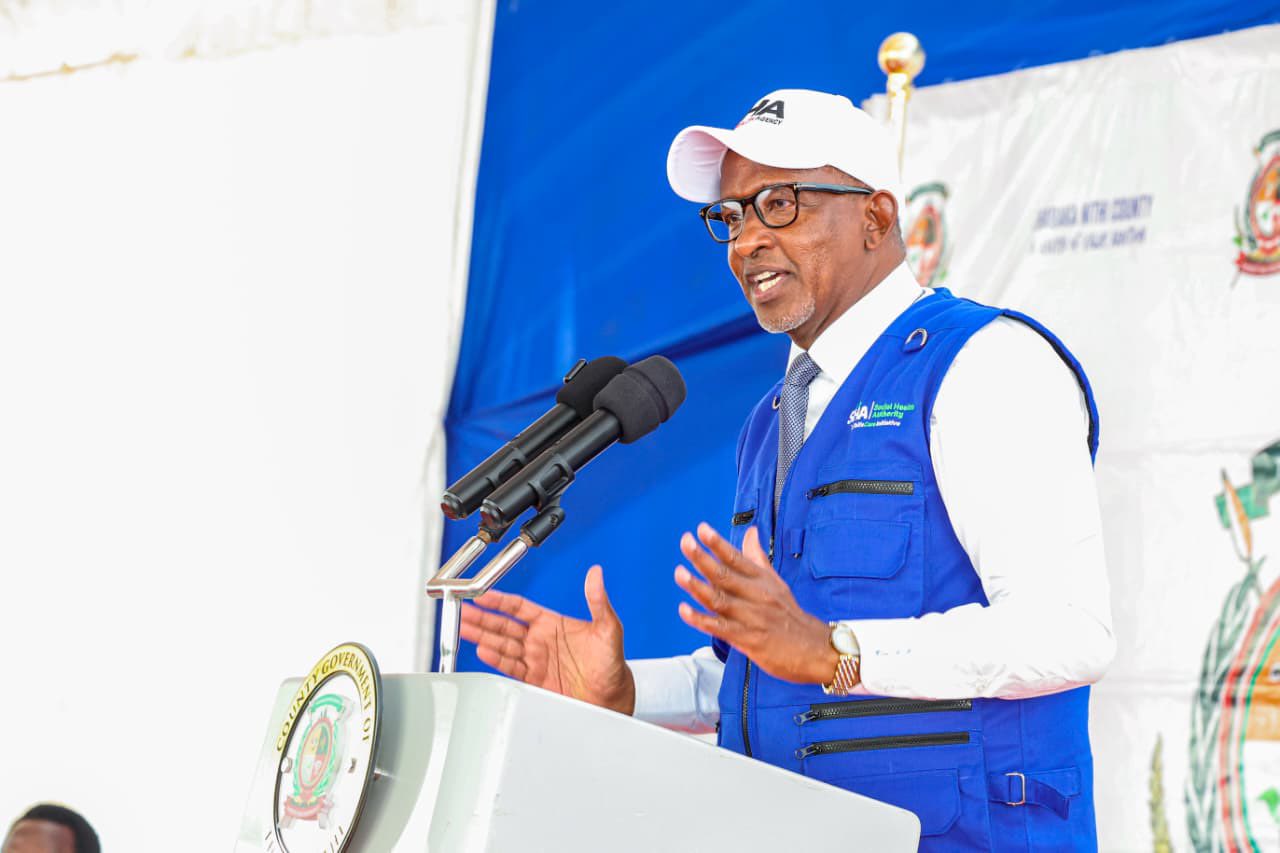
 Health CS Aden Duale speaking in Chuka Town, Tharaka Nithi County recently.
Kenya has promised to integrate herbal and traditional medicine into the national health system. However, the move will be guided by laws and standards that are still being developed.
Health Cabinet Secretary Aden Duale said the government wants
the process to protect patients, respect culture and support universal health
coverage.
Duale spoke in New Delhi, India, during the World Health
Organization’s Second Global Summit on Traditional Medicine, where ministers,
scientists, indigenous leaders and practitioners from more than 100 countries
gathered to shape the future of traditional medicine worldwide.
The CS said Kenya recognises the long role of traditional
medicine in communities and wants to bring it into the formal health system in
an organised and safe way.
“Kenya’s Traditional, Complementary and Integrative Medicine
(TCIM) approach prioritises patient safety, scientific evidence, innovation,
environmental stewardship and the respectful integration of indigenous
knowledge,” Duale said.
“Kenya’s constitution safeguards biodiversity, promotes
equitable benefit-sharing and recognises indigenous knowledge as a cornerstone
of sustainable development.”
He said the government is already putting in place key laws and
guidelines to make this happen.
“To operationalise this vision, Kenya has established a
comprehensive policy and regulatory framework, including the Traditional,
Complementary and Integrative Medicine Policy, the Traditional Health
Practitioners Bill, the National Research Framework and the Herbalists’
Handbook. These instruments are designed to professionalise practice, strengthen
safety and quality standards and enhance evidence generation,” Duale said.
Traditional medicine is widely used in Kenya, especially in
rural areas and informal settlements in towns. Most of these practices operate
outside the formal health system, with little regulation.
The Ministry of Health said regulation of herbal and traditional
medicine products is currently handled by the Pharmacy and Poisons Board, which
oversees products from development to sale.
The board uses digital regulatory systems and expert committees
to assess safety and quality.
Kenya is also recognised as a Regional Centre of Regulatory
Excellence in pharmacovigilance, meaning it plays a leading role in monitoring
medicine safety in the region.
Duale said technology is helping improve oversight. Digital
tools and artificial intelligence are being used to speed up evaluation,
improve transparency and strengthen decision making on herbal products.
He said beyond safety, the government sees traditional medicine
as an economic opportunity.
“Kenya is also strengthening research and innovation through
strategic partnerships that leverage artificial intelligence, genomics and
digital platforms to improve standardisation, strengthen evidence and support
the global integration of validated TCIM practices,” Duale said.
The long-term plan is to bring traditional medicine into primary
healthcare in a structured way.
This would include accrediting practitioners, setting clear
referral systems between traditional healers and hospitals, expanding research
and possibly including some services under the national social health insurance
scheme.
“Kenya is ready to work closely with WHO, Africa CDC, fellow member
states and global partners to unlock the full potential of traditional
medicine—ensuring it is safe, well-regulated, evidence-based and culturally
grounded—to strengthen health systems and improve health outcomes across
Africa,” Duale said.
The WHO summit in India provided global context for Kenya’s
position. According to WHO, traditional medicine remains a major source of care
for millions of people worldwide.
Nearly 90 per cent of WHO member states report that between 40
and 90 per cent of their populations use some form of traditional medicine.
“WHO is committed to uniting the wisdom of millennia with the
power of modern science and technology to realise the vision of health for
all,” director general Tedros AGhebreyesus said.
“By engaging responsibly, ethically and equitably, and by
harnessing innovation from AI to genomics, we can unlock the potential of
traditional medicine to deliver safer, smarter and more sustainable health
solutions for every community and for our planet.”
WHO said integrating traditional medicine into health systems is
critical at a time when health services are under pressure.
Nearly half of the world’s population lacks access to essential
health services, while more than two billion people face financial hardship
when seeking care.
WHO says safe and regulated traditional medicine can help expand
access and choice, while supporting prevention and health promotion.
WHO chief scientist Dr Sylvie Briand said integration must be
based on science and strong regulation.
“We need to apply the same scientific rigour to the assessment
and validation of biomedicine and traditional medicines, while respecting
biodiversity, cultural specificities and ethical principles,” she said.
WHO also highlighted that traditional medicine underpins
fast-growing global industries such as herbal medicines, yet less than one per
cent of global health research funding goes to this area.
To address this, WHO is launching a Traditional Medicine Global
Library with more than 1.6 million scientific records to support research,
policy and regulation, especially in lower-income countries.
“Advancing traditional medicine is an evidence-based, ethical and environmental imperative,” Dr Shyama Kuruvilla of WHO’s Global Traditional Medicine Centre said.