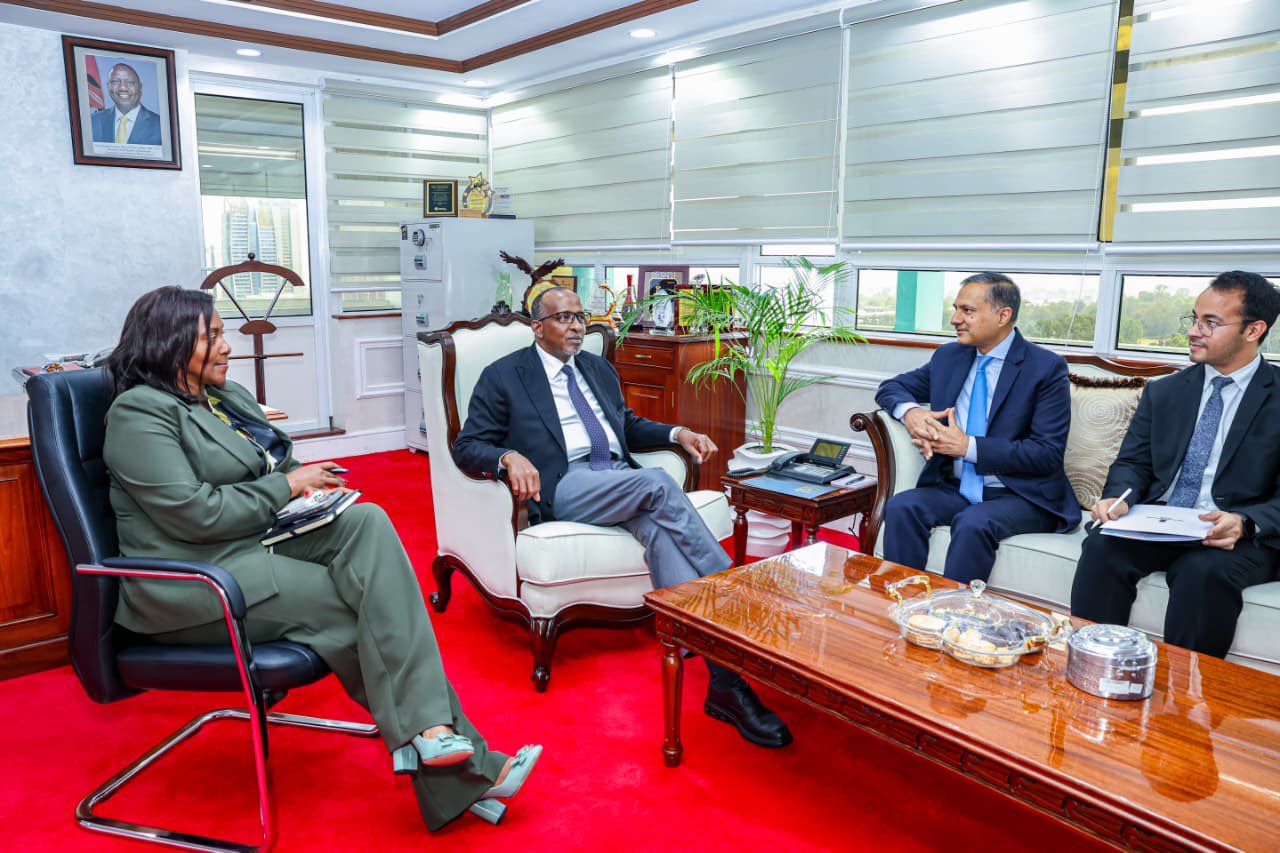


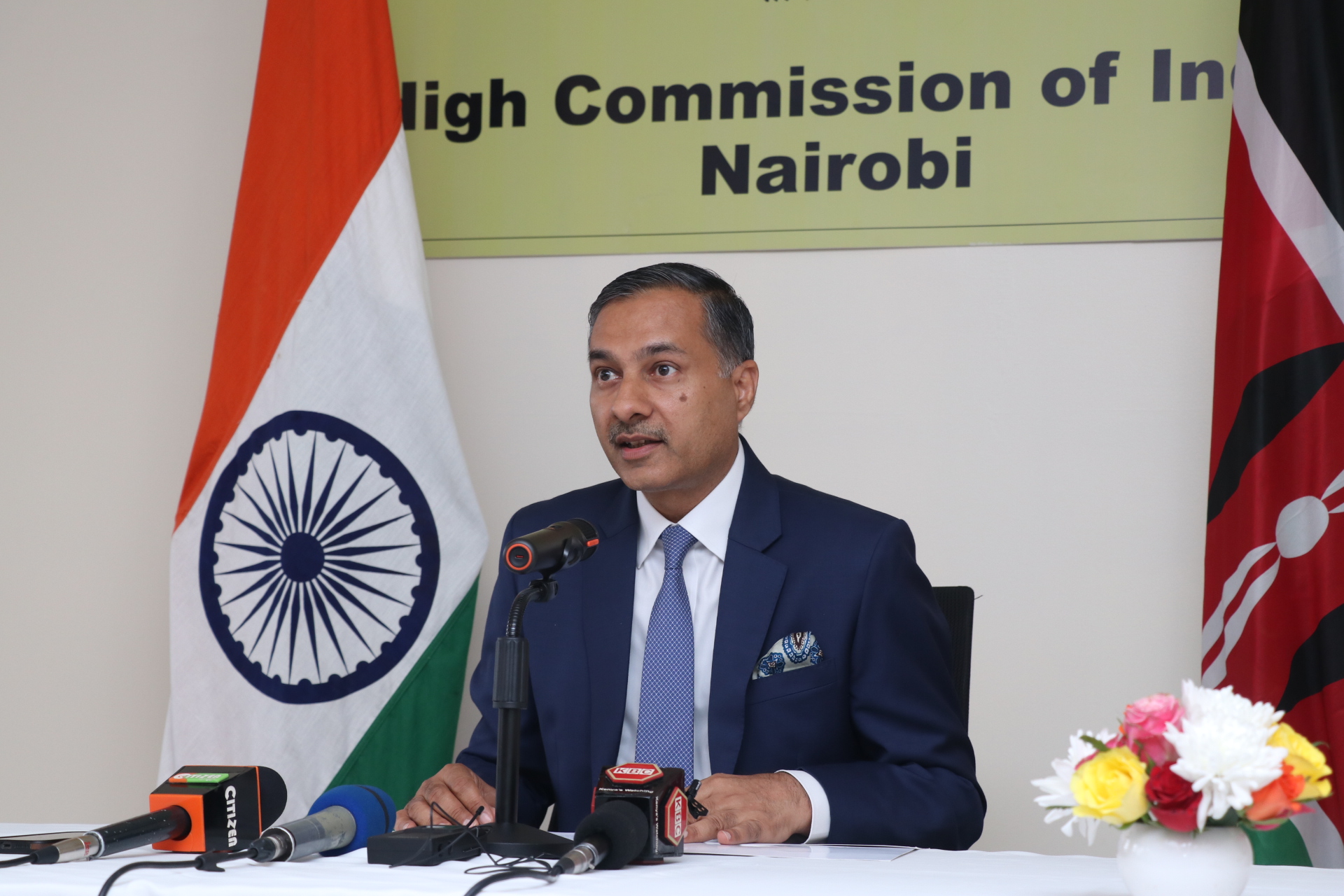
In his first press briefing since presenting his
credentials on December 1, High Commissioner Swaika said his economic diplomacy
will be among his top priorities alongside expanding high-technology
partnerships, and strengthening people-to-people links.
Swaika framed India–Kenya relations as a partnership rooted
in shared history but increasingly defined by strategic alignment, development
cooperation and practical outcomes on the ground.
In this regard, the envoy noted that his focus would be on
translating strong political trust into tangible benefits for the people of the
two states.
“India-Kenya relationship is one that is progressing
rapidly. We expect high-level engagements in near future that will further give
a strategic direction further to these multifaceted relations.
“Going forward, the focus of the High Commission would be
on strengthening our economic cooperation, new and high-technology areas,
cultural bonds and more youth exchanges,” the envoy said at the High Commission
in Nairobi.
At the heart of his agenda is economic diplomacy, with
India already Kenya’s third-largest trading partner, recording annual trade of
about $3.5 billion.
Swaika noted that India’s exports to Kenya are largely
consumption-based and do not displace local manufacturing, while Kenyan exports
to India have surged by nearly 80 per cent over the past year.
He noted that strengthening two-way trade, expanding market
access and encouraging Kenyan exports would remain a priority for the High
Commission.
Investment promotion is another central pillar in his tour
of duty.
He noted that early 200 Indian companies operate in
Kenya across manufacturing, pharmaceuticals, ICT, infrastructure, finance and
consumer goods, employing tens of thousands of Kenyans. This, he noted,
highlighted the growing interest of Indian investors in Kenya, the gateway to
East African region.
More than 1,600 Indian companies have visited Kenya in the
past two years alone, including startups and small and medium enterprises
seeking opportunities in the country.
The relocation of the Export–Import Bank of India’s East
Africa representative office from Addis Ababa to Nairobi, he said, demonstrates
New Delhi's confidence in Kenya as a regional commercial hub.
Beyond traditional commerce, the High Commissioner
identified high-technology cooperation as a key focus area.
For instance, he said Kenya has expressed interest in
replicating India’s digital public infrastructure solutions, following a recent
high-level Kenyan delegation visit to India.
He highlighted digital services, fintech, healthcare
technology, renewable energy and manufacturing were highlighted as sectors
where India’s development experience aligns closely with Kenya’s Vision 2030
and can support job creation and industrialisation.
Dr. Swaika also signalled a sustained emphasis on defence
and security cooperation, describing it as a mature and multi-dimensional
partnership.
In the recent past, Kenya and India have intensified theoir
defence ties, particularly in maritime security.
His tenure will prioritise training, peacekeeping
collaboration, maritime engagement and capacity-building initiatives, including
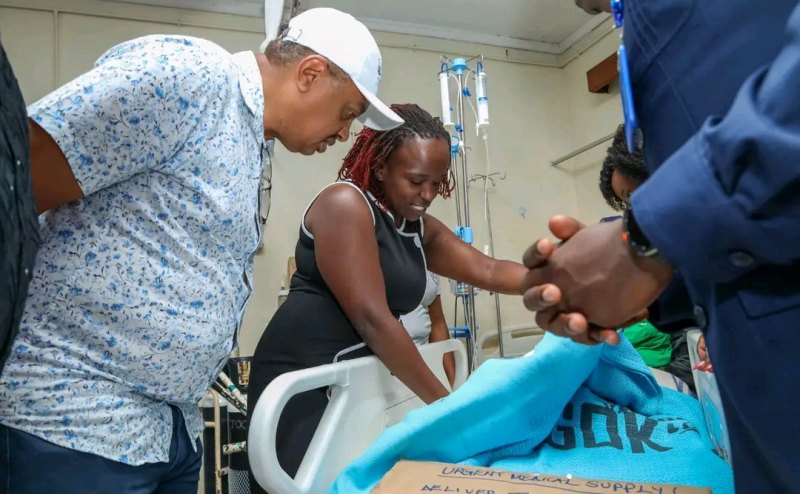
cooperation between Kenyan and Indian shipyards. He cited recent Indian support
to Kenya’s defence medical infrastructure and rapid humanitarian assistance
during floods as examples of partnership in action.
A major component of his agenda centres on human capital
and people-to-people ties.
Education, scholarships and capacity building remain among
the most noticeable and historical aspects of the India-Kenya ties, with
around 400 fully funded training and academic opportunities offered annually to
Kenyans.
Over the past decade, thousands of Kenyan professionals
have been trained in India, creating a network that anchors bilateral ties
beyond formal agreements, the envoy said.
Among other areas of focus the diplomat mentioned include
healthcare and mobility.
India has become a leading medical destination for Kenyans,
with about 10,000 travelling there for treatment this year alone. Simplifying
travel through e-visas and expanding cultural exchanges, youth programmes and
tourism cooperation are part of the High Commission’s forward agenda.