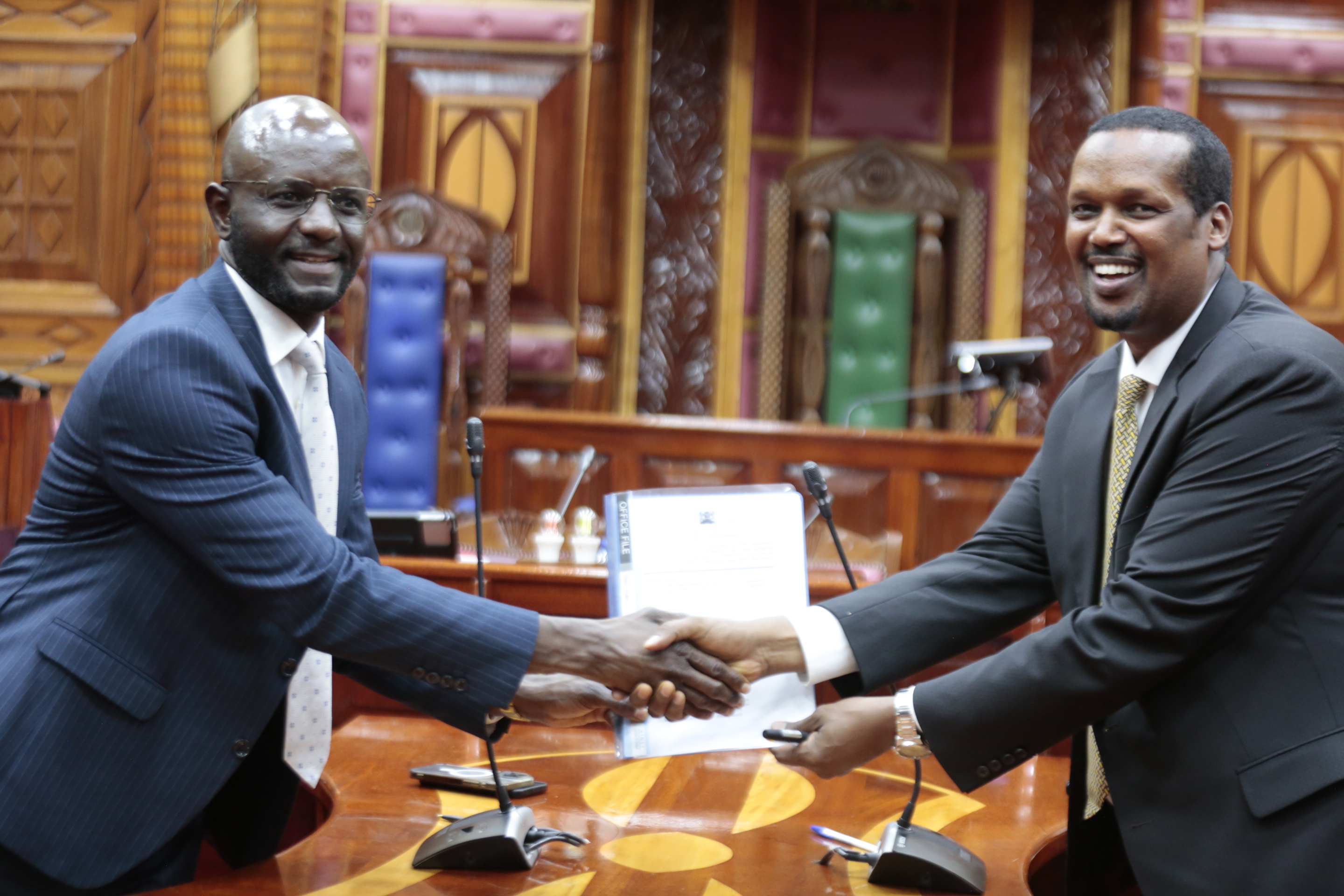
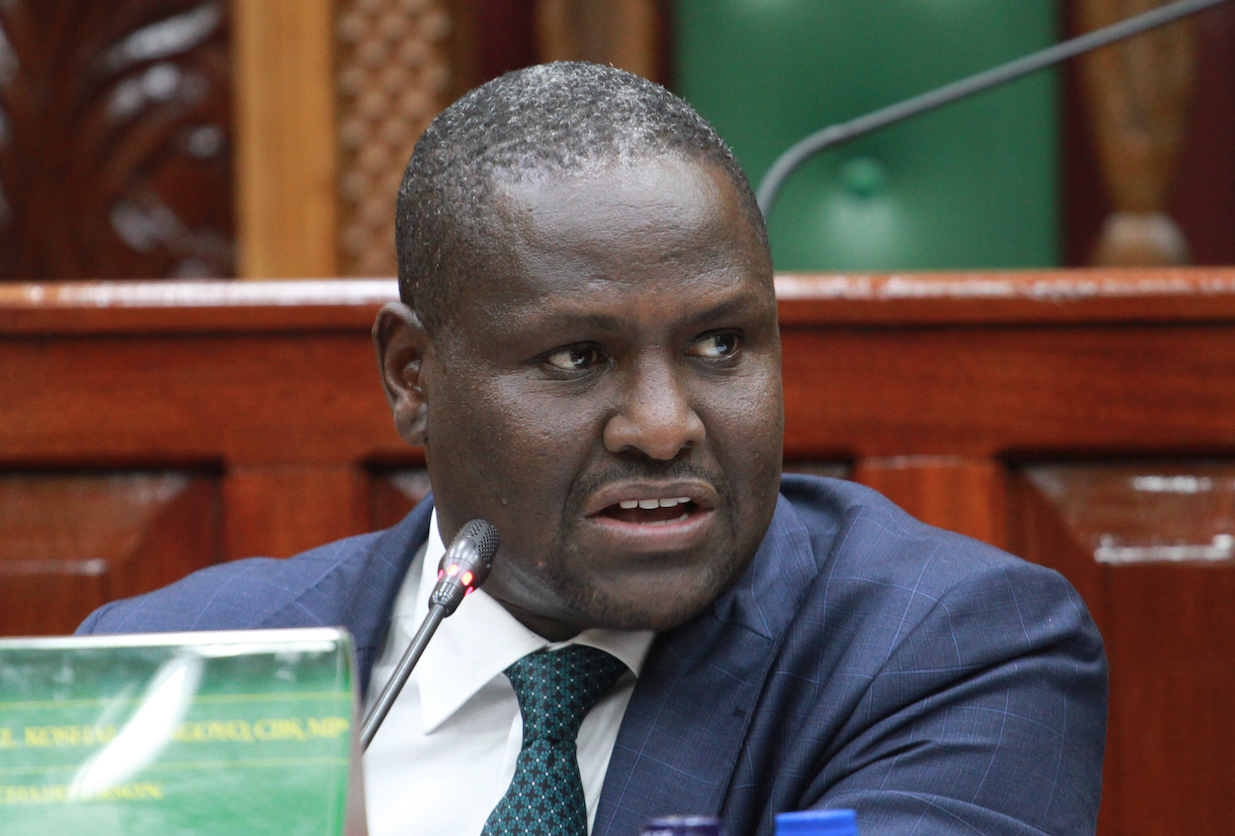
 Narok West MP Gabriel Tongoyo /ENOS TECHE
The National Assembly Security Committee has exposed 12
vital ministries and state agencies, including the president’s office, in its
scrutiny of their 2024-25 financial performance.
The report covers spending by the Deputy President’s
offices, the National Police Service, and immigration and internal security
departments.
The most outstanding contradiction lies in the near 100
per cent absorption rates - a measure of how much allocated cash is spent.
On average, the agencies under review spent 98 per cent
of their budgets, with some, like the Parliamentary Affairs department, spending
more than their allocation.
The committee, chaired by Narok West MP Gabriel Tongoyo, has
raised concerns that the impressive spending did not translate into results.
The committee found a ‘mismatch between financial and
non-financial parameters’, which in plain terms means money was spent, but work
was not done.
“There are circumstances where MDAs recorded an
absorption rate of 100 per cent of the budget and, on the other hand, recorded
a low achievement of the key performance indicators or targets,” the committee said.
“Such high absorption should, however, translate to an increase in service delivery,” the report reads.
The National Police Service Commission failed to meet
its recruitment targets for 5,000 police officers and 1,400 marginalised
individuals due to budget constraints. The commission spent 99.3 per cent of
its Sh1 billion budget.
MPs have also pointed fingers at the State Department
for Immigration, which issued millions of passports and IDs but faced
significant backlogs and missed other internal targets.
The report laments that such high absorption ‘should…
translate to an increase in service delivery’, but clearly has not.
“A review of targets set at the beginning of the
financial year shows some MDAs did not meet their targets as envisaged, including
the National Police Service Commission, the Office of the Deputy President and
the State Department for Immigration and Citizen Service, among others,” the
report reads in part.
The National Police Service reported that funding gaps
crippled operations, highlighting that only 3 of 11 police aircraft were
operational.
It also reported that vehicle repairs were limited during
the review period and a critical Level 4 hospital for officers remains
unfinished with a Sh833 million bill.
The review further established how development projects have been starved of funds. "Generally, there are limited funds for development spending," the report says.
The National Police Service received only Sh585 million
for six projects, completed just two, and has 15 stalled projects nationwide, including
police housing and stations worth Sh3.8 billion.
The Executive Office of the President saw its
development expenditure absorption plummet to 51 per cent, as key projects like
modernising the government press were rationalised.
The committee said the National Treasury was partly to
blame for the chaos witnessed during the period under review.
It criticised the submission of three supplementary
budgets within the year, with the final revision rushed through ‘less than one
week to the end of the financial year’.
Such last-minute changes, the lawmakers said, dent the
credibility of the annual appropriation and make proper spending impossible.
“This rushed process also led to negative balances on
some budget lines, a violation of basic accounting principles,” MPs said.
Moving beyond observation, the committee issued a series
of binding recommendations, effectively ordering an overhaul of the budget
systems.
MPs directed a link between the cash spent by MDAs and the results. In this respect, they want all accounting officers to submit quarterly
reports explicitly tying funds spent to targets achieved.
They said it is aimed at “ensuring exchequer releases
are aligned with performance outcomes.”
MPs further directed MDAs to enact a time-bound strategy
to reduce verified historical pending bills by 20 per cent by June 2026 and pay
all new, eligible bills within 90 days.
It also directed that agencies complete old projects
first and issue a comprehensive list of all stalled and ongoing projects.
The committee ordered that no new projects are to be
introduced in the 2025/2026 budget until the stalled ones are prioritised and
completed.
The committee ordered the National Treasury to limit
supplementary budgets to a maximum of two per year and submit them at least 60
days before the financial year closes.
It must also provide real-time expenditure data to prevent negative balances, the MPs said.
INSTANT ANALYSIS
The report shows how the government is proficient at
spending money but failing at delivering value. MPs say the culture of focusing
on budget absorption over tangible outcomes, coupled with reckless accumulation
of debt and poor budgetary planning, is undermining service delivery and
threatening fiscal stability.