
What do you mainly use LinkedIn for
What respondents said in a survey.
4mon agoWILLIAM WANYOIKEInfographics
When LinkedIn launched on May 5, 2003, only about 2,000 people joined in the first week
In Summary

Audio By Vocalize
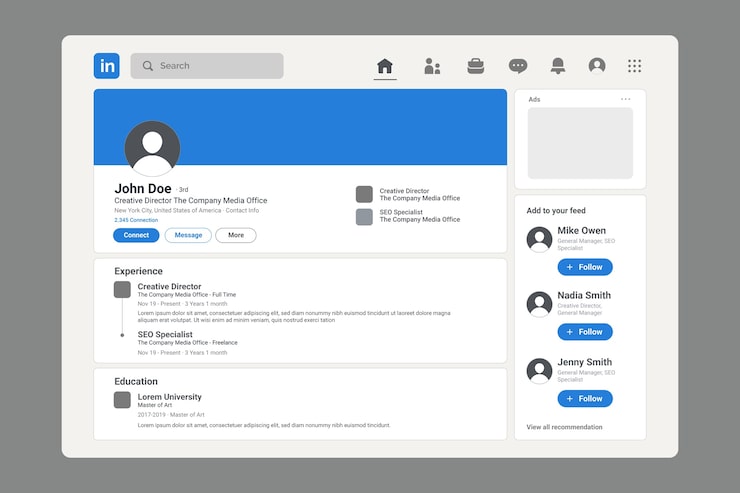
In 2002, Reid Hoffman noticed a quiet but powerful contradiction in how people searched for work.
Almost everyone had a resume.
Yet most of those resumes were hidden away in drawers, only pulled out in moments of desperation.
“Everybody had a resume, but everybody kept it private in the drawer,” Hoffman recalls during an interview with Nas Daily.
At the time, job hunting was slow and inefficient.
People printed their resumes dozens of times, mailed them to companies, and waited.
Often, nothing happened. Hoffman believed this system made little sense in a world that was rapidly moving online.
His idea was simple but radical for its time. What if people put their resumes online, where anyone could see them?
The reaction was largely negative.
Even those closest to him were unconvinced.
His roommate questioned the logic of exposing such personal information.
Investors were equally sceptical. Hoffman was told the idea would never work.
In the early days, the critics appeared to be right.
When LinkedIn launched on May 5, 2003, only about 2,000 people joined in the first week.
Growth was slow, and interest was limited.
“Nobody cared,” Hoffman, who co-founded the platform alongside Eric Ly, admits.
But he remained convinced.
“Great entrepreneurship is when you have an idea that other people think is crazy, and you know that you’re right,” he says.
As internet use expanded, attitudes began to change.
More people went online not just for information, but for opportunity.
Job seekers started uploading their resumes.
The numbers rose steadily, from 10,000 users to 100,000, then to one million.
In 2007, there were 10 million users on the platform, which urged LinkedIn to open offices around the world, including India, Australia and Ireland.
Recruiters soon followed. They realised they could search for talent directly instead of waiting for applications.
This created a powerful network effect. More resumes attracted more recruiters.
More recruiters meant more job offers. That, in turn, drew even more users to the platform.
In October 2010, LinkedIn was ranked No. 10 on the Silicon Valley Insider's Top 100 List of most valuable startups.
From 2015, most of the company's revenue came from selling access to information about its members to recruiters and sales professionals.
LinkedIn also introduced their own ad portal named LinkedIn Ads to let companies advertise in their platform.
What began as a risky experiment grew into the world’s largest professional network.
Today, LinkedIn has more than one billion users globally, according to Hoffman.
“One billion is just the beginning,” he says.
“We’re now going to get to two billion."
The platform fundamentally changed how people think about work, careers and professional identity.
For many, a LinkedIn profile became as important as a traditional resume, if not more.
In December 2016, LinkedIn reached another major milestone.
Microsoft acquired the company for $26.2 billion, one of the largest technology acquisitions in history.
Since 2017, 94 per cent of business-to-business marketers use LinkedIn to distribute their content.
For Hoffman, it was validation of an idea that many once dismissed as strange or unnecessary.
LinkedIn, however, was not Hoffman’s only bold bet.
He was also among the early investors in companies that would go on to reshape the internet economy, including Facebook and Airbnb.
Now, Hoffman believes the world is on the edge of another transformation, driven by artificial intelligence.
“According to Reid, the next big crazy idea is AI,” Nas Daily states.
In his view, AI has the potential to do for entrepreneurship what LinkedIn did for employment.
While LinkedIn helps people find jobs, AI could help people create entire companies on their own.
“AI gives you your own company,” Hoffman says.
“It gives you your entire team for whatever you want to do."
He envisions a future where anyone, anywhere in the world, can take a single idea and turn it into a functioning business.
This can be done with AI tools handling tasks that once required large teams and significant capital.
Hoffman also points to AI’s impact on creativity and knowledge.
In one example, he describes receiving a book that was customised specifically for him, complete with his own picture.
The personalisation, he explains, was made possible by artificial intelligence.
“AI is going to change everything, including books,” he says.
Beyond business and media, Hoffman is also working on a startup that aims to use AI in the fight against cancer, highlighting the technology’s potential in health and science.
For Hoffman, the rise of AI marks a defining moment.
“We are at the greatest moment in my lifetime in human history,” he says, reflecting on how much technology has expanded what individuals can achieve.
His journey, from an idea mocked for being too strange to a platform used by more than a billion people, shapes how he views the future.
The lesson, he suggests, is not just about technology, but belief.
LinkedIn helped more than a billion people find jobs.
Hoffman now believes the next wave of innovation may mean people no longer need to wait for one.
Instead, with the help of AI, they can build their own.
“You just have to believe in your crazy idea,” Hoffman says.
What respondents said in a survey.