Human rights commission has raised alarm over reported cases of organ harvesting targeting vulnerable groups.
Sarah Muthoni, 32, from Mukuru kwa Reuben in Nairobi spotted a job advert pinned on a roadside wall and she didn’t think twice as she was desperate or a job.
She followed the directions on the poster to a small building on
the edge of the settlement, oblivious that she was walking straight into a
trap.
Inside, she was offered a glass of water as she waited for the interviewer. That is the last moment she remembers clearly.
Hours later, Muthoni woke up on the dusty floor of an unfinished building, disoriented and in pain, with a tight bandage wrapped around her side.
“At first, I thought it was a robbery, but the pain was too
much. I realised I had undergone some kind of procedure that I never agreed to
and never understood,” she recalled.
Her story is similar to that of Brian (not his real name), a 19-year-old casual labourer who disappeared from a construction site on the outskirts of Nairobi last September. His family searched police stations and hospitals for weeks. When he finally resurfaced a month later, he was weak, confused and carried a fresh surgical scar on his stomach.
“I was approached by two men who said they had another construction job for me. I followed them because I needed the work, but I didn’t know I was being set up. Days later, I came back home with a wound I still can’t explain,” he said.
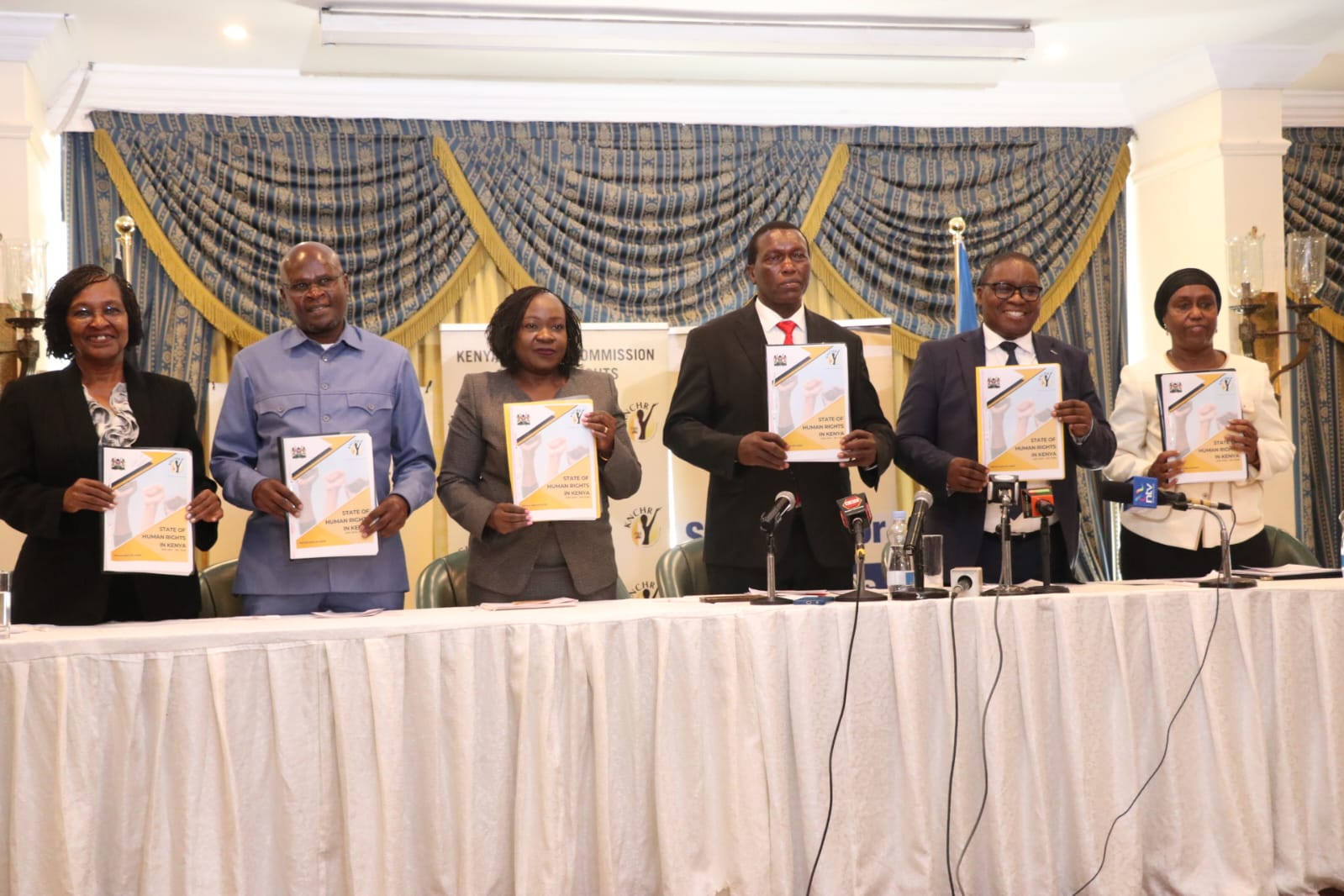
A new report by the Kenya National Commission on Human Rights has warned that organ trafficking is on the rise in the country. The report noted that traffickers increasingly target people who are already vulnerable including young job seekers, informal workers, rural residents and those unable to access proper healthcare.
According to the ‘State of Human Rights in Kenya 2025’ report, released yesterday, organ trafficking has emerged as a growing threat fuelled by poverty, unemployment and deep gaps within the health system.
The commission called on the Ministry of Health and the Inspector General of Police to conduct urgent and thorough investigations, saying many of the networks involved operate in secrecy and are difficult to trace.
The report also revealed widespread inequalities and mounting pressure across Kenya’s healthcare sector, which has left many exposed to exploitation.
KNCHR said that private facilities contracted under the Social Health Authority, including Kenya Association of Private Hospitals and Rural and Urban Private Hospitals Association of Kenya recently withdrew services due to delayed payments.
This disruption, the commission warned, has pushed thousands of low-income households into crisis, leaving many unable to access treatment or forced to turn to expensive private clinics.
“Employment disputes involving health workers under the universal health coverage programme also remain unresolved, with county and national authorities trading blame,” the report said.
Digital health services which the report said was seen as a solution under the new SHIF system, remains out of reach for many rural residents, women, and persons with disabilities due to poor ICT access, governance gaps, and privacy concerns.
In arid and semi-arid regions, KNCHR recorded continued drug shortages, persistent understaffing, and long distances to health facilities. These conditions, the report showed, expose already vulnerable communities to exploitation.
The commission however recognised recent government interventions including the proposed increase of the health budget to Sh138.1 billion in the 2025-26 financial year.
This includes allocations to UHC coordination, primary healthcare, emergency and chronic illness funds, coverage for orphans and persons with disabilities, and the national immunisation programme.
KNCHR also welcomed the rollout of the Social Health Authority’s new structure and the inauguration of the Benefits Package and Tariffs Advisory Panel, which will guide evidence-based health benefits and tariffs.
“But more must be done particularly in protecting citizens from abuses such as organ trafficking, strengthening oversight in hospitals, and ensuring that no Kenyan is denied care because of delayed payments or unaffordable premiums,” the commission said.
It called for the government to adopt a flexible 'Lipa SHA pole
pole' model to ease the burden on informal workers and ensure continuous access
to care for more than 27 million registered SHA members.