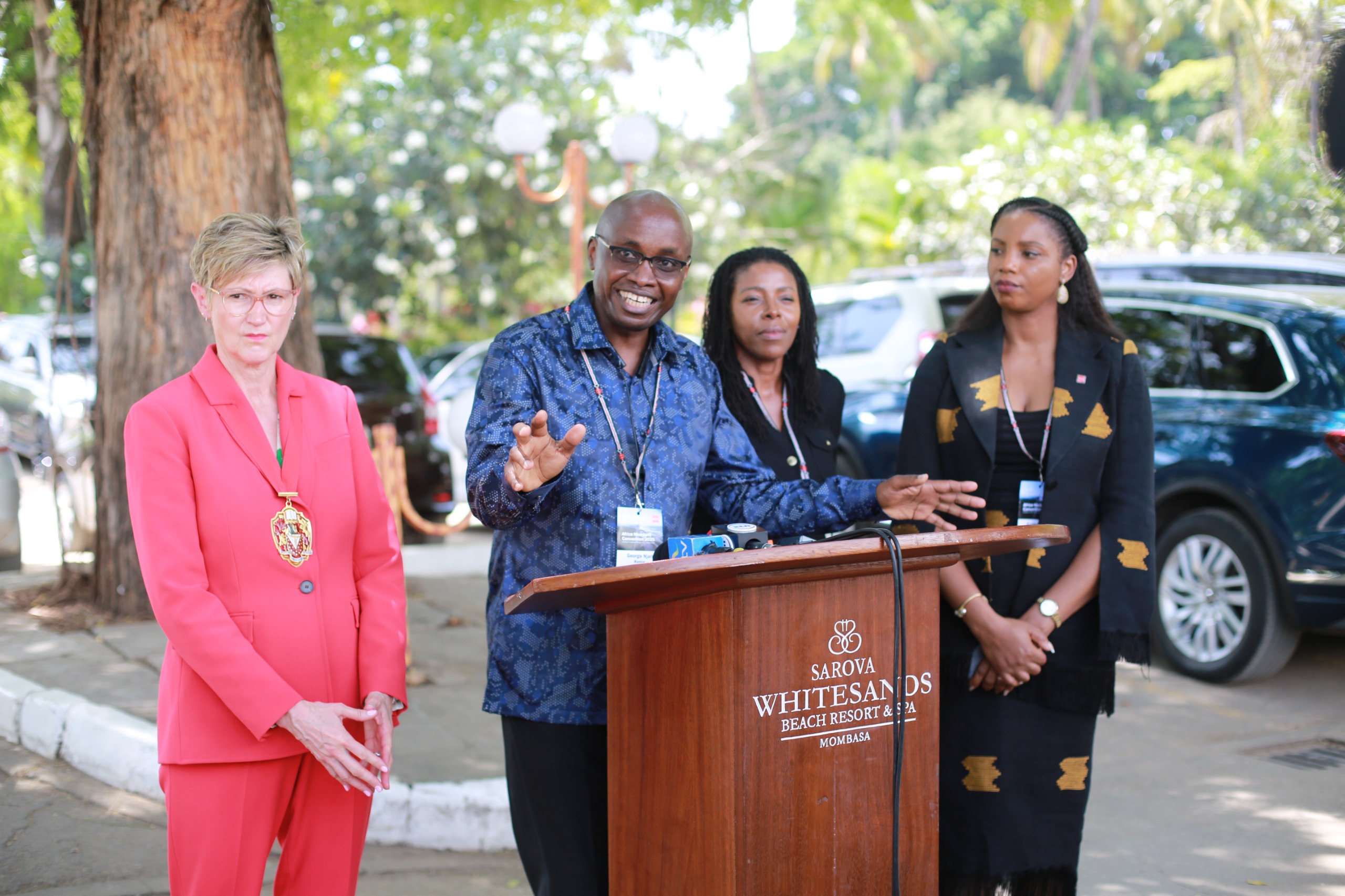
ACCA’s Melanie
Proffitt, George Njari, Jane Ohadike and Evelyn
Isioye in Mombasa on Wednesday / JOHN CHESOLI
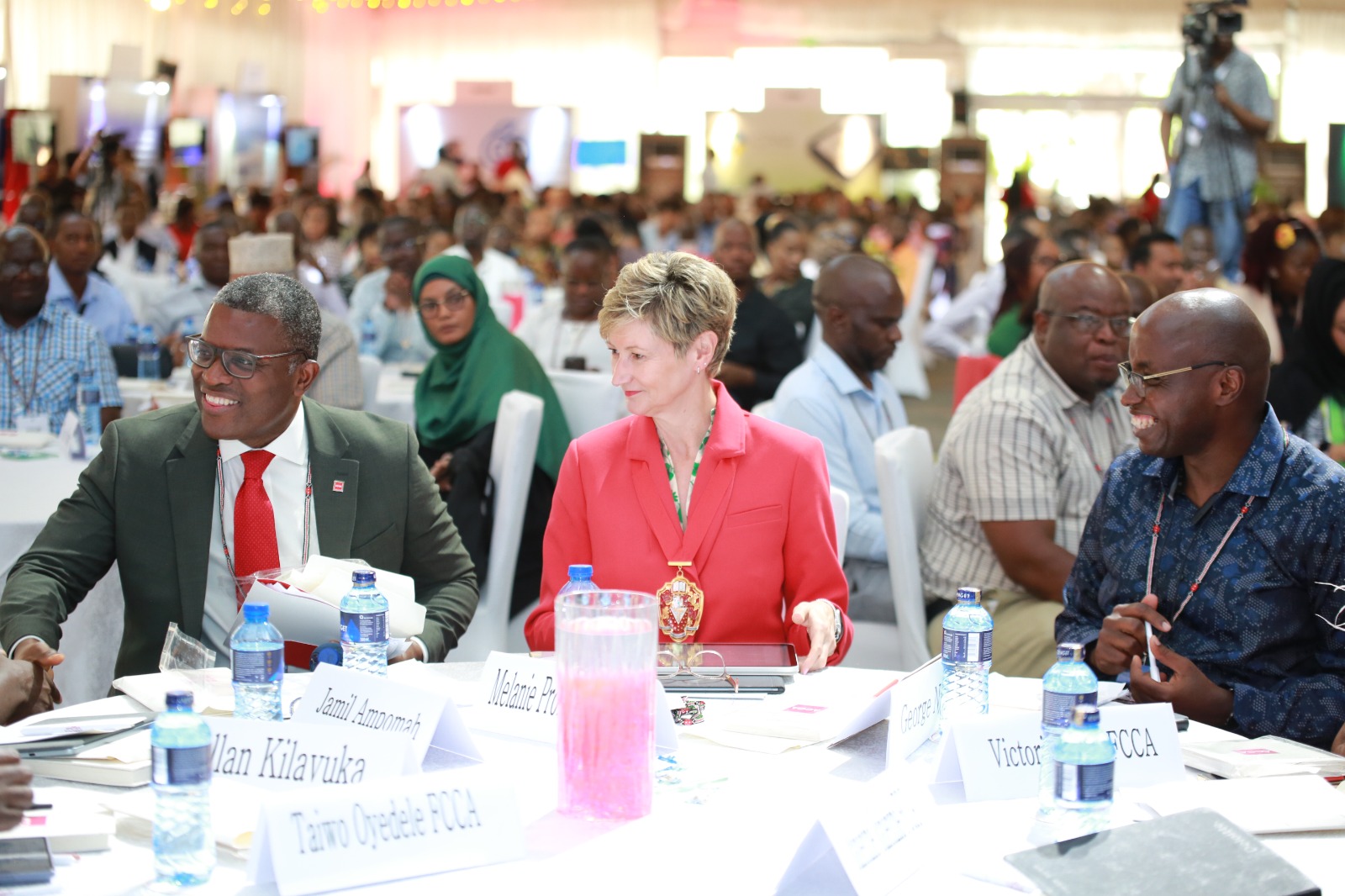
ACCA’s Jamil Ampomah, Melanie Proffitt and George
Njari in Mombasa on Wednesday / JOHN CHESOLI
Accountants in Kenya face major challenges due to the digital transformation across the globe, with artificial intelligence now a must-have in systems.
However, with
technology comes digital challenges, and accountants no longer have to only
check on social integrity but also learn digital integrity.
More than 1,000
accountants from across Africa were told to positively embrace AI, ethical
leadership and sustainability skills to remain relevant in the changing
global economy.
Speaking during the Association of Chartered Certified Accountants’ African Members Convention 2025 in Mombasa, ACCA Africa director Jamil Ampomah said technology is transforming the accounting profession.
"Professionals must move beyond traditional bookkeeping
roles and become strategic business advisers," he said.
Ampomah also said
accountants must be guardians of digital integrity even as the globe manoeuvres
around the skills gap that exists with AI now almost taking over.
“Every organisation
has its own plan to bridge this skills shortage. This means that every ACCA
accountant should be equipped with profound understanding of all these
disciplines and skills,” the Africa director said.
ACCA global
president Melanie Proffitt said accountants must surge beyond their normal
roles and ensure the organisations they work for do not fall victim to digital
fraud.
AI, Proffitt said,
is changing the way accountants work, liberating them from the routine repetitive
tasks traditionally associated with accountancy.
She said AI presents both risks and opportunities
for the profession, but accountants are uniquely positioned to act as
“custodians of trust” as organisations integrate automated systems into
financial reporting and decision-making.
“AI brings risks such as bias and errors, but it also creates opportunities,” Proffitt said.
"Professional accountants have the ethical competence and human judgment required to check these risks, strengthen controls and ensure that stakeholders can trust information produced with the help of AI."
Kenya Airways CEO
Alla Kilavuka said today’s accountant is not expected to be that traditional financial
record keeper and custodians of the records.
“Now, we expect you
to guard the digital integrity. You have to be digitally literate,” Kilavuka
said.
ACCA East Africa head George Njari said local
contexts must be considered as the profession adapts to digital transformation.
He said ACCA engages with regional professionals to
address issues on how technology will affect accounting.
“Our role is to support members and employers in
the region to understand how AI can be applied responsibly, while safeguarding
professional standards,” he said.
ACCA Africa head of public affairs Jane
Ohadike said they have already embedded AI and ethics training into their professional curriculum to prepare current and future accountants for technology-driven workplaces.
“We have infused this into our learning from the
professional qualification level. Our students are taught to understand the
ethical implications of AI, including potential bias and misuse of data,”
Ohadike said.
ACCA’s technical policy lead for Africa and India,
Evelyn Isioye, said technology is quickly becoming more influential in business
processes.
This means ethical conduct, which remains the
backbone of the accounting profession, must be observed at all times, Isioye
said.
“ACCA-qualified accountants are bound by a strict
code of ethics. Integrity and ethical behaviour underpin our qualification, and
this will be even more critical in the era of AI,” she said.
She said ACCA is collaborating with governments, accountancy bodies and other stakeholders to strengthen professional capacity and promote ethical standards across African markets.
INSTANT ANALYSIS
ACCA is expanding access to technology-focused training through scholarships and partnerships with universities and public institutions. The organisation is working with development partners to reach students and professionals who would otherwise be unable to access specialised learning.








![[PHOTOS] Ruto pushes for stronger Kenya-EU economic ties in Brussels](https://cdn.radioafrica.digital/image/2026/06/3aebc395-285b-441c-8aa4-33cb538f8d44.jpg)