The construction of Talanta Sports City is expected to enhance Kenya’s Competence-Based Education (CBE) framework by providing a world-class facility for learners pursuing careers in sports and the arts.
Currently 68 per cent complete, the project aims to nurture talent, promote international sports, and inspire a new generation of athletes and creatives.
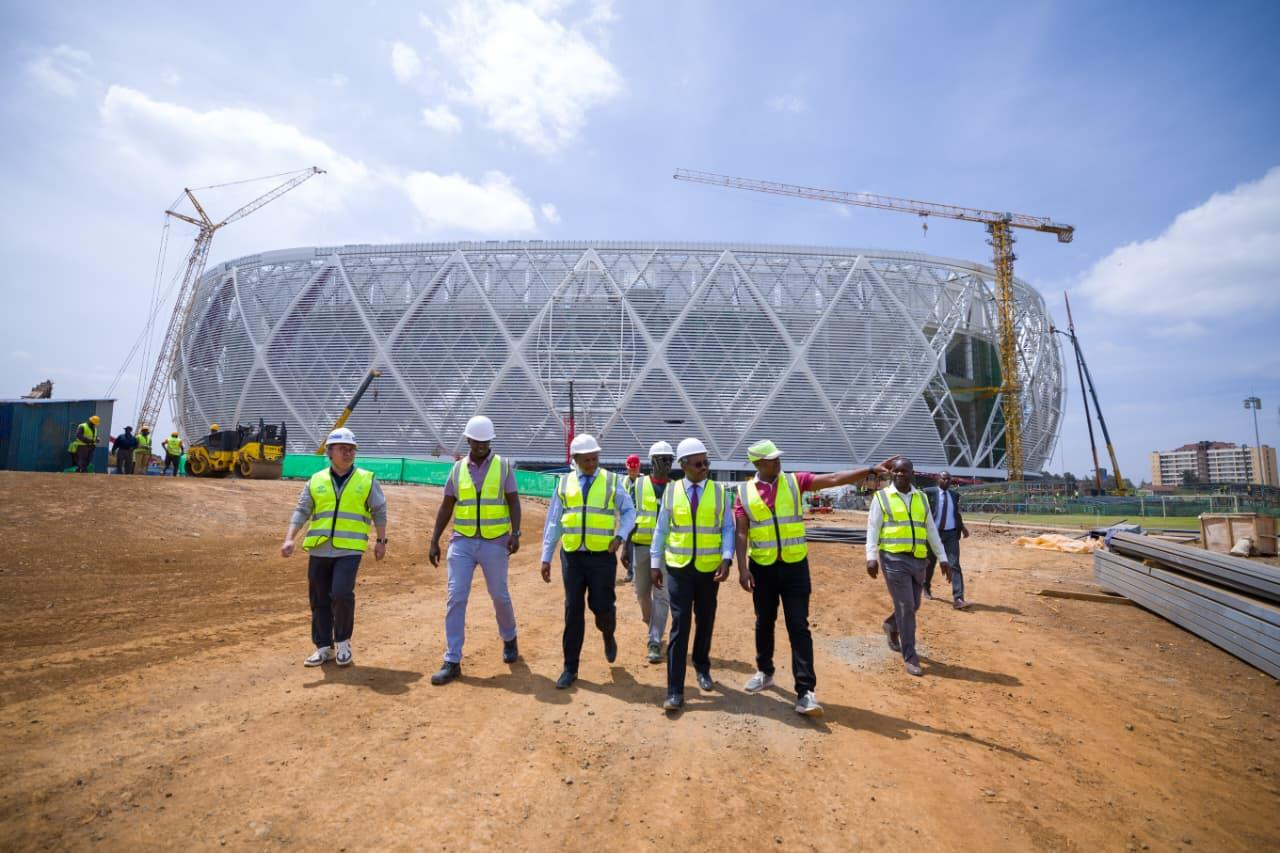
Sports Principal Secretary Elijah Mwangi, who recently toured the facility, described the project as a “great gift” to the nation.
“For us in the State Department for Sports, our responsibility is talent identification, nurturing, and development. We are satisfied with the progress of the work,” Mwangi said. He added that Talanta Sports City is expected to have a lasting impact for generations.
Situated on 45.64 hectares and under the proprietorship of the Kenya Defence Forces, the facility is being constructed by the China Road and Bridge Corporation (CRBC).
Mwangi stated that the facility adheres to international standards set by organisations such as FIFA and the Confederation of African Football (CAF), making it suitable for hosting international tournaments and cultural events.
“This facility will provide infrastructure for athletes and inspire youth to consider sports and creative arts as viable career pathways,” he noted.
The sports city will include three professional training pitches designed to support football, rugby, and athletics, providing a comprehensive environment for multiple disciplines.
The government envisions the facility as a hub for talent identification and development, aligned with the goals of Kenya’s CBE framework.
By integrating high-quality sports and arts infrastructure within an educational context, the project aims to equip young Kenyans with skills to compete nationally and internationally.
Defence Principal Secretary Patrick Mariru highlighted the international quality of the project.
“The Talanta Stadium reflects what the President calls ‘First World.’ For the first time in 60 years, we will have a stadium comparable to facilities in Europe,” he said, noting that the last major stadium project, Kasarani, was completed in the late 1980s.
The stadium will have a 60,000-seat capacity, enabling it to host international competitions in football, rugby, and athletics.
According to Mwangi, hosting such events will provide young athletes with exposure to high-level competition while enhancing Kenya’s profile in global sports.
The facility is expected to generate socio-economic benefits, including tourism, revenue generation, and employment opportunities for local communities.
Its inclusion of arts and creative industries is also intended to support music, performance, and visual arts, complementing Kenya’s growing creative economy.
“This is a milestone for our country,” Mwangi said. “Talanta Sports City will serve as a beacon of excellence for athletes and learners interested in the arts, shaping careers and opportunities for Kenyan youth.”
The sports city is also intended to support community engagement and grassroots sports development.
By providing access to professional-grade facilities, young athletes from across the country will have opportunities to develop their skills and potentially represent Kenya on international platforms.
Government officials stressed that the stadium forms part of a broader initiative to position Kenya as a regional leader in sports and arts education.
Investments in world-class infrastructure and training programs aim to professionalise sports, improve talent pathways, and integrate arts and sports into the national education system.
The project also aligns with the government’s “First World” vision, aimed at upgrading infrastructure to meet international standards. Mariru described Talanta Sports City as a tangible example of this initiative, highlighting its potential to support Kenya’s human capital development.
Once complete, the facility will rank among the largest and most advanced in Africa, integrating stadiums, training pitches, and educational spaces.
Its design incorporates modern technology and adheres to international safety and performance standards to provide high-quality experiences for athletes, performers, and spectators.
“With steady progress, stakeholders are optimistic about the impact of Talanta Sports City,” Mwangi added. “It is more than a sports facility; it is a cradle for talent, a stage for creativity, and a legacy for the nation.”