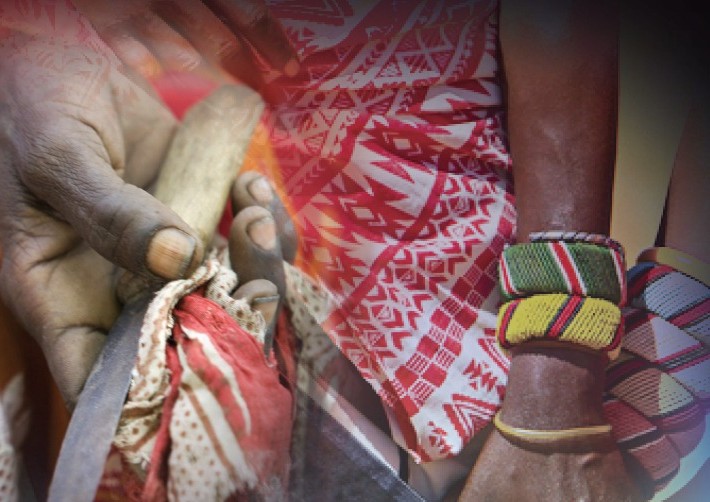
Somewhere along a border path at dawn, a frightened girl grips her mother’s hand as they hurry toward a hut where an older woman waits with a razor.
In another village, a teenage girl lies awake knowing neighbours are whispering that she is “unfinished,” her worth questioned because she has not been cut.
And across the region, countless women carry the quiet weight of pain they never chose, scars that mark not tradition, but survival.
These are the lives at the centre of the proposed East African Community Elimination of Female Genital Mutilation Bill, 2025, now before the East African Legislative Assembly.
The Bill speaks directly to these hidden journeys, these whispered shames and these inherited wounds.
It is a regional attempt to stop girls from being ferried across borders under the cover of darkness, to halt the medicalised procedures carried out behind clinic doors, and to silence the mocking voices that push families toward the cut.
Beyond its clauses and penalties, the Bill seeks to rewrite the futures of girls who still fear the sound of footsteps outside their homes.
It aims to give them what tradition once denied: safety, dignity and the chance to grow into womanhood without violence carved into their bodies.
The East African Community is considering a landmark piece of legislation that could transform the region’s fight against Female Genital Mutilation (FGM).
The EAC Elimination of Female Genital Mutilation Bill, 2025 proposes a unified regional approach to prohibiting the practice, strengthening penalties, tightening cross-border surveillance and expanding protection for girls and women at risk.
The Bill is anchored in commitments already made by partner states under various regional and international frameworks and seeks to eliminate a practice recognised globally as harmful and without any health benefits.
According to the memorandum accompanying the Bill, the objective is to provide a legal structure that will facilitate the elimination of FGM across all partner states by prohibiting the act, banning its medicalisation, preventing cross-border procedures and ensuring that courts in all member countries can issue protection orders for girls and women believed to be at risk.
It underlines that FGM violates a wide range of rights, including the right to health, life, physical integrity and freedom from cruel or degrading treatment.
The Bill adopts a zero-tolerance position and seeks to give partner states clear obligations for detecting, preventing and responding to cases.
THE IMPACT
If enacted, the proposed Act will outlaw FGM entirely. Performing the procedure would attract a minimum of five years’ imprisonment or a fine of at least USD 5,000.
The Bill outlines specific circumstances that constitute aggravated FGM, including when the victim is a child, a woman with a disability, or when the act results in disability, sexually transmitted infections, or death.
In such aggravated cases, perpetrators would face life imprisonment. Parents
or guardians who subject girls to FGM would face up to seven years in prison or
fines of up to USD 5,000, while anyone who aids or abets the practice, including
those who allow their premises to be used, would be liable for up to ten years’
imprisonment or fines of up to USD 10,000.
The Bill also criminalises aiding or inducing a girl or woman to perform FGM on herself, with offenders facing up to five years in prison.
Conspiracy to perform FGM attracts a penalty of up to 10 years, while the
use of derogatory or abusive language intended to shame a girl or woman for not
being cut, or to ridicule a man who marries an uncut woman, is also
criminalised, with penalties of up to five years’ imprisonment or fines of up
to USD 5,000.
The proposed law takes a firm stance against the growing trend of medicalised FGM. Any health professional who performs it would face a minimum of seven years in prison or a fine of at least USD 10,000.
Health facilities that allow the use of their premises for the procedure would be fined up to USD 30,000.
However, the Bill clarifies that providing post-FGM medical care such as emergency treatment, counselling, or support services does not constitute an offence, ensuring that victims can seek care safely.
A significant part of the Bill addresses cross-border FGM, a practice that remains difficult to curb due to uncoordinated laws among EAC partner states.
Anyone who facilitates the movement of a girl or woman from one partner state to another for purposes of FGM would face up to ten years in prison.
Those who cross borders to perform the procedure face up to 20 years’ imprisonment. The Bill makes it explicit that consent is not a defence in any FGM-related offence and emphasises that a girl cannot consent under any circumstances.
To strengthen enforcement, each partner state would be required to designate a national focal point agency to coordinate detection, reporting and prevention efforts.
These agencies would also train health workers, law enforcement officers and community leaders, engage men and boys as allies, and collaborate with civil society organisations and government ministries.
They would also be tasked with studying trends in FGM and compiling national
reports on the progress.
The Bill further obligates countries to integrate information on FGM’s harmful effects into national education and health systems.
Health providers would be required to document cases and report them quarterly to the national focal point.
Teachers, social workers, religious leaders and health professionals would be mandated to report suspected cases of FGM to police, with failure to do so attracting fines of up to USD 5,000.
Courts across the region would have powers to issue protection orders, restricting
the movement or actions of individuals suspected of planning to subject a girl
or woman to the practice.
Partner states would also be expected to jointly monitor borders to prevent girls from being moved for the cut.
Survivors of FGM would, under the proposed law, be entitled to post-FGM healthcare, legal assistance and psychosocial support, regardless of whether the act was conducted legally or illegally.
Health providers offering such support would not face prosecution.
UNIFIED APPROACH
The Bill calls for coordinated regional public awareness campaigns to be developed in local languages and delivered through an inclusive approach involving youth, community elders, women’s groups, religious leaders, civil society organisations and the media.
Public awareness efforts would also target border communities and
professionals such as teachers, judges, law enforcement officers and health
providers.
If the proposed law is enacted, the EAC Secretary General would compile reports every two years detailing the measures taken by each country, the number of prosecutions, the support services available and the communities where FGM remains prevalent.
The reports would include recommendations for strengthening elimination
efforts and would be presented before the regional Assembly.
With its tough penalties, cross-border collaboration mechanisms and focus on prevention and survivor support, the Bill represents a decisive regional effort to eliminate a practice that has persisted for generations.
As EALA debates its provisions, partner states are under growing pressure to back a unified approach that could significantly accelerate the end of FGM across East Africa.
Regional human-rights organisations say the fast-changing ways in which FGM is being carried out have made a strong case for a unified East African law.
Equality Now warns that new patterns, including rising medicalisation and coordinated cross-border movement, are evolving faster than individual countries can respond.
Equality Now’s End Harmful Practices programme lead, Caroline Lagat, said uneven prevalence rates across the region have created pressure points that traffickers and families continue to exploit.
“Across Eastern Africa, we have varying prevalence rates, with Somalia at 99 per cent, while others have 2 or 3 per cent. One of the most pressing and emerging issues is cross-border FGM, where people travel from countries with strict laws to others with weak implementation," she said.
"Even where laws exist, families move girls across borders to avoid detection, and this is exactly what the EAC Bill aims to address."
Lagat added that the growing trend of medicalised FGM is making enforcement even more difficult, noting that harmonised penalties and survivor support systems are urgently needed across the region.
![[PHOTOS] The new Ngong –Naivasha Road viaduct](https://cdn.radioafrica.digital/image/2026/06/64d4f771-4432-4aee-ba3c-2f304c4436ec.jpg)



![[PHOTOS] 'Mr Speaker Sir' Gen Z protester in court](https://cdn.radioafrica.digital/image/2026/06/b3e62d8e-25c3-4780-90f9-4eb48b1ce8a7.jpg)