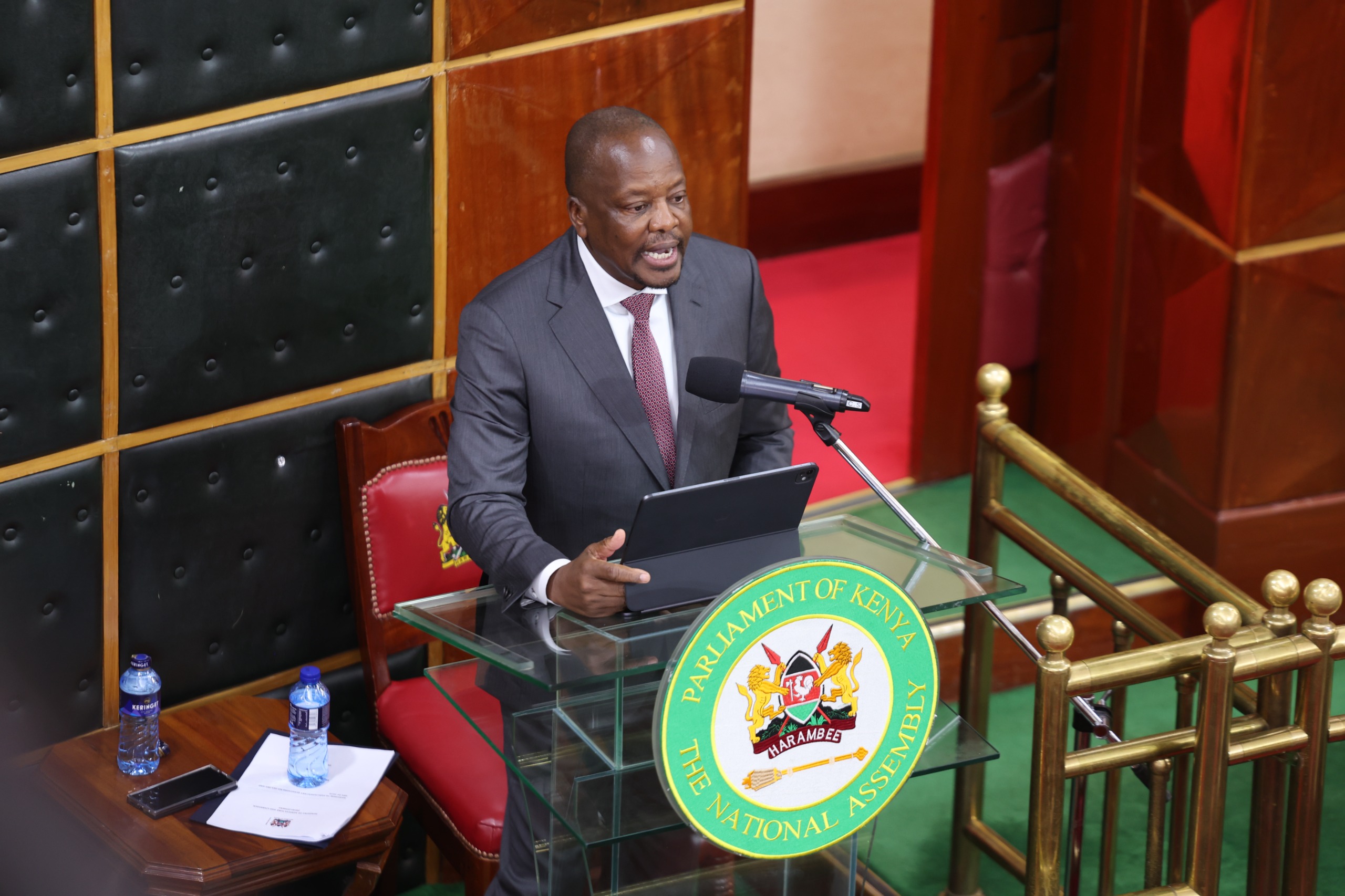
Kenya exports between 13 and 17 tonnes of miraa (khat) to Somalia every day, Agriculture Cabinet Secretary Mutahi Kagwe has confirmed.
He dismissed reports suggesting that more than 40 tonnes leave the country daily, describing such figures as “wildly exaggerated and not supported by any verified records.”
The CS attributed variations in reported export volumes to market fluctuations, differences in cargo capacity, and supply dynamics.
Kagwe assured Parliament that the government has harmonised export records across the Agriculture and Food Authority (AFA), KenTrade, and the Kenya Revenue Authority through a unified single-window platform.
“For the first time, miraa export data is seamless, verifiable, and synchronised across all agencies,” he said.
According to AFA, Kenya has exported more than 17 million kilogrammes of miraa to Somalia since July 2022, when the market reopened following a decade-long ban in Europe.
Miraa is an important crop in Kenya, grown by nearly 110,000 farmers on approximately 360,940 acres, supporting over 1.4 million livelihoods.
The country produces an estimated 32,000 metric tonnes annually, valued at Sh13 billion, with 80–90 per cent consumed locally. Somalia remains the main export destination.
To strengthen data integrity and safeguard revenue, the Ministry has introduced stricter export controls.
These include mandatory submission of airway bills and flight manifests, compulsory KEPHIS inspections for all consignments, deployment of AFA crop inspectors in export warehouses, and monthly reporting by airlines to the Kenya Airports Authority.
“We want to eliminate guesswork and ensure that every kilogramme leaving the country is documented,” Kagwe said.
The government is also exploring alternative export routes to stabilise supply and reduce logistical costs.
Options include opening additional landing ports in Somalia, operationalising road export corridors in northern Kenya, and launching direct miraa cargo flights from Isiolo to Manda Island to ease congestion at JKIA.
To support farmers, the Ministry has invested in irrigation, market sheds, boreholes, and earth dams across Meru, Embu, and Tharaka Nithi counties.
Miraa cooperatives have received a total of Sh220 million in seed capital, while the Miraa Research Institute, established under KALRO in 2021, continues to focus on scientific research, value addition, and market development.
Since 2023, the government has collected Sh67.9 million in miraa levies, which is being reinvested in research, market access expansion, and infrastructure improvement.
“The government remains fully committed to professionalising the miraa value chain and unlocking new export markets for our farmers,” Kagwe affirmed.