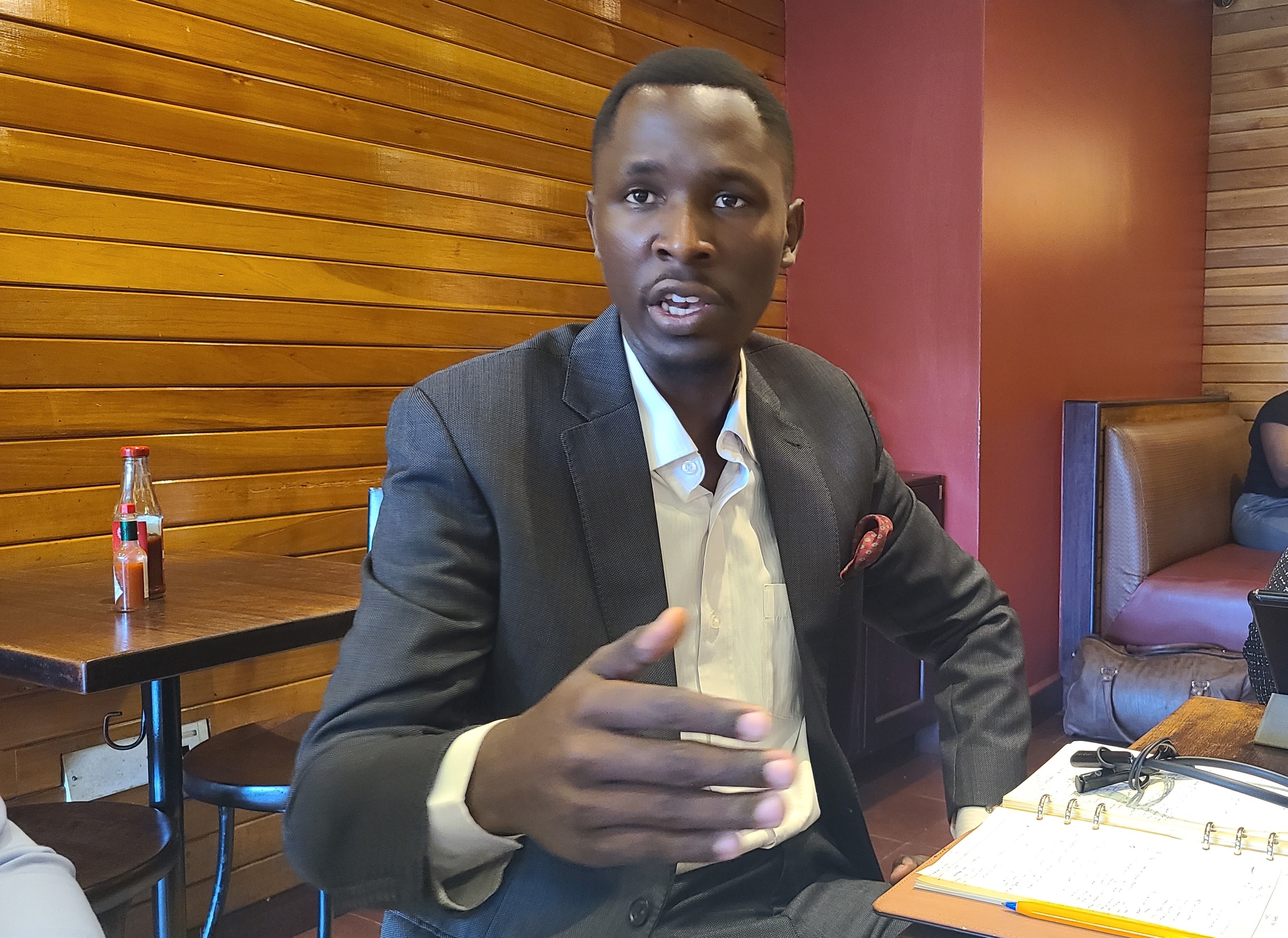


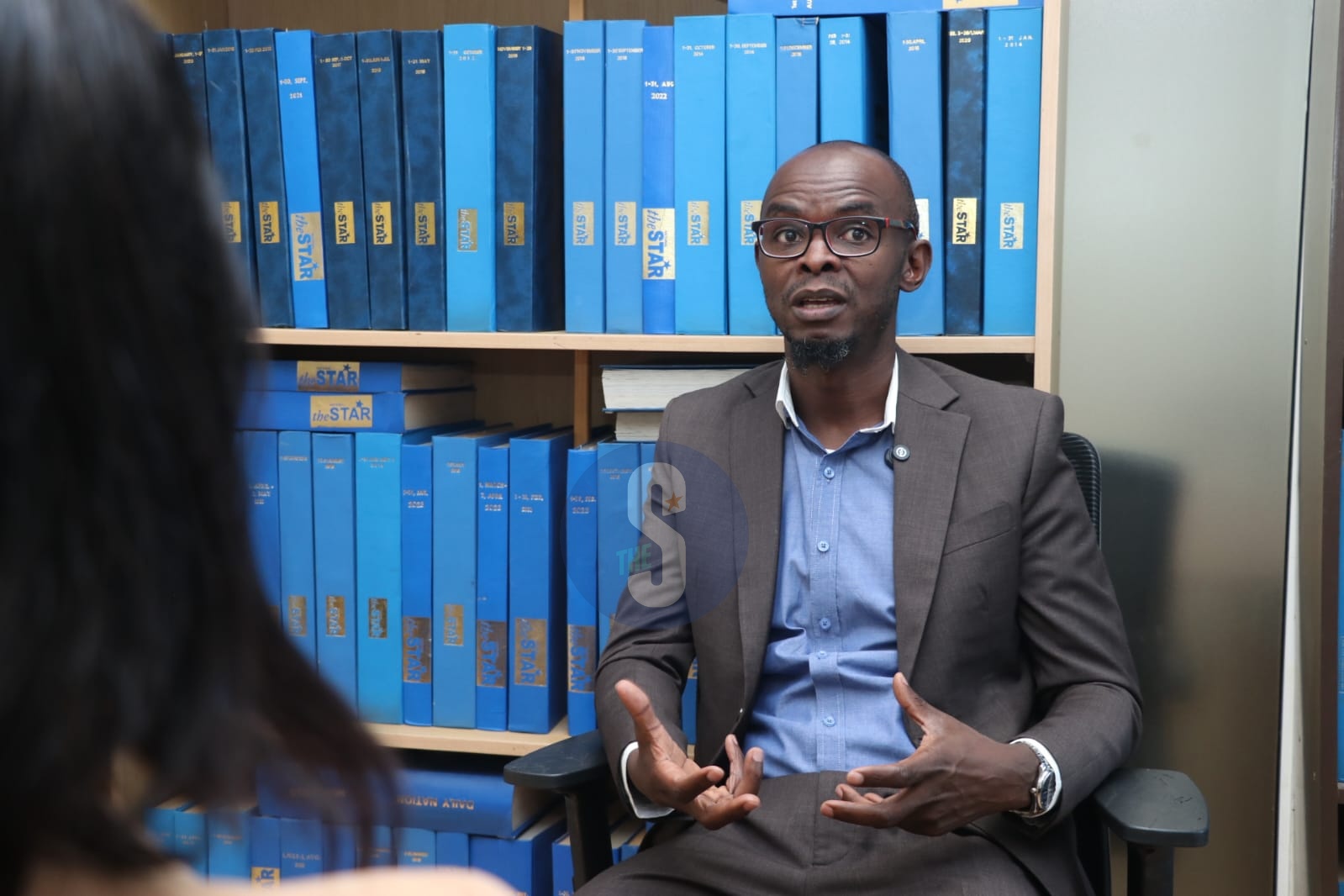
 CFA Society East Africa president and Raisin Capital principal Francis Nasyomba speaking during an interview with the Star at Radio Africa offices, Westlands on November 26, 2025/LEAH MUKANGAI.
When Francis Nasyomba speaks about the future of African finance, he does so with the conviction of a man who has lived the contradictions of the continent’s investment landscape; immense promise on one hand, chronic under execution on the other.
As the president of CFA Society East Africa, Nasyomba sits at the intersection of policy, global standards, and the on-the-ground realities of entrepreneurs searching for investment.
His message is clear: Africa’s next leap forward will not be funded from abroad but designed and executed by Africans themselves.
“We need to start doing things for ourselves,” he says with characteristic plainness.
“We need to not only start investing in Africa, but we also need to build local African talent that can play at a global level.”
The idea of Africa investing in Africa is not just a slogan but has become the foundation of his leadership philosophy and the driving force behind the upcoming Africa Investment Conference (AfIC) 2025, hosted in Nairobi.
It is also the heart of a movement rapidly taking shape across the continent.
The CFA Society East Africa President sees his role as shaping an investment profession that understands Africa’s unique needs and opportunities.
Nasyomba deliberately positions young people at the centre of that mission.
“Young people must come up with the skills that allow them to play globally while in Africa,” he said.
For him, the future of Africa’s capital markets depends not only on regulatory reforms or on access to liquidity, but on the quality of professionals being shaped today.
He describes his vision almost as an equation that carries skilled local talent, African capital, ideas, hence leading to sustainable African development.
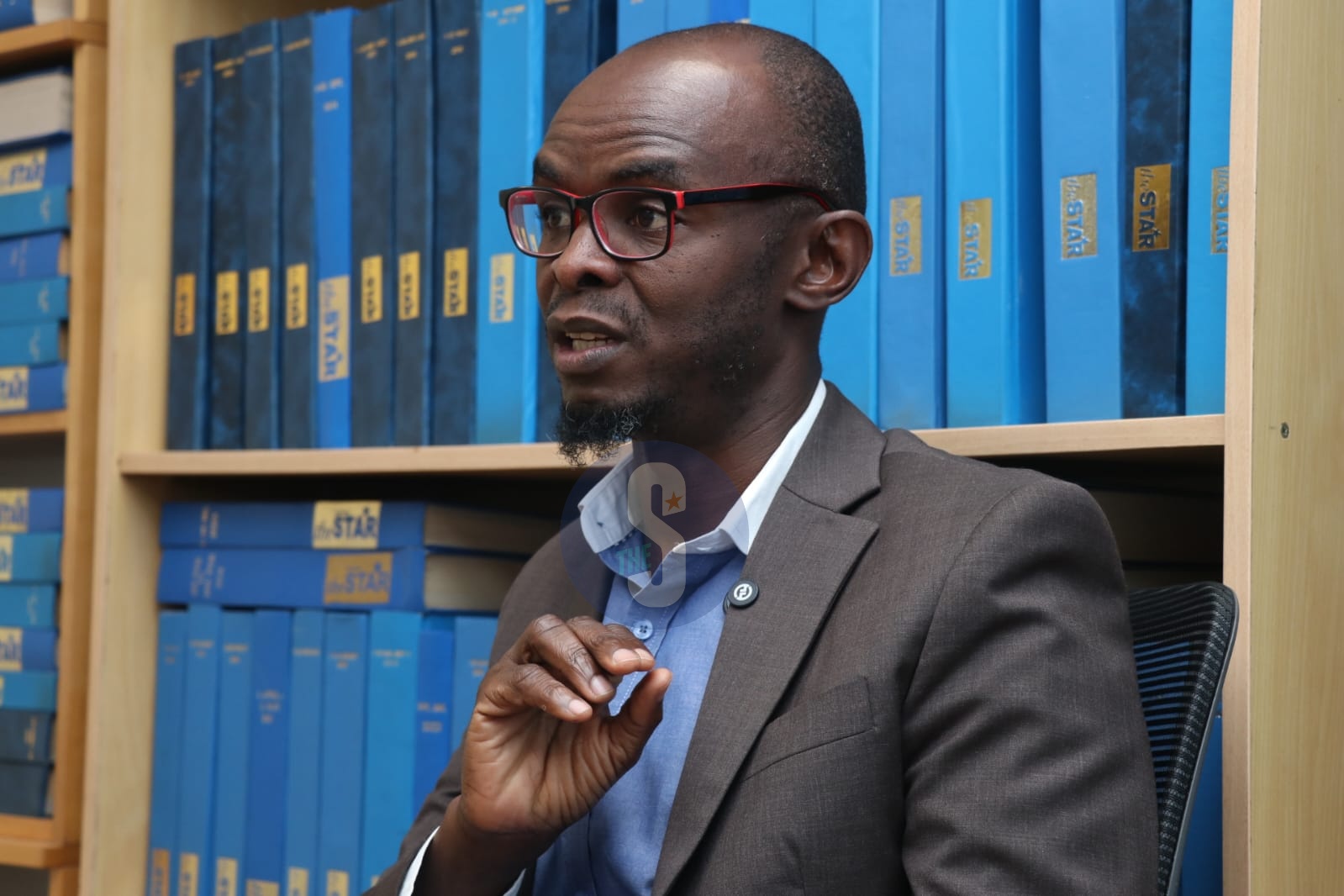
Raising Capital, the advisory firm he leads, is still a young business.
However, its early experience helping fast-growing African companies structure transactions, access funding, and navigate investor ecosystems has become a mirror to the challenges that the broader investment community faces.
“There has been a whole lot of cross-pollination,” he said.
Lessons learned supporting entrepreneurs inform how he leads CFA Society East Africa, and the society’s commitment to ethics, governance, and professional excellence reinforces how he builds Raising Capital.
The most important lesson, he said, is deceptively simple while noting that people come first.
“Whatever you do, start with people; your staff, team, society members,” he explained.
“Members are people, they’re not just numbers. Even suppliers, once you figure out that they are people, then you start figuring out what they need. Leadership begins with understanding and without that, organisations risk guessing what stakeholders want.”
On the state of the region’s investment environment, Nasyomba offers a balanced but sober assessment.
“East Africa has very strong long-term potential, but we also need to recognise the current challenges,” he says.
Those challenges, he believes, stem not from resource shortages or bad policies, but from one persistent bottleneck, execution.
“It’s not for lack of resources or policies but lack of execution. We need to start being able to execute, otherwise, we are facing a challenge coming up very soon in the young,” Nasyomba said.
With a population projected to be the world’s youngest by 2050, Africa must unlock opportunities urgently.
Without deliberate, large-scale job creation, millions risk being left behind.
The recent 42 per cent drop in foreign direct investment (FDI) into Africa has raised alarm across markets.
Nasyomba, however, believes this moment, while challenging in the short term, presents an opportunity for a structural reset.
“In the immediate term, maybe there is a concern because we have been relying heavily on foreign investment. In the medium to long term, we just need to shift how we’ve been doing it,” he acknowledged.
The CFA President simply questioned why we have been relying on FDI.
One of the most illustrative examples, he noted, is a recent transaction in which Raising Capital advised KCB’s investment into Pesapal.
This, he said, was an African institution backing an African fintech.
“That investment will never show up as foreign direct investment, but doing exactly the impact it is supposed to do,” he said.
For Nasyomba, Africa already has the capital it needs, but simply hasn’t reorganised itself to deploy it effectively.
He points to sectors like tourism, which is a major revenue generator that remains underleveraged when it comes to domestic reinvestment.
“We need to stop looking at it as if someone else must invest in us. We have to figure out how to invest in ourselves, within ourselves,” Nasyomba noted.
The CFA President further said that their global reputation is built on integrity, ethics, and investor protection.
“As a society, we believe we are doing enough, but the enough is not adequate,” he said amidst a pause.
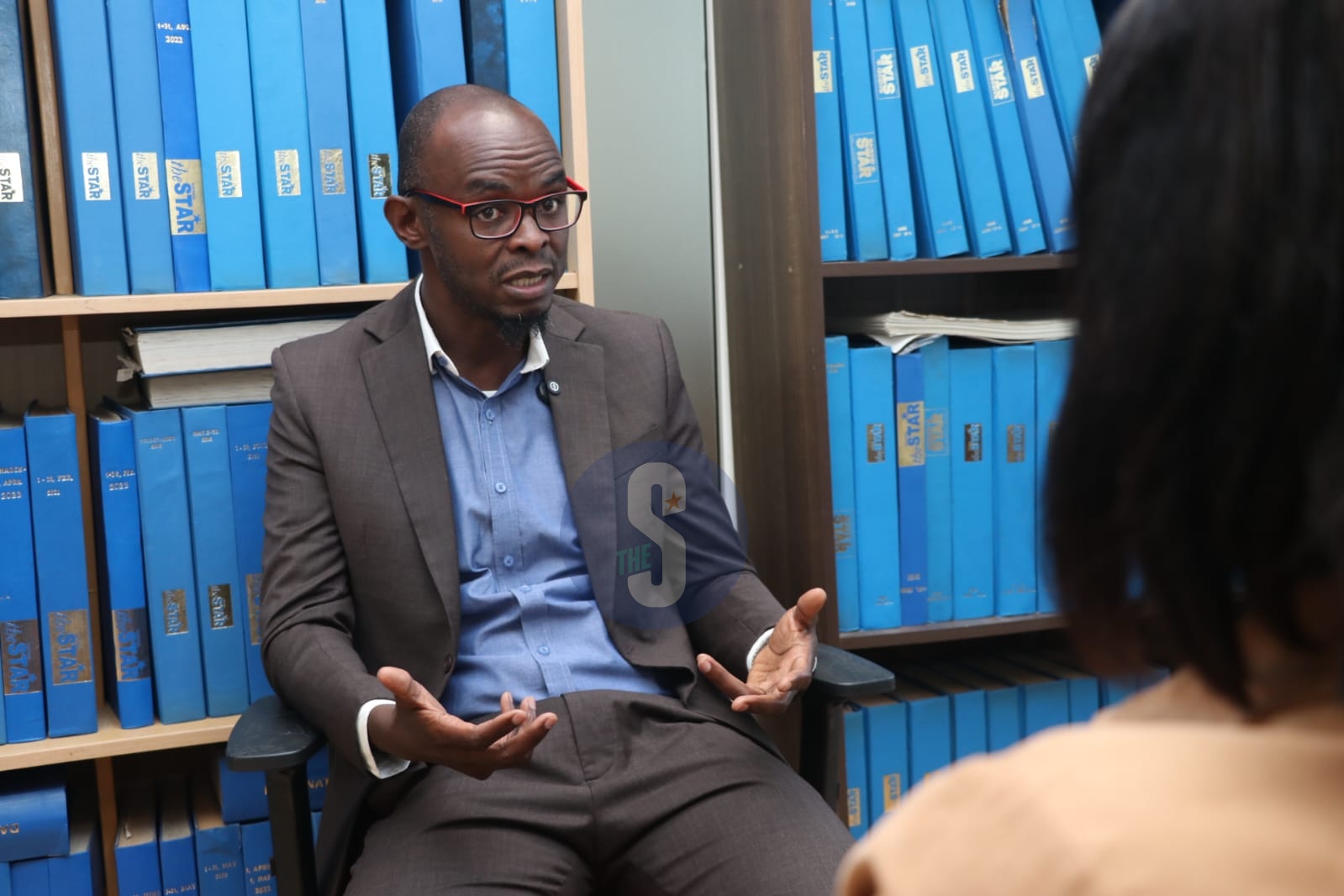
Nasyomba explained that while CFA members hold themselves to high ethical standards, the financial industry extends far beyond CFA charter holders.
He warned that there is always that one bad apple that ends up spoiling the whole basket.
The real power for accountability, he said, lies not just with regulators or professional bodies, but also with the industry itself.
“We need to call it out, professionals must have the courage to call out unethical behaviour and members of the public who rely on our services must also call it out,” he said.
According to Nasyomba, it is a shared responsibility and one that he believes Africa must take more seriously if it intends to attract large-scale, sustainable investment.
He further said that CFA Society East Africa has worked intentionally to strengthen partnerships across the continent.
Nasyomba noted, “The upcoming Africa Investment Conference (AfIC) 2025 is not just an East African event; it is co-hosted by societies from South Africa, Nigeria, Ghana, Egypt, and Mauritius.”
The CFA president said while emphasising the need of working together as Africa.
Beyond conferences, he noted that CFA societies across East Africa, including Ethiopia, Kenya, Rwanda, Uganda, and Tanzania, have ongoing agreements and MOUs with most capital markets authorities.
They collaborate on market development, transparency, and regional harmonisation.
Public engagement is also a priority, though Nasyomba admits that more must be done to help ordinary citizens understand capital markets and financial systems.
“Some will understand immediately, while others may need more information. However, we must keep speaking to the public,” he said.
The theme for the 2nd Africa Investment Conference (AfIC) 2025 is Africa Investing in Africa: Solutions to Challenges.
Earlier in the conversation, Nasyomba spoke about the 42 per cent fall in FDI.
That drop, he said, is the single biggest reason this year’s conference theme was chosen.
“We are relying significantly on outside capital to grow Africa. Right now, we have the resources, the talent and the policy frameworks. We need to start acting and stop talking,” the CFA President clarified.
For him, the reliance on external capital is not just unsustainable but dangerous.
Last year’s U.S. elections, he noted, triggered movements in global capital markets that cost Africa jobs and businesses.
“It affected us significantly because we are relying heavily on external financing,” he said.
“Solutions to challenges,” the second part of the theme, he said, speaks to Africa’s habit of discussing problems endlessly without implementing fixes.
Nasyomba clarified that there is nothing new he was going to tell about the challenges, since the problem is the execution.
He therefore insisted that the upcoming conference has to deliver measurable outcomes.
Two years from now, if the event moves to another African city, Nasyomba wants attendees to report on what was implemented, what failed and why.
For Nasyomba, the true value of AfIC 2025 will be determined not by attendance, prestige, or networking but by action.
“I want us to spend time discussing what do we do, not what the challenges are. Not the policy requirements. What do we do tomorrow? Next month? Next year?” he said firmly.
He pointed to one example while noting that pension funds in Kenya recently received approval to allocate part of their portfolio to alternative assets of up to 10 per cent.
However, most he said have not even reached the allowed ceiling.
“Before we ask for the limit to be increased, can we at least utilise what we already have?” he asked.
The CFA Society East Africa president noted that the conference will bring together a wide range of leaders from regulators to CEOs to global finance experts.
The conference, he said, will have notable participants from the chairman of the CFA Institute Board of Governors, the only African serving on the CFA Institute’s global Board of Governors to the president of the Somali Development Bank.
Asked how the event might influence policy or investment practice in East Africa and beyond, Nasyomba returned to the theme that has threaded through the entire conversation: execution.
“What we expect is that the conversations will bring clarity on what needs to be done, and on who must do it,” he said.
He wants the conference to set a new standard, one where African investors, institutions, and policymakers commit to specific, time-bound actions.
“Africa knows what its challenges are, and what we lack is action. Therefore, the conference must be different,” Nasyomba emphasised.
In many ways, that is the essence of Nasyomba’s leadership philosophy: a continent that stops waiting for solutions from elsewhere and a profession that calls out wrongdoing and champions ethics.
The CFA president also calls for a generation of African youth equipped not only with skills, but with global competitiveness and a financial sector courageous enough to invest confidently first in itself.
If he succeeds, he noted that AfIC 2025 may not just be a conference but could be the beginning of Africa’s next financial chapter.