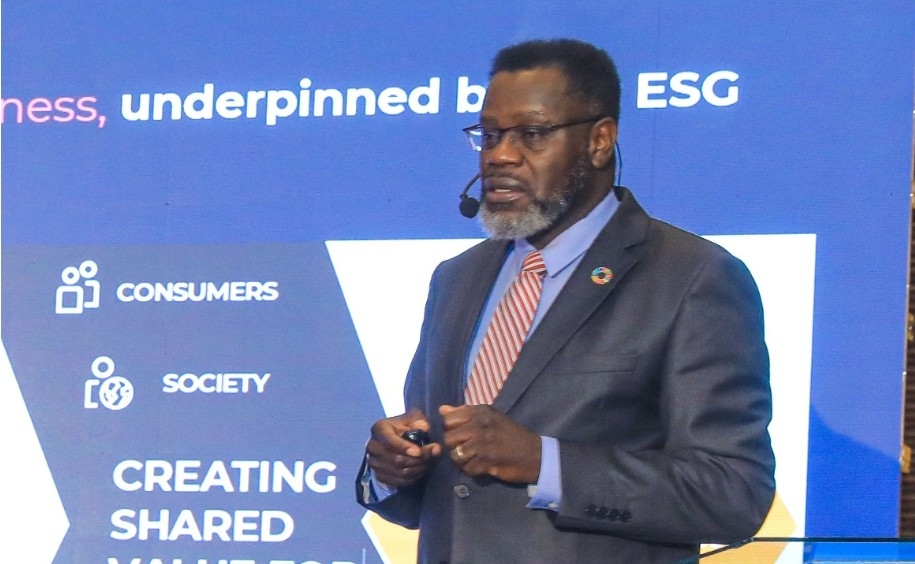


 AHF Kenya Country Director Dr. Samuel Kinyanjui during the launch of The Voices of Impact – HIV & STIs Media Awards at a Nairobi hotel/HANDOUT
A new award aimed at celebrating excellence in HIV reporting among Kenyan journalists has been launched in a bid to strengthen the country’s HIV response and keep the epidemic high on the national agenda.
The Voices of Impact – HIV & STIs Media Awards will recognise journalists who produce outstanding work on HIV, sexually transmitted infections, and related public health issues.
Organisers say the initiative seeks to elevate the role of the media in sustaining Kenya’s HIV fight, improve the quality of health journalism, and ensure the public remains informed on emerging epidemiological trends.
The awards come at a time when health experts are raising concerns over a resurgence of new HIV infections, persistent stigma, and a looming Sh28 billion funding gap threatening progress made over the past decades.
The initiative is a collaboration between AIDS Healthcare Foundation (AHF) Kenya, the National Syndemic Diseases Control Council (NSDCC), the National AIDS and STI Control Programme (NASCOP), and the Media Council of Kenya (MCK).
The launch event in Nairobi brought together editors, health reporters, policymakers, and stakeholders in Kenya’s HIV response.
AHF Kenya Country Director Dr. Samuel Kinyanjui said the new awards were necessitated by a decline in HIV reporting across Kenyan newsrooms, warning that reduced media focus risks slowing down the country’s ability to prevent new infections.
“HIV stories are not as prominent in the media as they used to be. We cannot confine HIV coverage to a once-a-year event during World AIDS Day,” Kinyanjui said. “If HIV is a national challenge, then its reporting should also be national.”
NASCOP Chief Executive Officer Dr. Andrew Mulwa echoed the call for enhanced journalism around HIV, noting that while the health sector provides data and statistics, it is journalists who humanise the epidemic.
“We keep talking about the numbers, but it is journalists who can give them a face,” he said.
Mulwa added that some regions that had previously been overlooked in awareness campaigns are now recording overwhelming new infections, signalling the need for renewed focus.
He cited government statistics indicating that 55 people are newly infected with HIV every day—equivalent to one new infection every hour. Alarmingly, nearly 40 per cent of these new infections occur among adolescents and young adults.
AIDS-related deaths also remain high at 57 every day, with men disproportionately affected due to late testing and higher rates of treatment drop-out.
While an estimated 1.3 million Kenyans are currently living healthy lives thanks to effective HIV treatment, Mulwa noted that stigma continues to impact their daily lives, often discouraging testing and adherence to medication.
“Sustained, accurate reporting remains essential to informing the public, shaping national dialogue, and driving action,” he said.
Organisers emphasised that the Voices of Impact Awards will not only empower journalists but also reinforce the national HIV response at a time when donor support is shrinking. With nearly 70 per cent of Kenya’s HIV programmes funded by external partners, the projected funding gap in 2025 poses a significant threat to ongoing efforts.
The awards are expected to inspire a renewed commitment within the media to highlight successes, challenges, and lived realities of HIV in Kenya, ensuring the fight remains visible and well-resourced.