TAXPAYERS are set to shoulder a
Sh8.2 billion bill for Covid-19 vaccines that were never delivered and
later destroyed in a European warehouse without proper oversight
from government officials.
A new audit has revealed that the
National Treasury has acknowledged the liability by writing a letter
proposing the modalities of settling
the debt owed to the Belgian supplier.
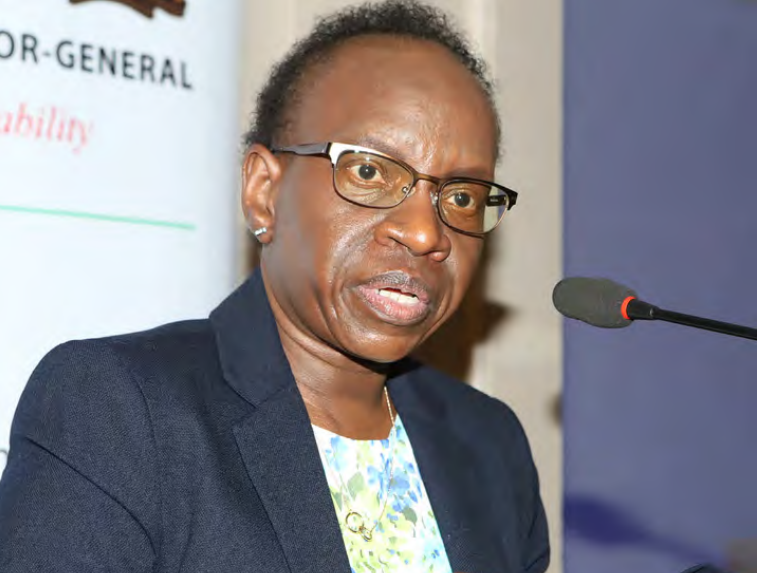
Auditor General Nancy Gathungu has detailed the findings in
a report on the Covid-19 Health
Emergency Response Project for the
year ending June 30, 2025, tabled in
Parliament on November 6.
According to the audit, the Ministry of Health, through the African
Vaccine Acquisition Trust, committed to purchasing a substantial consignment of vaccines.
However, after only 1.8 million
doses were delivered, the demand
for vaccinations went down following the World Health Organization’s declaration that the pandemic
was no longer a global emergency.
This left a balance of 2,721,600
doses, valued at $64 million (approximately Sh8.2 billion), that
had been manufactured but were
no longer needed.
The audit report states that the
vaccines, which never left a warehouse in Belgium, were subsequently destroyed in August and October
2024.
“These unshipped vaccine doses
were indicated as no longer needed
and were destroyed in the months
of August and October 2024 as per
the destruction certificates,” the report reads.
The National Treasury is preparing to pay the full amount to Johnson & Johnson, for the destroyed
vaccines as per the audit report.
Gathungu has raised concerns
about the events, first citing that
there was no evidence of approval
by the Cabinet, putting the concerned implementing agencies led
by the Health ministry on the spot.
The Auditor General says her
investigation uncovered that there
was no approval to destroy doses,
casting doubt on the financial commitment of the stated magnitude.
Furthermore, and perhaps more
alarmingly, the audit found no
proof that a Kenyan multi-agency
team of experts ever travelled to
Belgium to verify the fundamental
facts.
Officials failed to physically
confirm whether the vaccines had
actually been manufactured, check their expiry status, or witness the
destruction process firsthand.
“There was no evidence that
the multi-agency team, made up
of critical experts, the user department and mandate holders from
the Kenyan government visited
the warehouse in Belgium to verify whether the vaccines had been
manufactured, their expiry status
and witness the destruction exercise,” the report reads.
This means the government relied solely on the ‘destruction certificates’ from the manufacturer and
the word of the supplier, pointing
to how procurement rules were ignored.
“In the circumstances, the value
for money was not realised,” Gathungu said in the report, which now
awaits a review by the House’s audit committees.
The project management in the
report acknowledged the observation, stating that the country did
not need the vaccines after the pandemic threat had receded.
They revealed that attempts to
negotiate a substitute product from
the manufacturer, Johnson and
Johnson, failed. The ministry says
J&J said they had already manufactured the vaccines.
“AVAT team says that Kenya has
to meet its obligations and pay for
the vaccines even though they will
not be used,” the report reads.
Kenya, AVAT, and Afrexim Bank
entered into a participating agreement in May 2021 for the procurement of Covid-19 vaccines.
Management required the government
to procure a minimum of 10 million doses at $10.
The government
placed an order for 13.3 million
vaccine doses.
However, delivery was only for
1.8 million doses, with the balance
pending deliveries.
Management
said a further 2.7 million was manufactured but not shipped.
The unshipped component was
indicated as no longer needed and
was due for destruction, as per the
ministry brief to auditors.
It is emerging that the management was waiting for Cabinet approval, as at the time the audit review was concluded.
AVAT wrote to Kenya on June 10,
2024, indicating that the bill had
accrued to the Sh8.2 billion, being
the cost of the vaccine and accrued interest of $7.1 million (at that time
equivalent to Sh930 million).
AVAT
asserted that the vaccines were
made available for delivery as per
the terms of the contract, pointing
to the decision by MOH as not affecting the claim.
The Health Ministry indicated
that the government had engaged
the Afrexim Bank to have the interest waived by the bank had not acceded to the request as at the time of
the audit.
“We agree with the auditor’s observation,” the management
response reads, adding that the order was shelved after the WHO declared the virus no longer a public
emergency.
“AVAT team says that Kenya has
to meet its obligations and pay for
the vaccines even though they will
not be used,” the report reads.
The
management adds that, “We are
awaiting a Cabinet decision on this
matter, having submitted a Cabinet
memo to the Health Cabinet Secretary.”
The Sh8.2 billion liability comes
on top of other financial losses identified in the audit, including ongoing commitment fees on undrawn
loans intended for vaccine purchases that were never made.
It has since emerged that the
government has failed to withdraw
or utilise some Sh8.7 billion that
was committed by the bank on the
Covid-19 response project.
As a result, the amount attracts
Sh43 million every year in commitment fee, worse off in the face of the
project having been closed on September 30, 2025.
“This is making it difficult to utilise the remaining funds within the
remaining period,” Gathungu said,
pointing to the violation of the public finance laws.
“In the circumstances, management was in breach of the law and
an unnecessary commitment fee
at a rate of 0.5 per cent per annum may be incurred,” the report
reads.
The revelation has cast a dark
shadow over the otherwise positive performance of the multibillion-shilling project, which was
largely hailed as successful in bolstering the country’s health infrastructure.
The Covid-19 emergency response project is credited with helping a number of hospitals get testing labs, medical oxygen, and waste
management systems.






![[PHOTOS] Ruto hosts Bungoma delegation at State House](https://cdn.radioafrica.digital/image/2026/07/38c18064-4bd7-4a52-9171-4dcce631a74b.webp)