They are shaping up as ballot measure of political
formations and leadership strength across regions that
could define the 2027 General Election.
For both the ruling Kenya Kwanza Alliance and the United
Opposition, every win or loss carries weighty implications — not just for
control of Parliament and county assemblies, but also for the perception of
national momentum.
The IEBC has finalised registration of 181 candidates for
the 24 electoral areas, which include seven parliamentary seats — six in the
National Assembly (Ugenya, Kasipul, Mbeere North, Banisa, Magarini, and Malava)
and one in the Senate (Baringo). There are also 17 ward-level contests across
various counties.
“Candidates are commencing campaigns upon successful
registration by the respective returning officers. The campaigns shall end on
Monday, November 24, 2025, being 48 hours before the by-election day,” said
Gideon Balang, IEBC’s Manager of Electoral Operations.
He added that campaigns will run daily between 7.00 a.m. and
6.00 p.m., urging aspirants to adhere to the Electoral Code of Conduct.
For IEBC, these polls will serve as a litmus test for its
credibility and preparedness ahead of 2027, following years of scrutiny over
electoral transparency and operational independence.
For the Kenya Kwanza Alliance, led by President William
Ruto, the by-elections are a chance to reaffirm that its development agenda and
economic reforms resonate with Kenyans despite public discontent over issues
like the cost of living.
Conversely, the United Opposition sees the by-elections as
an opportunity to reclaim lost ground, demonstrate enduring grassroots support,
and show that it remains a credible alternative capable of mounting a strong
2027 challenge.
Among the six National Assembly seats and one Senate
position, the Malava and Mbeere North by-elections have emerged as the most
politically charged contests — both with implications that extend far beyond
their constituencies.
In Malava, Kakamega County, the upcoming by-election has
become a fierce contest for regional supremacy and a test of shifting loyalties
within Western Kenya — one of the country’s most crucial voting blocs.
Political analyst Joseph Mutua described the Malava poll as
“a high-stakes battle between the Kenya Kwanza administration and the United
Opposition.”
“The stakes are high in this by-election. No one wants to
imagine that they will lose the election,” Mutua said. “The contest will serve
as a mirror of the region’s current political leanings and could offer early
clues about how Western Kenya may vote in 2027.”
According to Mutua, leaders from both sides — particularly
UDA under Kenya Kwanza and the Opposition alliance — view the race as a crucial
barometer of their popularity.
The by-election is also a litmus test for Prime Cabinet
Secretary Musalia Mudavadi, who is backing UDA’s candidate David Ndakwa.
A victory would cement his influence in Western politics
ahead of 2027, while a loss could weaken his standing within Kenya Kwanza.
However, the race has exposed deep internal cracks within
the coalition.
Kakamega Senator Boni Khalwale, a UDA member, is supporting
opposition candidate Seth Panyako of DAP-K. Panyako’s campaign is also backed
by Trans Nzoia Governor George Natembeya and DAP-K party leader Eugene Wamalwa.
“I decided to support Ndakwa for the Malava seat in the
spirit of the broad-based government,” said Kakamega Deputy Governor Ayub
Savula, who has defied his DAP-K party to support the UDA candidate.
“I have already hit the ground running, campaigning for
Ndakwa together with other Kenya Kwanza politicians. I am confident we will
emerge victorious.”
Savula added that he abandoned Panyako because “the party
leadership is not united in drumming up support for him.”
Khalwale, meanwhile, defended his decision to back Panyako,
arguing that UDA failed to honour “the family of the late Malulu Injendi” by
denying his son Ryan Injendi the party’s nomination, even though the coalition
has previously endorsed relatives of deceased politicians elsewhere.
The presence of Mudavadi, National Assembly Speaker Moses
Wetang’ula, and Presidential aide Farouk Kibet on the campaign trail
underscores how vital the seat has become to the ruling coalition.
In Mbeere North, Embu County, the contest is pitting
President William Ruto against his former deputy, Rigathi Gachagua, who now
leads the Democracy for the Citizens Party.
The United Opposition has thrown its weight behind
Democratic Party candidate Newton Karish, while the ruling UDA is supporting
Leonard Muthende.
Ruto has dispatched Public Service Cabinet Secretary
Geoffrey Ruku to lead the campaign for Muthende, while former CS Justin Muturi,
the ex-Democratic Party leader, is rallying behind Karish.
Analysts argue that the Mbeere North race could either
reinforce Ruto’s authority in Mt Kenya or embolden Gachagua’s new political
venture.
“A win for UDA will offer Ruto the much-needed boost,
signalling that he retains a foothold in the region,” said governance expert
Bosco Kiura, who once advised former Embu Governor Martin Wambora.
“However, a loss would be politically disastrous,
reinforcing perceptions that Ruto has lost control of Mt Kenya.”
Kiura added that Mbeere North politics are defined less by
party and more by clannism and personal networks.
“You recall the fight between Gachagua and Kindiki about Mt
Kenya West and East. Whoever wins will have a point to prove and say, ‘I am the
one with this ground,’” he noted. “Whichever way it goes, it will have
casualties nationally and locally.”
In Magarini Constituency, Kilifi County, ODM is seeking to
defend its coastal dominance and honour the legacy of Raila Odinga.
ODM has issued a direct ticket to former MP Harrison Kombe,
who is also enjoying backing from both the ruling UDA and Senate Speaker Amason
Kingi’s Pamoja African Alliance (PAA).
Kombe faces stiff competition from nine candidates,
including 25-year-old Amos Katana (Independent), Sarah Wahito Gakahu (Kenya
Moja Movement), Samuel Nzai (Wiper), Emmanuel Kalama (We Alliance Party), and
Rev. John Sulubu (Kenya Social Congress).
In Baringo County, following Gideon Moi’s withdrawal from
the senatorial race, Vincent Kiprono Chemitei of UDA has emerged as the
frontrunner.
A victory for Chemitei would solidify Ruto’s grip on the
Rift Valley, while a loss would dent the region’s perceived unity under Kenya
Kwanza.
In Banissa, the race is largely symbolic — residents have
rallied behind UDA’s Ahmed Maalim Hassan, the brother of the late MP Kullow
Maalim Hassan, against People’s Liberation Party (PLP) candidate Isaac Malela.
In Ugunja, ODM is banking on Moses Omonsi, a former
Constituency Development Fund manager, to retain the seat vacated by Energy
Cabinet Secretary Opiyo Wandayi. Omonsi faces Chrispine Oduor (KANU), Benson
Obol (UGM), and Orodi Odhiambo (Wiper).
In Kasipul, youthful ODM candidate Boyd Were faces a crowded
field including Philip Aroko (Independent), Robert Ajwang’ (Independent), and
Omondi Koyoo (National Liberal Party).
ODM hopes to sweep both seats to maintain its stronghold in
Nyanza.
Beyond the parliamentary seats, the 17 ward-level contests —
from Kariobangi North (Nairobi) to Chewani (Tana River) and Kisa East
(Kakamega) — will provide vital insights into grassroots sentiment ahead of
2027.
According to political observers, the November 27
by-elections will serve as a microcosm of Kenya’s political dynamics; testing
alliances, exposing rifts, and setting the tone for coalition realignments.
Each outcome will be dissected for meaning — whether it confirms
the government’s resilience, signals opposition resurgence, or hints at voter
fatigue.
“Every vote cast on November 27 will carry more than just
local implications — it will be a message about trust, governance, and the
country’s political direction,” said Mutua.
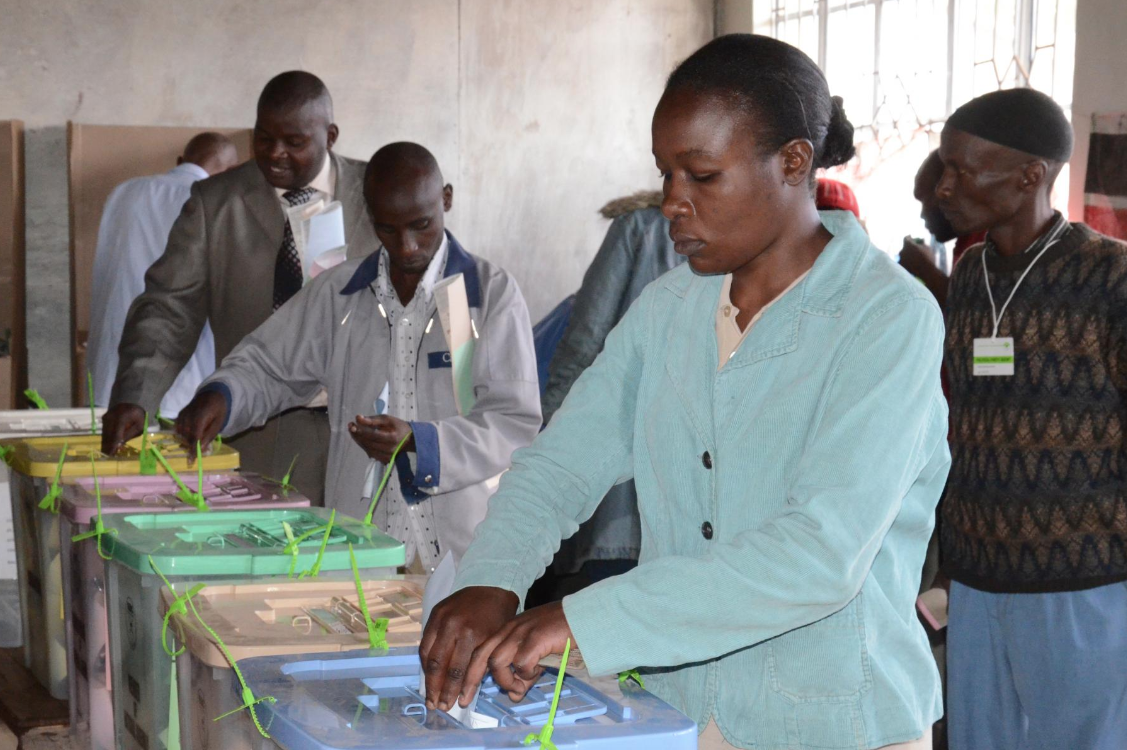
For the IEBC, the task is equally monumental, ensuring a
credible, peaceful process that restores public confidence.



![[PHOTOS] The new Ngong –Naivasha Road viaduct](https://cdn.radioafrica.digital/image/2026/06/64d4f771-4432-4aee-ba3c-2f304c4436ec.jpg)