A severe cash crisis is threatening to cripple the fight
against corruption in the country.
A new report has revealed how the national anti-graft
agency is struggling with a big deficit and chronic underfunding.
The alarming financial state of the Ethics and
Anti-Corruption Commission (EACC) is exposed in the latest audited report for
the year ended June 30, 2025.
The report by Auditor General Nancy Gathungu shows the commission sinking further into the red.
This is despite successfully recovering Sh3.4 billion in
stolen assets and preventing the loss of Sh16.5 billion of public funds.
The commission reported a net deficit of Sh89.1 million,
a significant increase from the Sh61.2 million deficit in the previous year.
“Management disclosed the poor financial performance,
attributing the increased deficit mainly to depreciation expense amounting to
Sh131 million,” the report said.
While management blames non-cash accounting entries like
depreciation, the auditor general has flagged this as a "material uncertainty"
that threatens the EACC's long-term operational sustainability.
“The provisions for depreciation is not matched with any
fund to the accumulated depreciation for the replacement to cover obsolescence
in the asset base,” Gathungu said in the report seen by the Star.
“My opinion is not modified in respect of this matter.”
More tellingly, the report shows the direct impact of
budget constraints on frontline operations.
A plan to recruit 200 new staff was scrapped entirely due
to "inadequate budgetary provisions," hampering the commission's
capacity to handle its caseload.
This is reflected in its investigative output, where it
completed only 229 corruption investigations against a target of 424.
Furthermore, the commission held Sh23 million in unpaid
trade payables, which it attributes to underfunding from the National Treasury.
“In all this, we remain cognisant of the tight economic
times we are in as a nation,” EACC chairperson David Oginde acknowledged in
his statement.
“Though our budgetary allocation often falls far short
of what we would require for effective output, we continue to exercise due
prudence in the use of the public resources entrusted to us.”
The auditor general also raised concerns about the
accountability of confidential funds used for security operations, recommending
a tightening of regulations and internal controls.
Besides the cash constraints, she called for more
prudence in the management of the agency’s confidential expenditures.
She said much as the commission filed the necessary
returns, like the certificate of confidential expenditure and declaration
affirming proper use of funds, more needs to be done.
“There is a need to enhance accountability of
confidential expenditures through review of regulations to clearly define
entities eligible for confidential security-related operations,” Gathungu
said.
She said EACC, like other entities that have the vote,
should establish internal oversight mechanisms and processes that include budget
projections and post-operational summaries.
Gathungu said the materials would help address risks and
ensure responsible use and accountability of the funds, beyond the certificate.
“The measures will strengthen governance, foster trust and ensure funds are utilised responsibly without compromising state security,”
the report reads.
The financial strain comes at a time when the EACC is
demonstrating critical results in its operations and case management.
The report highlights a major success in court, where the
conviction rate for corruption cases surged to 64 per cent, up from a dismal 26
per cent the previous year.
The commission also disrupted corruption networks to
avert losses of Sh16.5 billion, a figure more than double its annual target.
The paradox is that EACC is mandated to lead the
national anti-corruption effort, yet its own financial health is precarious.
Among the calls the agency has made to Parliament is to be
allowed to retain 50 per cent of the value of assets they recover from graft
cases.
CEO Abdi Mohamed, in March this year, urged the Senate to
consider amending the law to authorise the retention as a way of sustaining the
agency’s operations.
He argued the additional amounts–estimated at Sh2.5
billion annually- would enable the EACC to hire more staff and speed up
investigations and other activities.
INSTANT ANALYSIS
With a backlog of unresolved deficits awaiting a verdict
from the Parliamentary Public Accounts Committee, the EACC’s ability to
maintain its intensified fight against graft is in question. The report paints
a clear picture that without a more reliable and adequate financial lifeline
from the National Treasury, the agency’s crucial work of recovering public
wealth and holding the corrupt accountable faces an uncertain future.

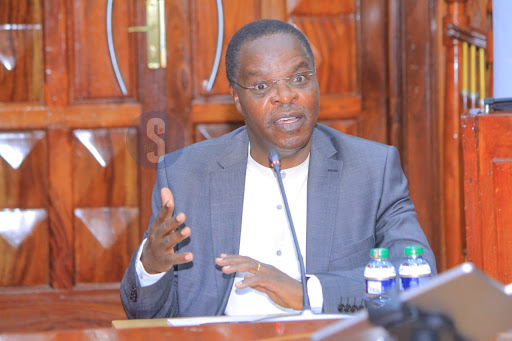
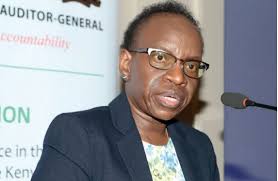 Auditor General Nancy Gathungu/HANDOUT