The National Police Service Commission has introduced stringent
new regulations to combat bribery, favouritism and backdoor deals in police
recruitment.
The National Police Service Commission (Recruitment and
Appointment) Regulations, 2025, have been tabled in the National Assembly for
consideration and approval by MPs.
The rules establish stringent checks and balances designed to
ensure that only the most qualified and suitable Kenyans join the service.
If implemented, it could reduce the rampant corruption in the
recruitment of officers.
This comes amid a new freeze of the hiring process by the
Employment and Labour Relations Court judge Hellen Wasilwa. The Friday
suspension means new recruits will have to wait until the mention of the case
on October 21.
For the first time, it is explicitly illegal to "solicit,
offer, or receive any payment or other form of consideration" for a
recruitment slot.
Anyone caught, whether a candidate, a member of the public, or a
senior officer, faces prosecution under the Anti-Corruption and Economic Crimes
Act.
Recruitment would be conducted in phases, starting with the
submission of applications online, shortlisting through the recruitment system
and after which candidates would be notified.
Phase two consists of verification of documents, physical
assessment of the candidates, and medical assessment, after which recruits will
be issued with admission letters.
The third phase would involve admission of the successful candidates
into the designated police training colleges.
“A person interested in filling an advertised vacancy shall
apply through the recruitment system or, under special circumstances, through
such other method as the commission may specify in the advertisement” the
regulations read.
Selection would also be strictly based on a publicly defined
concept of "merit”, including a candidate's ability, aptitude, integrity
and performance in objective physical and medical tests.
“The commission shall only shortlist candidates who meet the
minimum requirements,” the rules state, details showing that only shortlisted
candidates would be contacted and issued details of the recruitment centre for
physical assessments.
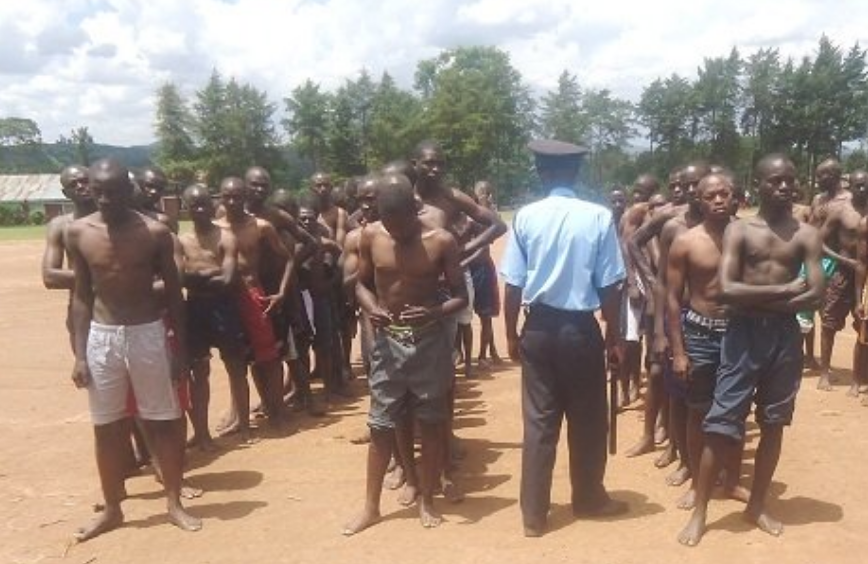
The infamous ‘running test’, where many youths have been
eliminated in the history of police listing drives, would also be standardised
- 6km for men, 4km for women, with all criteria applied uniformly.
It sets the minimum height for men (5’8”) and ladies (5’3”),
with other checks including flat foot, limping while walking, teeth, eyes (wink
with each, has squint), and whether the hands can stretch straight.
Recruiters will also check if a recruit has all fingers, knock
knees, bow legs, as well as any observable deformities on the elbow.
“A candidate, other than a shortlisted candidate, shall not be
permitted to attend the verification of documents and physical assessment.”
In the new dispensation, every official serving on a recruitment
panel would be required to take a solemn, legally binding oath of integrity.
They would be under compulsion to swear to "discharge their
duty honestly, impartially and without fear or favour”, and uphold the
principles set in the constitution.
Any breach of the oath would be a punishable offence.
In what could guard against local patronage, recruitment panel
members would be banned from serving in their home constituencies, to reduce
influence by relatives, local leaders.
“A recruitment panel member shall not be assigned to serve in
the constituency from which he originates,” the rules read.
The regulations create a multi-layered oversight structure that
makes it nearly impossible for corruption to go undetected.
Independent observers from civil society and other institutions
will be formally accredited to monitor recruitment centres.
As per the regulations, the officers would have unrestricted
access and must file official reports on what they witness.
“The chairperson of a recruitment panel shall grant accredited
observers access to the designated recruitment centres,” the regulations state.
In further checks, the process is split between three
committees: the recruitment panels on the ground, a technical committee
consolidating results and a high-level steering committee giving final
approval.
The impact assessment of the regulations says that the
separation of powers ensures no single group can manipulate the entire process.
The steering committee would also hold the ultimate power to
annul the results of a single recruitment centre or even the entire national
exercise if evidence of widespread cheating emerges.
"The object of these Regulations is to ensure that the
recruitment process is fair, objective, transparent..." the document
states.
To achieve this, all vacancies will have to be advertised within
14 days of occurrence, in national newspapers and on the NPSC website.
The final list of selected candidates must be published online
and in the press.
In the same vein, a secure, auditable online recruitment system
will be used to minimise human interference in application processing.
There are claims of vested interests that have used police
recruitment as a political tool and a source of illicit wealth for decades.
The proponents say that the regulations, if implemented
faithfully, will not only curb corruption but also improve the professionalism
of the police service.
NPSC, for every recruitment process, would be required to form a
technical committee comprising key officials and heads of training.
A person may enter the service as a police constable, police
cadet, specialist and exceptionally talented civilian staff or police
reservist.
INSTANT ANALYSIS:
The message from the NPSC is clear that the era of ‘kitu kidogo’
at recruitment centres is over. The commission would also independently verify
or authenticate documents submitted by a candidate. When the new rules, which
MPs can only check for compliance with other acts of Parliament and procedures
for enactment, take effect, Kenyans will be watching closely to see if they
finally bring the clean, merit-based process they have long been promised.











![[PHOTOS] Red carpet in Pretoria as Ruto begins South Africa visit](https://cdn.radioafrica.digital/image/2026/06/abe3e750-6e5a-4394-a45c-899768be6240.jpeg)