The Auditor General has raised serious concerns over management
of Kenya’s Contingencies Fund, citing irregular disbursements and lack of
accountability in spending public funds meant for emergencies.
The audit revealed that three ministries, Defence, Internal
Security and National Administration and Irrigation, failed to provide
expenditure returns of the stated amounts advanced from the fund. Irregular use
by other departments was also cited.
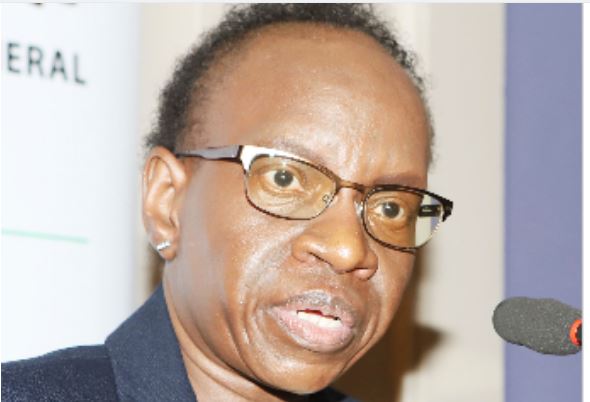
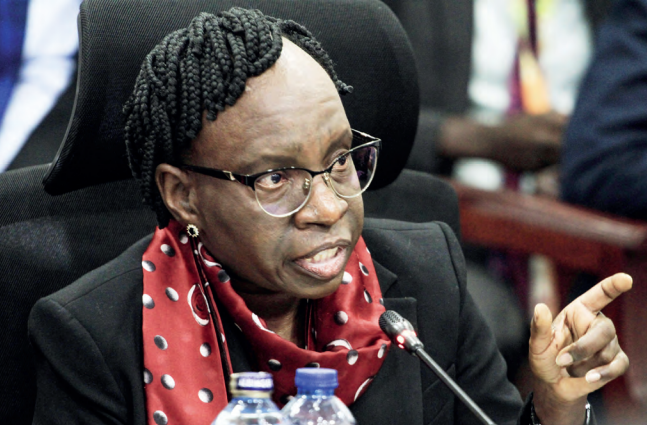
In a new report seen by the Star, Auditor General Nancy Gathungu
flagged unsupported expenditures and misuse of funds intended for “urgent and
unforeseen” needs.
As a result, she issued a qualified opinion on the Contingencies
Fund’s books for the period covering June 30, 2024. At the top of the list are unsupported refunds totalling
Sh1.07 billion from the fund.
Expenditure returns are essential to verify how public funds are
spent.
“In the circumstances, the validity of the amount disbursed from
the fund of Sh1,070,000,000 could not be confirmed,” the report reads,
indicating a significant lapse in transparency and accountability.
Gathungu further flagged irregular use of emergency funds.
This follows the finding that Sh130 million disbursed to the
State Departments for Public Works, Crop Development, and Livestock was used
for goods and services that did not meet the legal threshold.
The department reported the spending had been used for “urgent
and unforeseen” needs as provided by the Public Finance Management (PFM) Act,
2012.
“A review of the respective expenditure returns revealed that
the expenditure was in respect of goods and services that could not meet the
legal threshold,” Gathungu said.
Additionally, Sh3.83 billion was advanced to the State
Department for Arid and Semi-Arid Lands (Asals) and Regional Development
between December
2023 and June 2024.
The Auditor General said the department had already included
these activities in its approved supplementary budget, raising questions about
the urgency of the expenditure.
“No explanation was provided to justify the funding of the
expenditure from the fund, yet the department had included the activities in
the approved supplementary budget,” the report noted, casting doubt on the
propriety of the spending.
The Contingencies Fund was established under Article 208 of the
Constitution and is designed to address emergency needs where no other
budgetary provision exists.
It is managed by the National Treasury, with permanent capital
capped at Sh10 billion, although the amount fluctuates based on the prevailing
fiscal space. Sh5 billion is the projected spend for the next financial year.
It emerged that during the 2023-24 financial year, a total of Sh6.53
billion was advanced from the fund, more than double the Sh3.11 billion
disbursed the previous year.
The funds were primarily allocated for drought and flood
mitigation, including El Niño response measures.
The audit findings come at a time when the National Treasury is
grappling with revenue shortfalls and increasing pending bills, which stood at
Sh526 billion in June 2025.
Despite these challenges, the Treasury reported a 79.76 per cent
budget absorption rate for the year, an improvement from the previous year.
However, the Auditor General’s report suggests that improvements
in spending efficiency have not been matched by corresponding gains in
accountability.
In its management report, the National Treasury acknowledged
challenges such as resource constraints, technical staff shortages and the need
for better monitoring and evaluation systems.
It also highlighted efforts to enhance revenue mobilisation and
strengthen tax administration.
The Treasury, however, did not specifically address the audit
queries related to the Contingencies Fund in the published statements.
The audit opinion underscores weaknesses in the system used to
manage emergency funds.
It also raises questions about adherence to legal and procedural
safeguards designed to prevent misuse of public resources.


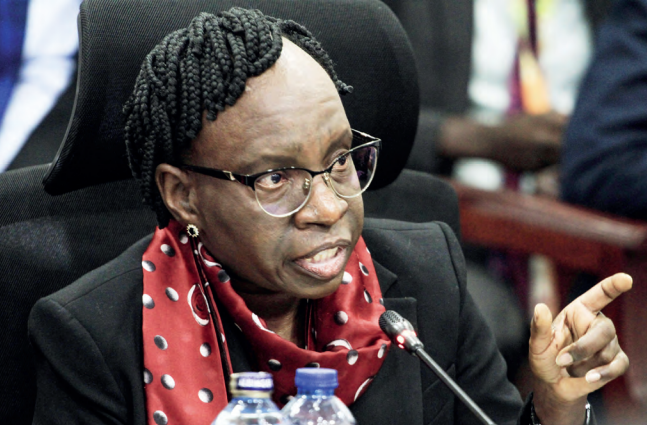 Auditor General
Nancy Gathungu
/FILE
Auditor General
Nancy Gathungu
/FILE