A
new audit has flagged the tenure of the Kenya Petroleum Refineries Limited
(KPRL) chief executive after it emerged that he has acted for more than four
years.
Auditor
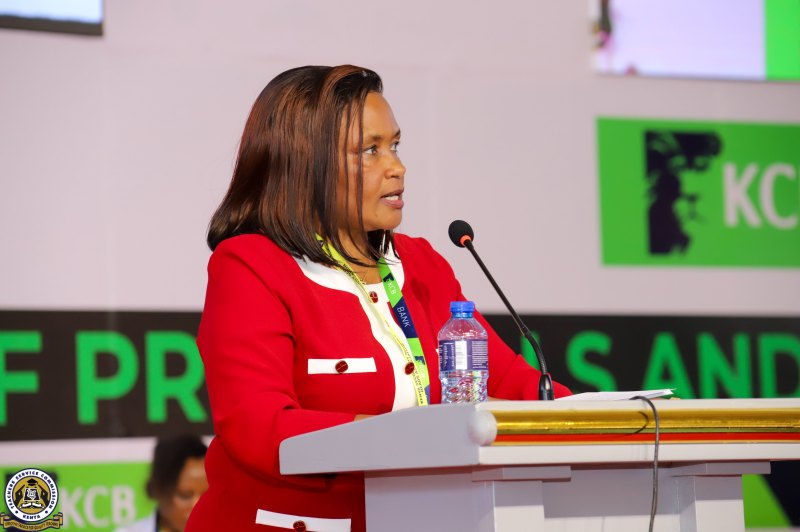
General Nancy Gathungu has cited the infraction in a review of the refinery’s
books for the period covering June 30.
Records
indicated that the CEO was appointed in acting capacity on October 4, 2019, and
was to serve for 12 months, which is also outside the threshold set in law.
It
emerged that the officer has held the position to date, past the six months set
in the law, public service human resource policy manuals and Mwongozo Code of
Governance for state corporations.
The
auditor also established that the board of directors has since been extending
the top boss's tenure for 12 12-month rolling period.
“Management
was in breach of the public service policies and guidelines,” Gathungu said in
the report tabled in Parliament.
Besides
the CEO, five other employees were appointed in an acting capacity for more
than six months contrary to directives.
In
March 2020, the government, through the Head of Public Service, directed state
agencies to strictly enforce the rule requiring positions of acting capacity
held for six months.
But
the audit reveals that some KPRL staff had been serving in an acting capacity
for periods exceeding 30 months.
Prolonged
acting appointments can undermine organisational performance, create
uncertainty and hinder long-term strategic planning.
Gathungu
further took issue with the irregular secondment of the chief operating officer
to the Petroleum department.
The
officer was seconded in July 2017, and the same was renewed in April 2023
despite the officer having exhausted the set maximum of six years.
Management
went ahead and released the officer, knowing well that it violated the
regulations. The Public Service Commission approval was not provided for audit
review, the auditor says.
The
Auditor General also identified financial and operational challenges,
including insolvency risks and non-compliance with procurement
regulations.
KPRL
is broke, with the audit concluding it faces an uncertain future. It reported a
Sh91 million loss during the period under review and has a negative working
capital of Sh2.5 billion.
Gathungu
took issue with management after it failed to disclose the material
uncertainty.
The
company's survival is dependent on government support and creditors, the
auditor said.
The
auditor also raised concerns about questionable asset values at the petroleum
refiner.
Assets
with a net book value of Sh1.7 billion include fully depreciated assets still
in use, worth over Sh2.3 billion. Their accurate valuation could not be
confirmed.
A
variance of Sh160 million was found in lease recoveries from the Kenya Pipeline
Company, indicating potential misstatement of income.
The
auditor has also flagged doubtful debts with over Sh165 million, including
debts from inactive companies and costs for a failed project, raising doubts
about their recoverability.
Further
on governance failures, the board of directors was found to be non-compliant
with governance codes.
The
board was understaffed, lacked a member with financial expertise and included
directors who had served beyond the legal term limit of six years, one for a
decade.
Gathungu
also highlighted operational inefficiencies after it emerged that the company
held six prime residential properties that were approved for commercialisation
in 2016 but remained unutilised.
No
explanation was provided for why the six houses had not been leased out despite
their prime location.
Further,
the company continued to incur recurrent utility costs relating to the facility
like water, electricity, and security charges, further increasing the losses.
“The
effectiveness in use of the assets and value for money incurred in maintaining
these assets could not be ascertained,” the auditor general said.
The
report has also cited the agency for failing to implement the e-procurement
requirements.
It
was established that the procurements were not conducted through an e-procurement platform, as required by the Public Procurement and Asset Disposal Regulations,
2020, and the National Treasury circular.
“The
company was in breach of the law,” the report reads in part, also citing the
firm for lacking a strategic plan, a functional audit department, and a board
of directors not properly constituted.
“Further,
weak corporate governance may impact negatively on the reputation and financial
performance of the company,” the auditor general said.
INSTANT ANALYSIS:
The
acting CEO’s prolonged tenure at KPRL exemplifies systemic governance
failures and disregard for public service regulations. It underscores the
need for stricter adherence to tenure limits and accountability mechanisms in
state corporations to ensure effective leadership and operational efficiency.
The National Treasury and the board of KPRL are expected to take corrective
actions. This situation mirrors broader concerns in Kenya’s public sector,
where acting appointments often circumvent regulatory safeguards.


 Auditor General Nancy Gathungu/FILE