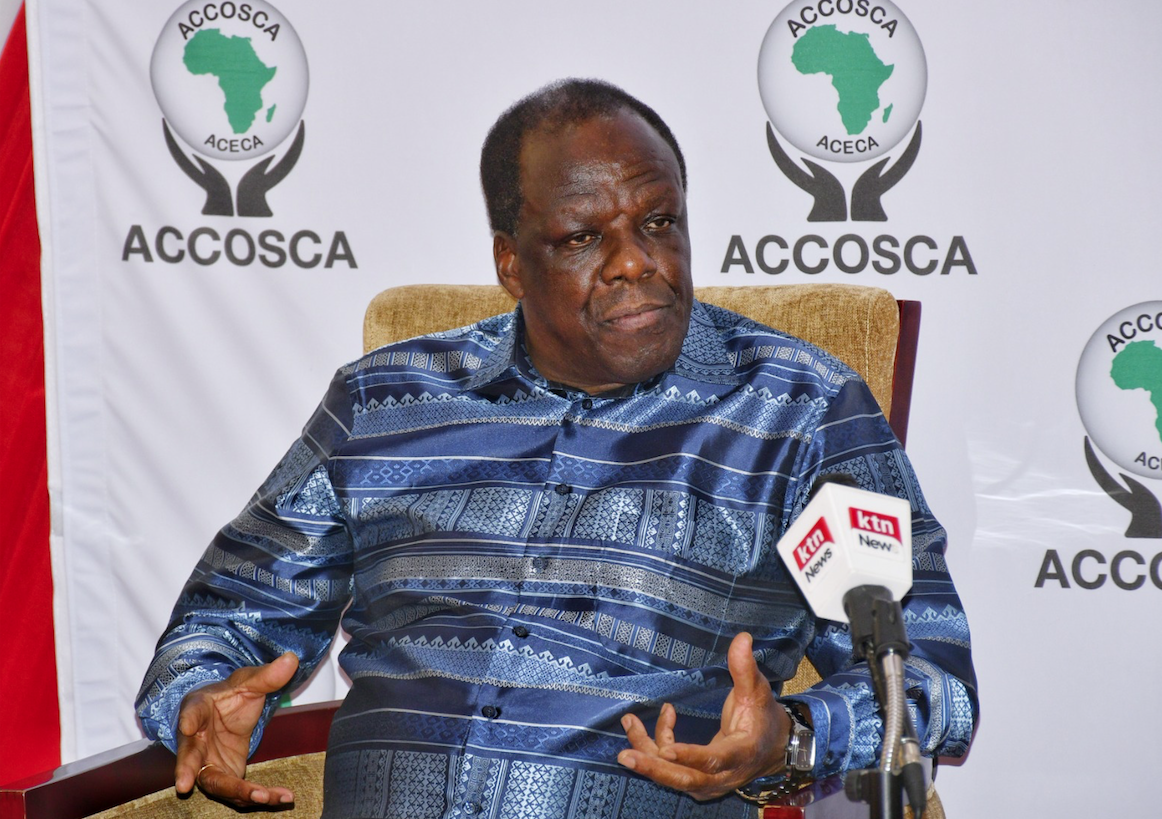
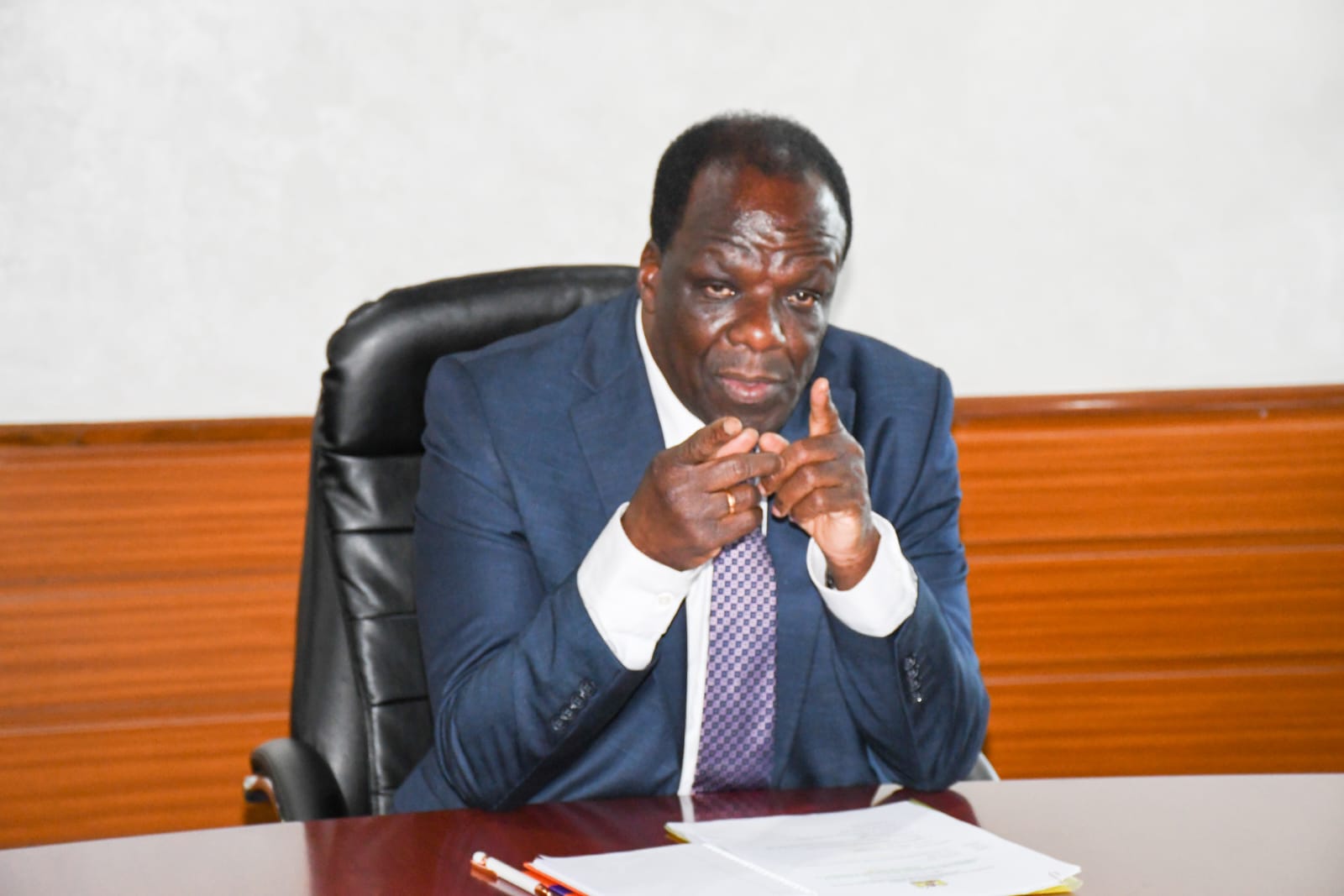
 MSMEs CS Wycliffe Oparanya [OPARANYA/X]
The High Court in Nairobi has nullified the Director of Public Prosecutions’ (DPP) decision to review and withdraw planned corruption charges against Cabinet Secretary Wycliffe Oparanya, terming it unconstitutional, irregular, and void.
Delivering his judgement, Justice Benjamin Mwikya Musyoki held that the DPP acted without transparency, accountability, or consultation with the Ethics and Anti-Corruption Commission (EACC), thereby usurping the commission’s investigative mandate.
"A declaration is hereby issued that the 1st respondent’s decision to review its decision to charge the 1st interested party with the offences of conflict of interest, abuse of office, money laundering, and conspiracy to commit an offense of corruption contained in its letter dated 8th of July 2024 is irregular and unconstitutional and therefore null and void," the judge ruled.
The court observed that the July 8, 2024, letter in which the DPP ordered the closure of Oparanya’s file “was shrouded in mystery and worked against public interest,” violating Article 157(11) of the Constitution, which requires the ODPP to act in the public interest and uphold the principles of transparency and accountability.
The case, filed as a constitutional petition by activist Fredrick Mulaa, challenged the DPP’s reversal of an earlier decision to prosecute Oparanya for alleged conflict of interest, abuse of office, money laundering, and conspiracy to commit corruption.
The EACC had investigated the former Kakamega governor and recommended his prosecution over alleged kickbacks amounting to Sh56.7 million from companies that won contracts in Kakamega County during his tenure as the county governor.
However, the DPP later closed the file after receiving representations from Oparanya’s lawyers.
In his judgment on Tuesday, September 16, 2025, Justice Musyoki noted that while the DPP has wide discretion to institute or discontinue criminal proceedings, that power must be exercised within the confines of the Constitution and in line with the DPP’s own 2019 “Guidelines on the Decision to Charge.”
The judge said the DPP failed to consult the EACC, which represents the public interest in corruption cases, before reversing the charges.
“Once the DPP received the request to review its decision to charge, the correct procedure would have been to direct the EACC to investigate the alleged fresh evidence,” he stated.
The court also dismissed a cross-petition by the ODPP seeking to expunge three internal letters—including the July 8, 2024, closure directive—from the record, on the basis that they were allegedly obtained irregularly.
Justice Musyoki found the letters were exchanged between public entities, had already been referred to in EACC’s reports, and were not confidential.
However, the judge declined to grant the petitioner’s request to invalidate Oparanya’s appointment as Cabinet Secretary for Cooperatives, Micro, Small, and Medium Enterprises Development, saying the court had not been provided with evidence of irregularities in the vetting process by the National Assembly.
“Without the benefit of seeing the reasons advanced to clear him for the position, this court would be overstepping on the mandate of the executive,” Justice Musyoki observed.
As a result, the consent to charge Oparanya now stands restored.
Each party was ordered to bear its own costs.