The government has unveiled an ambitious plan to streamline
and stabilise Savings and Credit Cooperative Societies, even as it blamed the
current crisis on delayed remittances by employers, poor governance and weak
regulatory oversight.
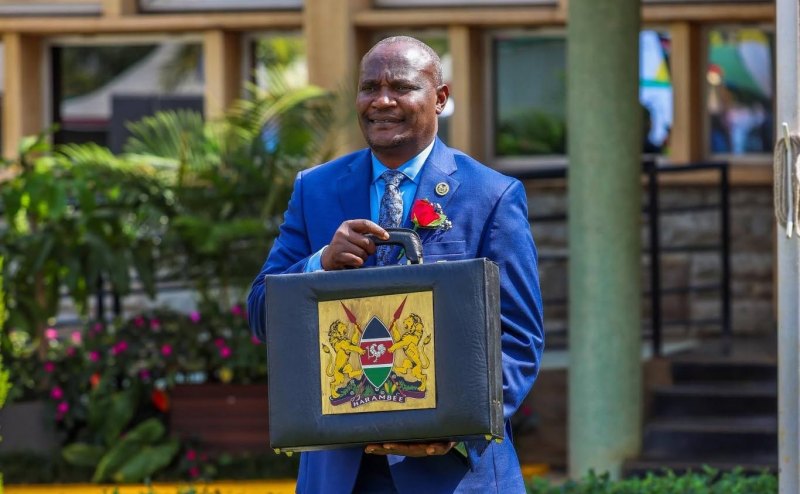
In a detailed statement before the Senate plenary on
Wednesday, Cooperative Cabinet Secretary Wycliffe Oparanya said the ministry is
working to strengthen the legal and institutional framework to revive the
struggling Sacco sector.
Oparanya said several administrative measures have already
been undertaken to safeguard members’ contributions and enhance the viability
of the Saccos.
“Administratively, the ministry has issued a circular to all
Saccos instructing them to avoid investing in non-core business,” the CS said.
He noted that studies have shown that Saccos which ventured
into capital-intensive projects such as real estate development have struggled
to remain afloat.
According to the CS, Saccos face three key challenges that
have affected their viability.
Many employers, especially county governments, he said, are
deducting money, running into millions of shillings from their employees.
However, they are not remitting the funds to the saccos,
leading to a collapse of the entities that are meant to economically empower
their members.
“Several county governments have deducted members' dues in
millions, but they have not remitted them. This has created liquidity problems
for Saccos. This is what affected Moi University Sacco, Afya Sacco and others,”
he said.
In addition, many saccos are grappling with governance
challenges, including corruption, which have threatened the existence of most
of them.
Oparanya said weak supervision by the regulator—Sacco
Societies Regulatory Authority (SASRA)— has perpetuated the problems the saccos
face.
He said the authority is financially handicapped and
ill-staffed to effectively supervise the saccos to ensure they effectively
perform their functions.
“What is crucial is that we strengthen Sacco supervisory
authority, which is SASRA. Unfortunately, SASRA has been underfunded, thus no
capacity to carry out supervisory purposes,” he said.
“Sasra has been collecting about Sh800 million to carry out
its supervisory work, but the money that comes back from the Treasury has never
exceeded Sh500 million. That is an administrative bottleneck that has been
there,” he added.
The CS said Sasra, which charges a percentage of Sacco
member deposits to enable it to carry out its work, is starved of funds as the
Treasury fails to remits the collected amount to it.
To respond to the challenges, Oparanya said the ministry has
fronted cooperatives Bill that seeks to strengthen Sasra and enhance its
supervisory mandate.
“To address these issues, in this particular house, the
ministry has introduced a cooperative bill that is supposed to address some
governance issues,” he said.
Administratively, the ministry has issued a circular to all
saccos to ensure that they do not invest in non-core business.
In addition, the ministry has directed the saccos to ensure
that any borrowing by their members is approved by the commissioner of
cooperatives
The ministry has also directed mandatory filing of returns
by all Saccos to ensure they are annually audited for financial soundness.
Oparanya said that it has directed Saccos to use delegates
systems, especially annual general meetings, for effective participation and
decision-making
“We have improved oversight to ensure members work within
the delegate system. Few people during the AGM to ensure the sacco transacts
business,” he said.