After a tortuous struggle,
the government finally got around to constitute the IEBC. The former commission
was fraught with controversies ever since the Isaac Hassan team was forced to
resign from office.
After the 2017 general election, Roseline Akombe
dramatically resigned and sought political refuge in the US from where she kept
releasing dossier after dossier regarding the events before the annulled
presidential elections.
To fill the gaps left by her compatriots, four new
commissioners were recruited before the 2022 election. They included
vice-chairperson Juliana Cherera, together with Justus Nyagaya, Irene Masit and
Francis Wanderi. The commission has suffered an image and credibility deficit
ever since it conducted the first elections under the new constitution in 2013.
The results of the first,
second and third presidential elections were challenged in the Supreme Court
under three different chief justices. David Maraga agreed with the petitioners
and annulled the results. However, Raila Odinga avoided the repeat elections
and got into a handshake arrangement with his competitor, Uhuru Kenyatta. It is
under the handshake government that the IEBC was reconstituted to organise the
2022 election. But the cloud of suspicion continued to hang over the commission
leading to a bitter falling out among the commissioners and chairman Wafula
Chebukati. The end of Chebukati’s tenure brought many legal challenges. The
boundary delimitation prescribed timelines elapsed in March last year. Also, 23
electoral vacancies could not be processed because of absence of commissioners.
The current commission
finds itself saddled with the historical baggage of its predecessors. Yet
conversely, if the process of its selection and the composition of its
membership are critically assessed, then a different picture emerges. While legal
hurdles hit the initial stages of recruitment, they turned out to be a blessing
in disguise. They made the process more rigorous and transparent. Steps were
taken to ensure that nothing was left to chance and that every loophole that
might have been unanticipated was sealed. The constant criticisms from the
opposition and civil society formations ensured transparency and fidelity to
the national ethos.
The selection panel went
through thousands of applications to do the shortlisting. Those who met the cut
and were interviewed were some of the best brains with requisite experience
that the country could offer. The last nine names were submitted to President
William Ruto by Parliament after the vetting; from the list, the names of seven
commissioners were published in the Gazette Notice.
Pundits agree the list is a
constellation of some of the finest leaders in electoral management that could
be found anywhere. Their CVs are available for ease of reference and their
interviews were done in the glare of public media. Chairman Erastus Ethekon has work experience with international
and multilateral organisations, while vice-chairperson Fahima Abdallah has had an illustrious
career in the public service, including on the Lamu public service board. In
the ranks are commissioner Francis Aduol, vice chancellor emeritus and renowned
academic in geodesy with extensive professional contributions to the question
of boundary delimitation in Kenya and Africa. Then there is Ann Nderitu who
served as the pioneer Registrar of Political Parties, key stakeholders in
elections. They share space with three other steady hands as commissioners with
vast public administrative experience useful for the delivery of the IEBC
mandate. One is a legal and communication expert while the other two are
celebrated public administrators.
The protracted political
stalemate that accompanied the appointment of the selection panel and the
subsequent appointment of the commissioners presented a potential
constitutional challenge. However, President Ruto was able to navigate the
turbulence and had the commission properly constituted. The bigger challenge
for civic practitioners has been the continuous voter registration that was
suspended just before the 2022 election. As the population grows, so does the
number of those who qualify to register as voters. The registration is meant to
be closely followed by verification of the voter register. This exercise aims
to clean the register, most importantly, ridding it of ghost voters. Having a
valid voter register and the required officers of necessary skills assures of
the credibility of the electoral process. The boundary delimitation exercise
will require legal protection from the Judiciary and Parliament since the deadline has passed. At the
same time, because of space and period constraints, these statutory activities
will logically demand enhanced resource allocation from the National Treasury.
Concerted efforts will be required from all stakeholders to work around the
clock to deliver an election acceptable to all stakeholders. The legitimacy of
any electoral process is determined largely by the acceptance of the electoral results.
The most disturbing threat
to the public goodwill toward the current IEBC has come from the political
class, especially the opposition. While their concerns during the process of
selection and eventual appointment were merited, the continued castigation of
the team amounts to intimidation. They have taken every opportunity to cast
aspersions on the persons of some commissioners. In various forums they have addressed in the public, the
opposition chiefs have sought to associate commissioners with government
officials. While this is an oversight role, which rightly is the opposition’s forte, the claims
should be credible and at best substantiated. Making such serious allegations
and against members of an independent commission serves to erode the very credibility
that is sought to be engrained.
The political class should
be brave enough to put aside their partisan interests and support the work of
the commission. The political parties and their leaders are key stakeholders,
if not the main clients of the IEBC. Their demonstration of goodwill and
objective support will be crucial in bringing forth the public confidence as a
ripple effect. However, their continued castigating of the commission casts the
commissioners in a bad light and affects their confidence levels. Having faith
in the commissioners would provide them the confidence to provide the necessary
leadership for the secretariat. This would enable the country to benefit fully
from the wealth of experience and vast knowledge that the commissioners bring
to the IEBC. The opposition leaders and other government leaders must therefore
put national interest ahead of their parochial pursuits to support the
commission. Such support should be extended to similar independent institutions
to anchor good governance practices. A collaborative framework should be
developed to strategically involve civil society organisations and tap into
their extensive grassroots and international networks. The current team at
Anniversary Towers should not be prejudged due to past experience with previous
teams. They should be given their due credit and assessed on their own merit.

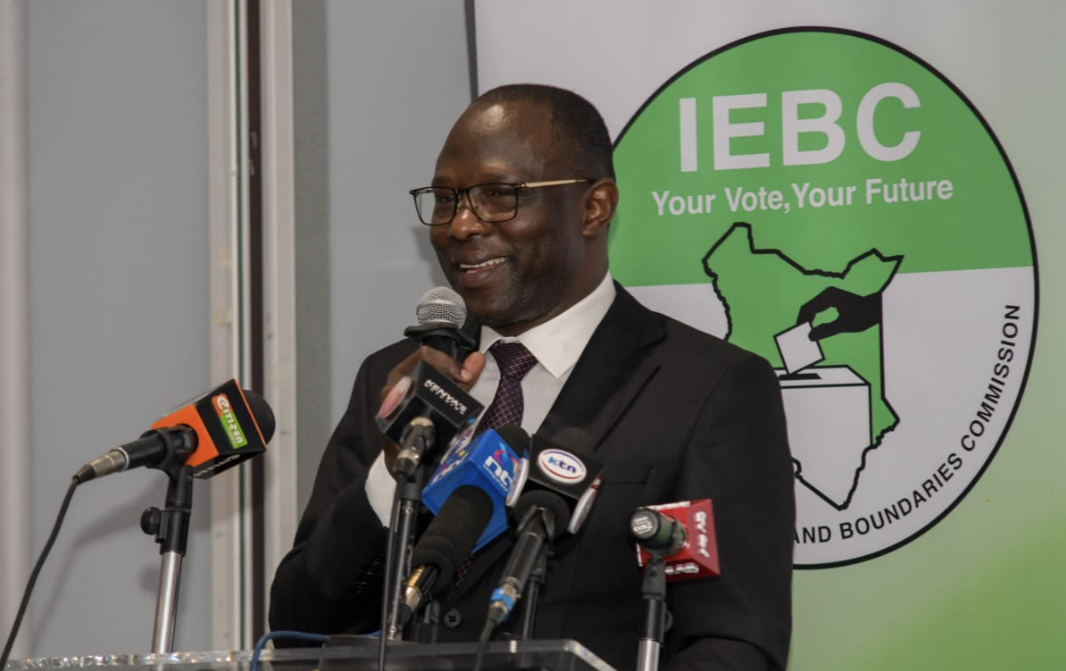
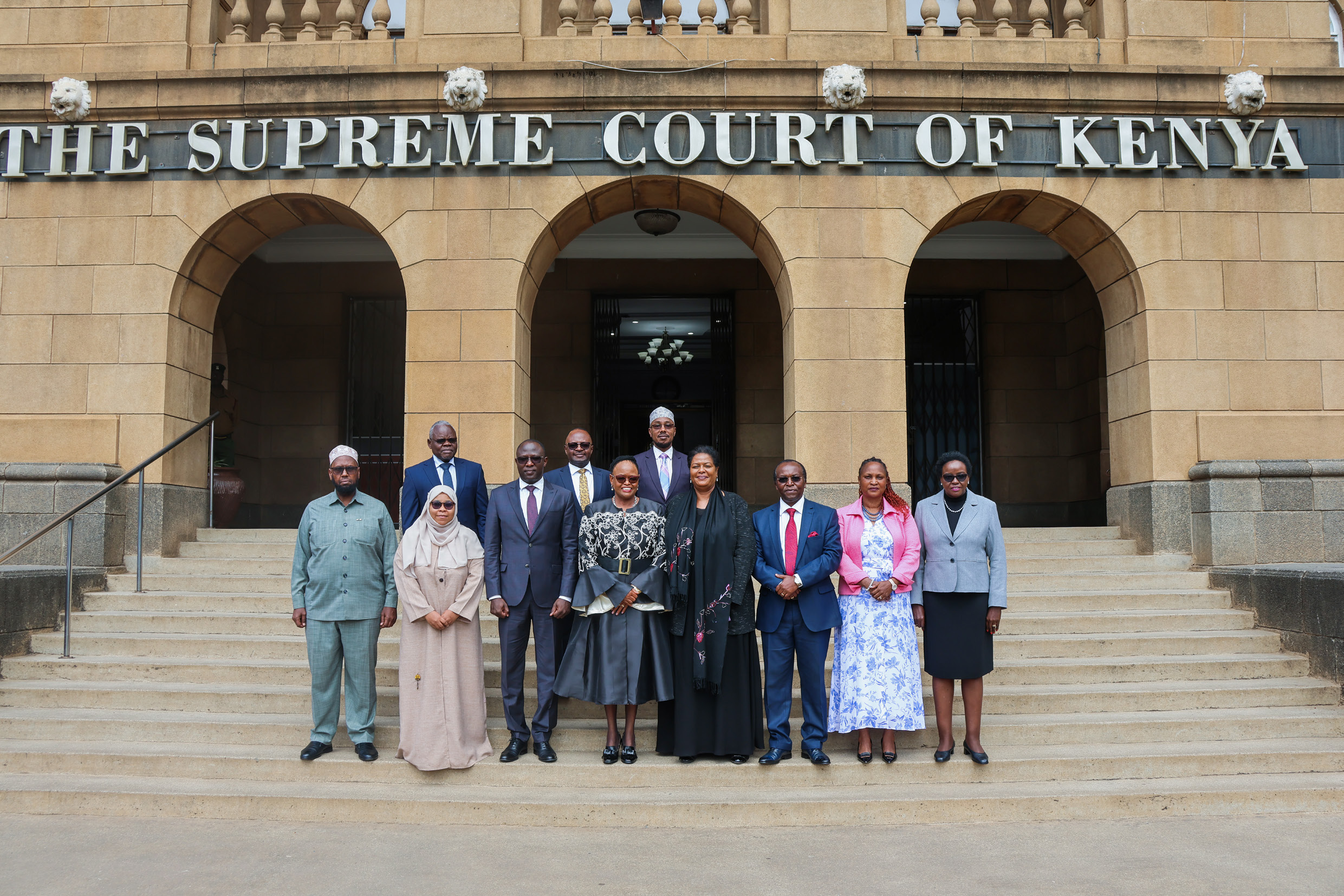 New IEBC team meets Chief Justice Martha Koome./IEBC