President William Ruto and his partner in
the broad-based government, Raila Odinga, have mounted a double-pronged strategy to counter the
influence of former Interior CS Fred Matiang’i in the Gusii region.
In a calculated move to secure their flanks ahead of the
2027 general election, they aim to counter the perceived threat of a Matiang’i
presidential candidacy, which has upended the traditional political calculus of
Kisii and Nyamira counties.
The concern within the broad-based side is palpable
after the emergence of Matiang’i, a seasoned administrator with a formidable
reputation from his tenure at the Interior ministry.
The ex-Interior CS has provided the Gusii nation
with a formidable homegrown figure to rally behind as a kingpin, changing the
political dynamics to a great extent.
For Ruto, a region that voted overwhelmingly for his
opponent (Raila) in 2022 is slipping further from his grasp.
For Raila, the backup of his Nyanza support is
showing cracks, with key allies defecting to the Matiang’i side, threatening
his stature as the region’s political force.
Owing to the mutual vulnerability, the two have forged
an alliance, ostensibly to help manage the uprising against ODM and UDA in the
region, coming amid perceptions that Raila himself is dented, too.
The two principals have reportedly agreed that facing
off against each other in their respective strongholds would only splinter votes and
hand an advantage to opportunistic opponents.
They believe that they can make an impact from a united
front, having learned the cost of going it alone.
This strategy was on full display on Thursday when
President Ruto and Raila hosted a meeting of Gusii grassroots leaders at State
House, Nairobi.
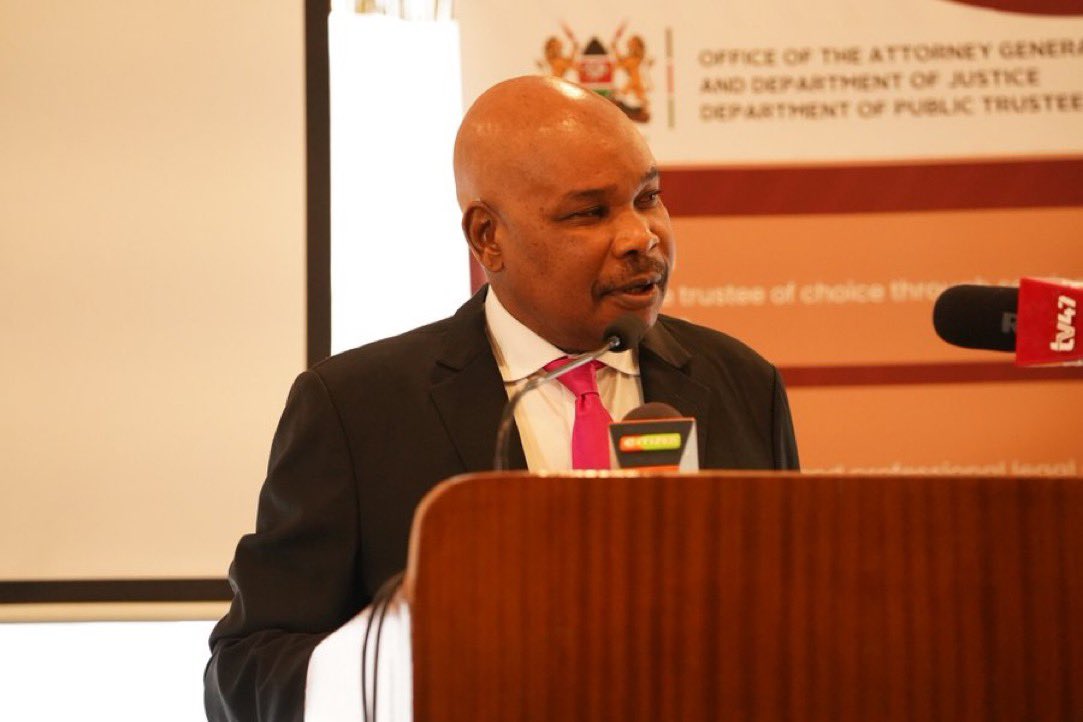
The gathering, led by Kisii Governor Simba Arati and
attended by Education Cabinet Secretary Ogamba Migosi and Solicitor General Shadrack
Mose is the second in a month.
The seemingly back-to-back conclaves signal the urgency
both leaders attach to the region.
In a statement after the meeting, President Ruto framed
the alliance not in terms of raw politics, but of historic opportunity.
“We have before us a rare and historic opportunity to
make every part of our country truly prosperous,” he said, before unveiling development
carrots for the region.
For Kisii, the President promised transformative
investments: 15,000 affordable housing units worth Sh30 billion, Sh2.5 billion
for modern tertiary student hostels, and four state-of-the-art markets valued
at Sh2.4 billion.
For Nyamira, he pledged life-changing projects worth
over Sh16 billion, including 7,000 housing units, student hostels, and three
modern markets.
The sweetener was a commitment to connect over 32,000
homesteads across both counties to reliable electricity, a move designed to
unlock business and endear the national government to the populace.
The delegation, in return, endorsed President Ruto’s
re-election bid and pushed for the swift completion of the promised mega projects.
However, beneath the surface of this show of unity, the
Gusii political landscape remains deeply fractured.
There are several ODM MPs who are working with Matiang’i,
notably Kitutu Chache South MP Antony Kibagendi and Kisii Senator Richard
Onyonka.
In the same vein, Ruto's allies in the region face a
serious challenge and have been treated to pockets of hostile receptions when
undertaking their political activities.
The faction allied to Matiang’i has dismissed these
overtures as inconsequential and politically desperate, saying the ground had
already shifted in favour of the former CS.
UPA national chairman and Rigoma MCA Nyambega Gisesa
told the Star on Friday that the meeting was inconsequential.
“The people of Kisii have decided on Fred Matiang’i. He
is the preferred candidate, and no one can change that now. The meeting had no
impact because the things the President said are the same ones he said when he
met us in Kakamega two years ago,” Gisesa said.
“I don’t see anything coming out of the engagements that
will be gainful for Ruto and Raila,” the MCA said.
His sentiments were echoed by Kitutu Chache South MP
Antony Kibagendi, one of several ODM MPs openly working with Matiang’i, who
argued that those backing Ruto were “signing their political obituaries.”
He accused State House visitors of being motivated by
personal gain rather than community interest, alleging they were being used to
undermine the former CS.
“Those who are visiting State House are after their
stomachs… The voters will deal with them,” Kibagendi warned.
He further contended that the project figures were
exaggerated, claiming the actual number of housing units planned was closer to
5,000, not 22,000.
“It is the same old story. These are ongoing projects
that we have spoken about for ages, only that the housing units are exaggerated,”
he said.
Political analyst Martin Andati painted the picture of
the Herculean assignment lying ahead of the broad-based government partners.
“Kisii is going to be a very hard nut to crack for the broad-based team. One, because of Matiang'i, who is carrying the hopes, fears and
aspirations of the Gusii nation. Two, the Gusii nation has traditionally had
two ministers in government, but this time they have got only one.”
“Also, for PS, they have always had three or so but this
time they have got the Solicitor General and PS Isaboke, which were belated
appointments, looking like an afterthought,” Andati explained.
This view is supported by Prof Olang Sana of Maseno
University, who believes the administration’s strategy may be too little, too
late.
“Ruto’s general strategy for Kisii cannot help change
the dynamics. It is too late,” the don said, highlighting the deep-seated
nature of the challenge.
In March, Raila met Gusii MCAs after receiving a lukewarm
reception in a tour he conducted immediately after ODM signed a pact with UDA, which pointed to the uphill battle.
The current charm offensive, focused on development
priorities, is a direct response to that initial coldness.
Thursday's meeting came amid Ruto’s
renewed outreach to Gusii leaders, with the focus remaining on development
priorities for Kisii and Nyamira.
Yet, for many in the region, the allure of development
is tempered by a desire for authentic representation.
Political leaders who snubbed the meeting argued that
the State House delegations would have nothing to add to the region.
They held that as a county, they had their allocations as
decided by the Commission on Revenue Allocation.
“No one should lie to us that we can get more as a
county or assembly by visiting the President at State House,” an MCA said.
INSTANT ANALYSIS
The battle for the soul of Gusii is now firmly joined.
On one side stands the combined machinery of the presidency and the opposition,
armed with the power of incumbency and promises of development. On the other stands a populist movement rallying around a local son, Matiang’i, fueled by a
desire for a first-ever Gusii president and a growing perception that the political
order has for years taken their support for granted. As 2027 draws nearer, the
twin attack from State House will be tested against the formidable groundswell
of a region that believes its time has finally come.

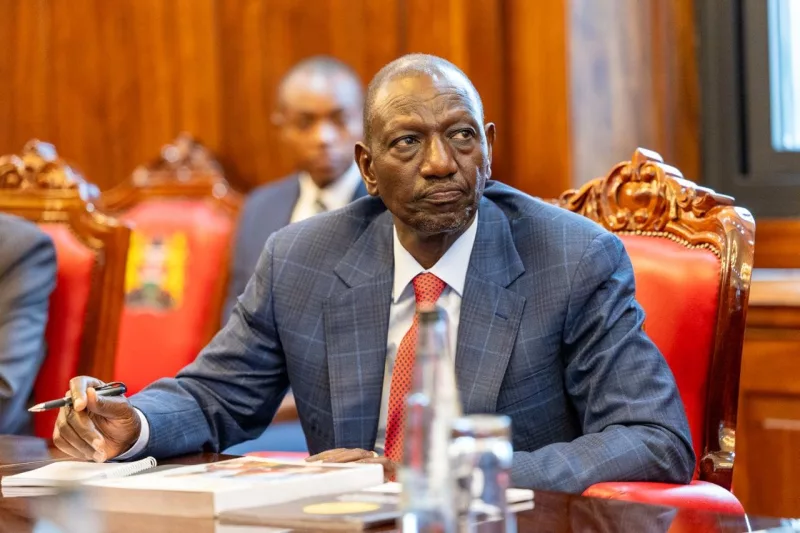
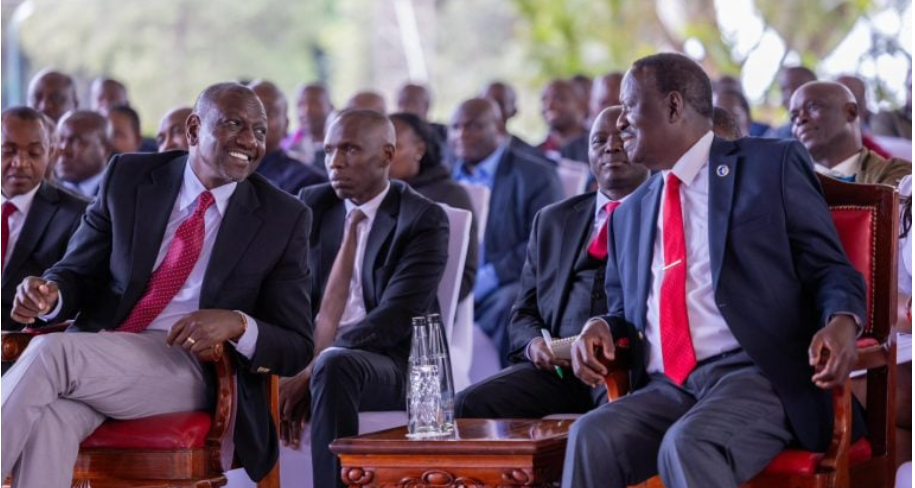 President William Ruto and ODM leader Raila during the Gusii leaders’ meeting at State House/PCS