A visit
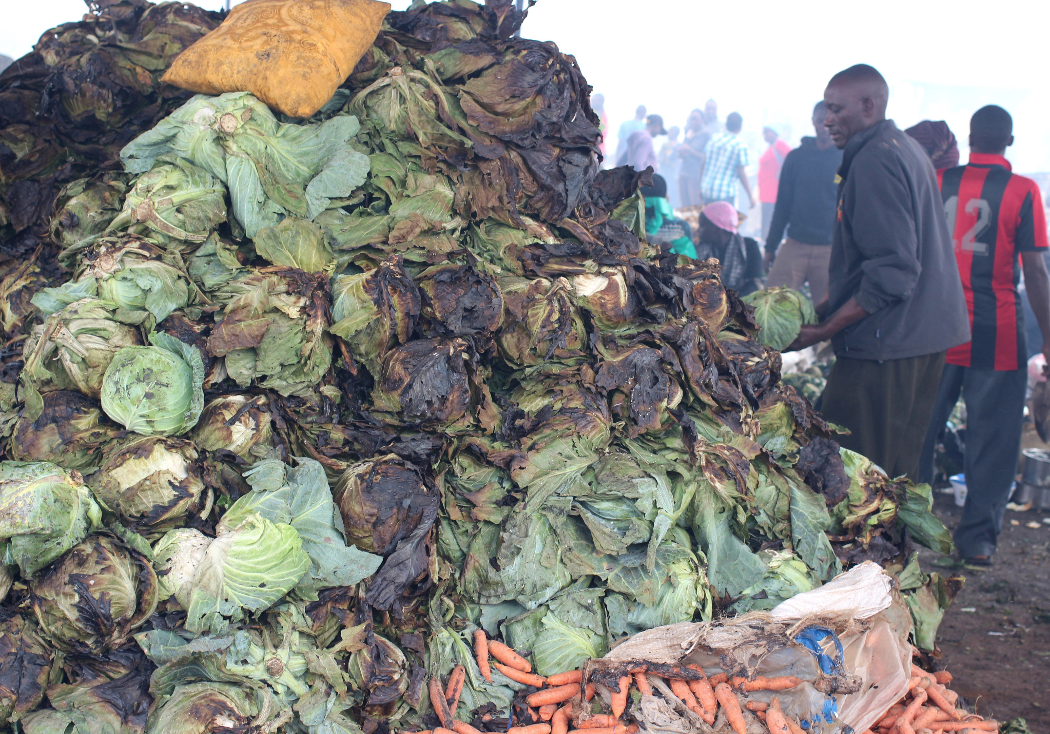
to the bustling Wakulima, Kangemi and Gikomba markets in Nairobi shows a sight too familiar.
Every morning, trucks unload
heaps of fresh mangoes, bananas, potatoes, only for most of them to end up unsold in the evening.
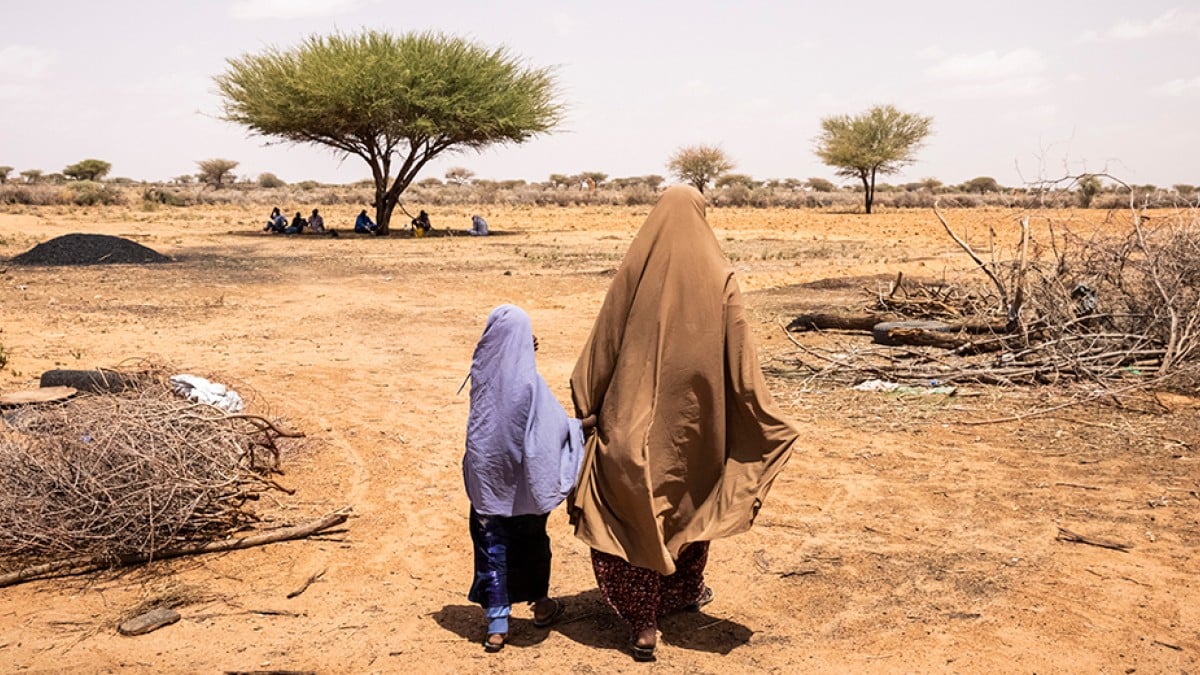
This is even as thousands of families go to bed hungry, while
others can only afford a meal a day. This is the irony of Kenya’s food system.
A new
report by the World Resources Institute Africa says the
country loses up to 40 per cent of the food it produces every year.
This is about 9 million tonnes worth an estimated Sh72 billion. Yet, 15 million Kenyans (about 28
per cent of the population) face food insecurity, and are struggling daily to
find enough to eat, according to UN reports.
The WRI
report says the amount of food wasted could fill nearly 500 million
18-tonne trucks.
It paints a worrying picture of losses in staple foods
and high-value crops.
It says maize, Kenya’s most important staple, loses between 20 and 36 per cent
before it reaches consumers. Potatoes, the second most important crop, record
23 per cent losses.
“Fresh
fruits suffer the worst fate, up to 56 per cent of mangoes, 15–35 per cent of
avocados and 7–11 per cent of bananas never make it to the plate, while fish, a
key source of protein, records 34 per cent loss,” the report says.
“Such
levels of waste not only undermine farmer incomes but also threaten national
food security and waste precious resources such as water, land and energy.”
The Food
and Agriculture Organization estimates that nearly 15 million people are
food insecure, while Unicef reports that one in four children under five is
stunted, a clear sign of chronic malnutrition.
In 2021,
about 39 per cent of Kenyans could not afford a healthy diet. At the same time,
a Unep Food Waste Index Report revealed that every Kenyan throws away an
average of 99kg of food annually, adding up to 5.2 million tonnes wasted
nationally.
“Thirty
to 40 per cent of food is being lost or wasted between production and
consumption. These losses deprive farmers of income, worsen food insecurity and contribute to climate change,” WRI Africa managing director Wanjira Mathai said.
“Tackling
food loss and waste presents a triple-win, feeding more people without
increasing production, strengthening farmer incomes and reducing greenhouse
gas emissions.”
Kenya is
a signatory to the 2014 Malabo Declaration, which calls for African Union
member states to cut post-harvest losses by 50 per cent by the end of the year. It has also
pledged under Sustainable Development Goal (SDG) 12.3 to halve food waste and
reduce food losses by 2030.
Yet,
despite these commitments, the WRI report warns that Kenya is falling short.
“Weak
monitoring systems, lack of standardised measurement methods, limited
financing and poor coordination across agencies have left the country unable
to track progress or design effective interventions,” the report says.
“Without
reliable data, it is impossible to set meaningful targets, design effective
interventions or accurately track progress.”
The report
indicates that the reasons behind the staggering losses are complex and vary
across crops and regions.
For
maize, poor storage is the main culprit, accounting for up to 70 per cent of
total losses. The report says farmers often harvest maize too early,
with high moisture content, making it susceptible to mould, insect infestation and aflatoxin contamination.
“Limited access to drying equipment and proper
storage facilities compounds the problem,” report says.
It further
indicates that potatoes are lost mainly due to poor harvesting techniques and
rough handling during transport.
Often, farmers dig them up using
tools that bruise the tubers, while traders pile them into sacks that cause
more damage before they reach the market, report says.
In the
fruit sector, the reports says perishability is the biggest challenge.
Mangoes and bananas, for example, often spoil quickly when stored or
transported under poor conditions. For domestic markets, mango losses reach up
to 35 per cent, compared to 18 per cent in export markets where stricter handling
and cold storage systems are used.
“For
fish, inadequate preservation facilities, unreliable cold storage and long
transport distances mean that nearly a third of the catch goes to waste before
reaching consumers,” the report says.
Beyond
hunger, the report says the economic toll is severe. It says Kenya
loses Sh72 billion every year to food loss and waste.
This is equivalent to
nearly half the Ministry of Agriculture’s annual budget.
The
authors say with more than 70 per cent of Kenyans depending on agriculture
for their livelihoods, these losses directly affect smallholder farmers who are
already vulnerable to fluctuating prices, droughts and pests.
Food
loss, they say, also worsens climate change. “When food is wasted, the
resources used to produce it, land, water, energy are wasted too. Decomposing
food in landfills produce methane, a greenhouse gas far more potent than
carbon dioxide,” the report says.
The WRI
report calls for urgent action across the food value chain. It recommends adoption of the target–measure–act strategy which sets clear reduction targets,
measure food loss and waste accurately, and implement evidence-based
interventions.
Other practical
recommended solutions include investing in affordable storage, drying, and
transport infrastructure, training farmers on harvesting and post-harvest
handling techniques, and creating policies that encourage surplus food
donations to food banks.
In
addition to embedding food loss and waste reduction into climate policies and
Nationally Determined Contributions and supporting consumer campaigns
to raise awareness about household food waste.
The
authors point out that reducing food loss and waste is not just a government
responsibility, adding that agribusinesses, researchers, civil society, and
consumers must all play a part.
“This
report provides insights into the extent of food loss and waste across key
value chains, identifies critical loss points and root causes, highlights
possible interventions and examines policy gaps,” Susan Chomba, director
of vital landscapes for Africa at WRI said.
“To
scale up reduction efforts, Kenya needs coordinated action from public and
private sector actors.”
The
authors said for a country where millions still face hunger every day,
reducing food loss and waste could be a game-changer. “By saving what is
already produced, Kenya can take a significant step towards ensuring no
citizen goes to bed hungry,” they said.
The
report was done through a collaborative effort between WRI Africa, the Food and Land Use Coalition, Kenya and Jomo Kenyatta University of Agriculture and Technology.
Authors
include Robert Mbeche, director food programme, WRI Africa, Josiah Ateka a
lecturer of agricultural and environmental economics at Jomo Kenyatta
University of Agriculture and Technology, Forah Obebo, a lecturer of economics
in the department of applied economics, Kenyatta University, James Wangu, of WRI Africa and Susan Chomba also of WRI Africa.
Infographic:
Kenya’s food loss crisis
9
million tons –
food lost annually
Sh72
billion – annual
economic cost of food loss
500
million – 18-ton
trucks needed to carry the wasted food
15
million Kenyans
– food insecure (28% of population)
Losses
by value chain:
Maize:
20–36%
Potatoes:
23%
Mango: up
to 56%
Avocado:
15–35%
Banana: 7–11%
Fish:
34%