Judges, MPs and members of the Salaries and Remuneration Commission are reported to have struck concessions on a proposed law that would guarantee senior judicial officers hefty retirement perks.
The push comes as other political elites—governors, MCAs, ex-councillors, and former MPs not covered under existing schemes—also demand pension packages from the public purse.
At the centre of the debate is the Judges’ Retirement Benefits Bill, 2025, sponsored by Majority Leader Kimani Ichung’wah and aggressively championed by the Judicial Service Commission.
The draft law promises lifetime medical cover, diplomatic passports, VIP airport lounge access, and inflation-adjusted pension benefits for superior court judges—all at taxpayers’ expense.
If passed, the benefits are projected to cost Sh15 billion annually, raising fresh scrutiny of Kenya’s already strained benefit schemes.
The SRC initially opposed the bill but later appeared to change its position, though it remains unclear at what point.
The commission has faced criticism in recent months for quietly bowing to MPs’ demands for more perks.
The SRC gifted MPs lucrative mileage allowances that have pushed the gross monthly pay of some legislators—particularly those from far-flung constituencies—close to Sh2 million.
The proposed retirement perks come at a time Kenya’s wage bill is already a pressing concern.
Nearly 42 per cent of government revenue is consumed by salaries and benefits, leaving little fiscal space for development spending.
The JSC, however, insists that judges require special compensation structures to safeguard judicial independence.
Officials argue that competitive benefits would also deter seasoned legal minds from abandoning the bench for more lucrative private practice.
Judiciary Chief Registrar Winfridah Mokaya has lamented the “inordinate delay” in enacting the benefits, saying the long wait has denied retired judges “fair compensation in line with rising living costs.”
The
multibillion-shilling wave of pension demands from retired and serving state
officers threatens to overwhelm the National Treasury.
If all are
honoured, Kenya’s pension budget would jump to more than Sh300 billion annually.
The demands come at a precarious time when the National Treasury is struggling to meet
its existing pension obligations.
The
government defaulted on Sh23 billion in payments to retired public servants in the
2023-24 financial year alone. As of March 2025, the Treasury failed to
allocate Sh30.14 billion in processed pension payments.
This
financial year, Treasury has allocated Sh234 billion, the amount set to rise by
Sh7 billion in the next financial year, maintaining an upward trend of about
Sh6 billion every year.
Retired
presidents, former MPs, retired vice presidents, military personnel, dependents
of eligible pensioners, and civil servants earn an ordinary pension monthly.
The payout hit the Sh100 billion mark this year.
The
government also caters for pension contributions to the Public Service Superannuation Scheme to the tune of about Sh40 billion every fiscal year.
Gratuity for
retired civil servants, MPs who opt for it, military, and retiring presidents
is also projected to hit the Sh100 billion mark in 2027.
Treasury has
to also set aside over Sh6.5 billion for payouts to persons who opt out of
government employment, hence opt out of the PSSS scheme.
Despite the
already strained fiscal space, more pension demands are being floated, from
governors to MCAs, to ex-councillors, as well as former MPs not covered in the
current scheme.
Council of
Governors chairperson Ahmed Abdullahi recently highlighted the "dire economic
state" of former governors.
He said some cannot afford basic necessities, including fuel, with others
unable to service debts.
They have
been backed by ODM leader Raila Odinga, who has publicly urged
Parliament to grant automatic pensions to two-term governors.
The ODM
leader argued that "a governor who has served two terms needs to be
entitled automatically to a pension" just as MPs are after two terms.
A separate
legislative proposal, the County Assemblies Pensions Scheme Bill, 2024, seeks
to create a contributory retirement arrangement for MCAs.
Former
councillors have also petitioned Parliament for a Sh15 billion pension payout.
County
governments will be contributing not less than 15 per cent of the county
lawmakers’ pensionable earnings.
MPs earn a
lifetime pension after two terms in office, creating a precedent that other
state officers now reference to justify their demands.
A recent
proposal sought to increase monthly pensions for ex-MPs who served between
1984 and 2001 to Sh100,000.
It was
rejected by SRC due to fiscal concerns, with Parliamentary Budget Office
estimates putting the cost at Sh180 million annually.
The salaries
commission has also rejected pension for governors, estimated to
cost about Sh3 billion.
Governors
want a lump sum pay on retirement, at the rate of one year’s salary for each
term served in office.
They have
also demanded a monthly pension of 80 per cent of their salary in their
lifetime, a fuel allowance of 10 per cent, maintenance expenses, a personal
assistant and a driver.
County
chiefs want full medical cover for local and overseas treatment and
premiums for spouse and two children. They also put a case for their deputies.
The SRC says the
proposal, citing that for judges, would "usurp its exclusive
constitutional mandate".
The fear is
that honouring one pension demand could trigger similar demands across the
public sector, posing an unsustainable fiscal burden.
“This would
result in a significant ripple effect across the public sector, exacerbating an
already constrained fiscal space and undermining efforts toward sustainable
public compensation management,” the SRC told MPs in response to the judges'
bill.
Through the
Parliamentary Pensions (Amendment) Bill, 2023, MPs sought to get benefits
even for serving one term or less than a year.
The proposed
law sought to grant lawmakers gratuity for the period served, notwithstanding
the fact that they are below 45 years. It is still on ice.
The
financial dimensions of the proposals are staggering, especially given Kenya's
current economic challenges.
Economist
Johnson Nderi says the defined contributory schemes are sustainable, while
defined benefits schemes bleed taxpayers.
He says
political offices deserve no benefits from the latter, and that the perks be
restricted to professionals – doctors, teachers, and select civil servants.
“Judges can
have a pension because they are doing a job. Being a legislator is not a job,”
Nderi told the Star in an interview.
He argued
that MPs deserve no pension, holding that “they are not a commoner. On what
basis are they paid a pension?” he asked.
To Nderi,
citizens are disadvantaged by the attempts to professionalise politics, yet
Kenyans are borrowing to meet budget deficits.
At the heart
of the perks dispute is which institution holds the authority to set retirement
benefits for state officers.
The SRC
holds that Article 230(4)(a) of the Constitution gives it the "exclusive
constitutional mandate to set and regularly review the remuneration and
benefits of all state officers," including judges.
This
position was upheld by the High Court in the landmark 2015 case by the Kenya
National Commission on Human Rights versus the state.
Margaret
Njoka, SRC's acting CEO, characterised attempts to bypass the commission as a
"direct usurpation" of the SRC's authority.
In April
2024, Parliament rejected a similar proposal that would have introduced
inflation-based pension adjustments for all retired public servants.
The National
Assembly Committee on Finance and National Planning justified this rejection by
citing sustainability concerns.
The Kuria
Kimani-led committee noted that such a move would be "discriminatory" as it would “provide for different treatment of two tiers of retirees".
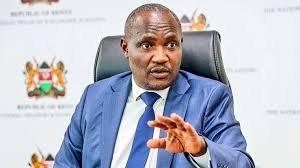
Treasury CS
John Mbadi says some of the requests have no legal framework to lay the basis
for the claim.
Former Kenya
Railways and KCC staffers are before MPs with petitions for retirement
benefits.
INSTANT
ANALYSIS
These numerous demands create a compound fiscal threat that could overwhelm
government resources, if all are implemented simultaneously. The SRC has
explicitly warned that acceding to the pension demands would inevitably trigger
"legitimate clamour” for similar benefits across the public service.





![[PHOTOS] Ruto pushes for stronger Kenya-EU economic ties in Brussels](https://cdn.radioafrica.digital/image/2026/06/3aebc395-285b-441c-8aa4-33cb538f8d44.jpg)