The Judiciary is at the centre of an intense public debate
following what many lawyers have criticised as a contradictory judgment in the
impeachment case against former Deputy President Rigathi Gachagua.
A three-judge bench of the High Court on Monday upheld Gachagua’s
impeachment while simultaneously finding that his constitutional right to a
fair hearing had been violated.
The finding has triggered criticism from opposition leaders
and legal practitioners, who argue that the ruling raises troubling questions
for Kenya’s constitutional jurisprudence.
The Gachagua case carries significant political implications
for the opposition and could have a bearing on the 2027 presidential contest.
If the impeachment is ultimately upheld by the Supreme
Court, Gachagua, who is widely regarded as a Mt Kenya political kingpin, will
be permanently barred from holding public office.
The controversial decision was delivered by Justices Eric
Ogola, Anthony Mrima and Freda Mugambi.
In their judgment, the judges found that the Senate violated
Gachagua’s right to a fair hearing when it declined to adjourn proceedings
despite his inability to attend due to illness.
The court subsequently awarded him Sh50 million in damages.
However, the judges still upheld the impeachment.
“Once the court found that the right to a fair hearing had
been violated, it was duty-bound to nullify the impeachment proceedings.
Damages cannot be a substitute for the right to a fair hearing,” said former
Justice Minister Martha Karua, herself a Senior Counsel.
The same position has been taken by many lawyers, including
Law Society of Kenya President Charles Kanjama, his predecessor Faith Odhiambo,
as well as lawyers Ekuru Aukot and Ahmednasir Abdullahi.
Gachagua described the ruling as contradictory and said he
disagreed with it.
He argued that the judges acknowledged violations of his
constitutional right to a fair hearing but still upheld the impeachment
process.
“While we respect the ruling of the High Court, we totally
and fundamentally disagree with the interpretation of the law and application
of facts. The long-standing legal principle of natural justice and the right to
a fair hearing has been ignored,” Gachagua said.
The former deputy president said his legal team had already
been instructed to file an appeal at the Court of Appeal, expressing confidence
that justice would eventually prevail.
DAP-K leader Eugene Wamalwa, also a lawyer and former
Constitutional Affairs and Justice minister, described the ruling as a
“constitutional and judicial absurdity”.
Kanjama said he was shocked by the court’s reasoning.
“Normally, when a right to a fair trial or fair hearing is
infringed, you invalidate the hearing, set it aside or order a new trial,” he
said.
“This is the first time in my experience as a lawyer that a
court has made a clear finding that the right to a fair hearing was
substantively violated but failed to reverse the underlying outcome.”
Kanjama noted that courts have historically held that
constitutional violations affecting due process contaminate the resulting
decision, raising questions about why a different approach was adopted in
Gachagua’s case.
Odhiambo went further, arguing that the judgment raises
fundamental questions about the coherence of constitutional remedies in Kenya.
“The right to a fair hearing is not procedural decoration.
It is a substantive constitutional guarantee, particularly in proceedings that
result in the removal of a person from high public office,” she said.
Odhiambo drew parallels with the landmark 2017 presidential
election petition in which the Supreme Court nullified President Uhuru
Kenyatta’s victory due to constitutional and legal irregularities in the
electoral process.
The court in that case held that a flawed process could not
produce a constitutionally valid outcome.
“When we place that 2017 reasoning alongside yesterday’s
judgment, a legitimate concern emerges,” Odhiambo said.
“In 2017, the violation of constitutional standards was
sufficient to nullify the result entirely. Yesterday, a violation of the right
to a fair hearing was found, remedied in damages, but the result was
preserved.”
Makueni Senator Dan Maanzo, who was part of Gachagua’s legal
team, echoed the criticism.
“There is a cardinal principle of law: you can never be
condemned unheard,” Maanzo said.
“At the moment Rigathi Gachagua fell ill, everything should
have ceased. We sought only a few days for him to recover and return to the
floor, but the request was rejected.”
Senate Majority Leader Aaron Cheruiyot, however, defended
the Senate’s handling of the impeachment proceedings, maintaining that the
House accorded Gachagua a fair hearing.
Cheruiyot said the Senate would challenge the High Court’s
finding faulting aspects of the process.
“As the Senate, we shall definitely appeal the High Court
finding on fair trial. We accorded Gachagua the opportunity to be heard orally
and through his filed submissions,” Cheruiyot said, adding that Gachagua opted
to use procedural tactics that slowed down proceedings.
On Tuesday, Gachagua vowed to challenge the High Court
decision upholding his impeachment.
He made the declaration while simultaneously launching what
he described as a nationwide political campaign to rally the opposition behind
a single candidate to face President William Ruto in 2027.
Gachagua said those dismissing his eligibility were merely
afraid of his candidature, insisting he would be on the ballot in 2027.
“Article 99(3) says no person shall be barred from vying in
any election until all avenues of appeal are exhausted. I will be vindicated by
the Court of Appeal, hopefully, and with further protection at the Supreme
Court still in my hands.”
“I wish to confirm to my supporters that I am eligible to
vie as a candidate should the formula agreed upon favour me as the single
presidential candidate.”
According to Gachagua, the court’s finding that his rights
under Articles 25, 47 and 50 of the constitution had been violated should have
automatically rendered the impeachment process null and void.
He argued that Parliament’s actions, which the judges found
unconstitutional in certain respects, could not legally form the basis of a
valid impeachment.
“Once that determination was made, the entire process
collapsed and was null and void. There was no impeachment,” he said.
Gachagua also took issue with the court’s decision to award
him Sh50 million in damages, saying the compensation was inadequate and failed
to address the constitutional issues raised in the case.
“The Sh50 million awarded to me is an insult to my
fundamental rights and freedoms and a mockery of the constitution. We are not
interested in money. Justice and constitutional supremacy were the issues,” he
said.
In a renewed attack on President Ruto, Gachagua claimed he
had previously rejected an alleged offer of Sh2 billion to resign from office,
insisting that he chose to defend constitutional principles instead.
The former deputy president, however, signalled that his
immediate focus would now shift from the courtroom to the political arena.
He revealed that consultations with supporters and political
allies had convinced him that the opposition should prioritise identifying a
single presidential candidate to challenge Ruto in 2027.
Gachagua said he had been tasked by his supporters with
leading negotiations among opposition leaders under the umbrella of the United
Alternative Government.
“I want to assure the people of Kenya that I will lead from
the front to identify the presidential candidate,” he said.
He outlined two possible paths for the opposition coalition.
The first, he said, would involve consolidating support
across the country if consensus emerged around his own candidature.
The second would see opposition principals agree on another
flag bearer, whom he pledged to support fully.
“If I am not the flag bearer, my supporters and I will
support the chosen candidate and ensure there is no division in the
opposition,” he said.
Gachagua maintained that he would play a central role in
efforts to remove Ruto from office, claiming he had the political network and
organisational capacity to unite opposition supporters across the country.
He accused the Kenya Kwanza administration of state capture
and extrajudicial killings and vowed to spearhead a campaign to make Ruto a
one-term president.
“Those who mobilised four million voters to put him in
office will mobilise 10 million voters to remove him,” Gachagua said.
He said after concluding his current political engagements
in Western Kenya, he would dedicate his efforts to building consensus around a
single opposition candidate, leaving the legal battle over his impeachment to
his lawyers.
“The journey to find one candidate to face Ruto has begun,”
he said.

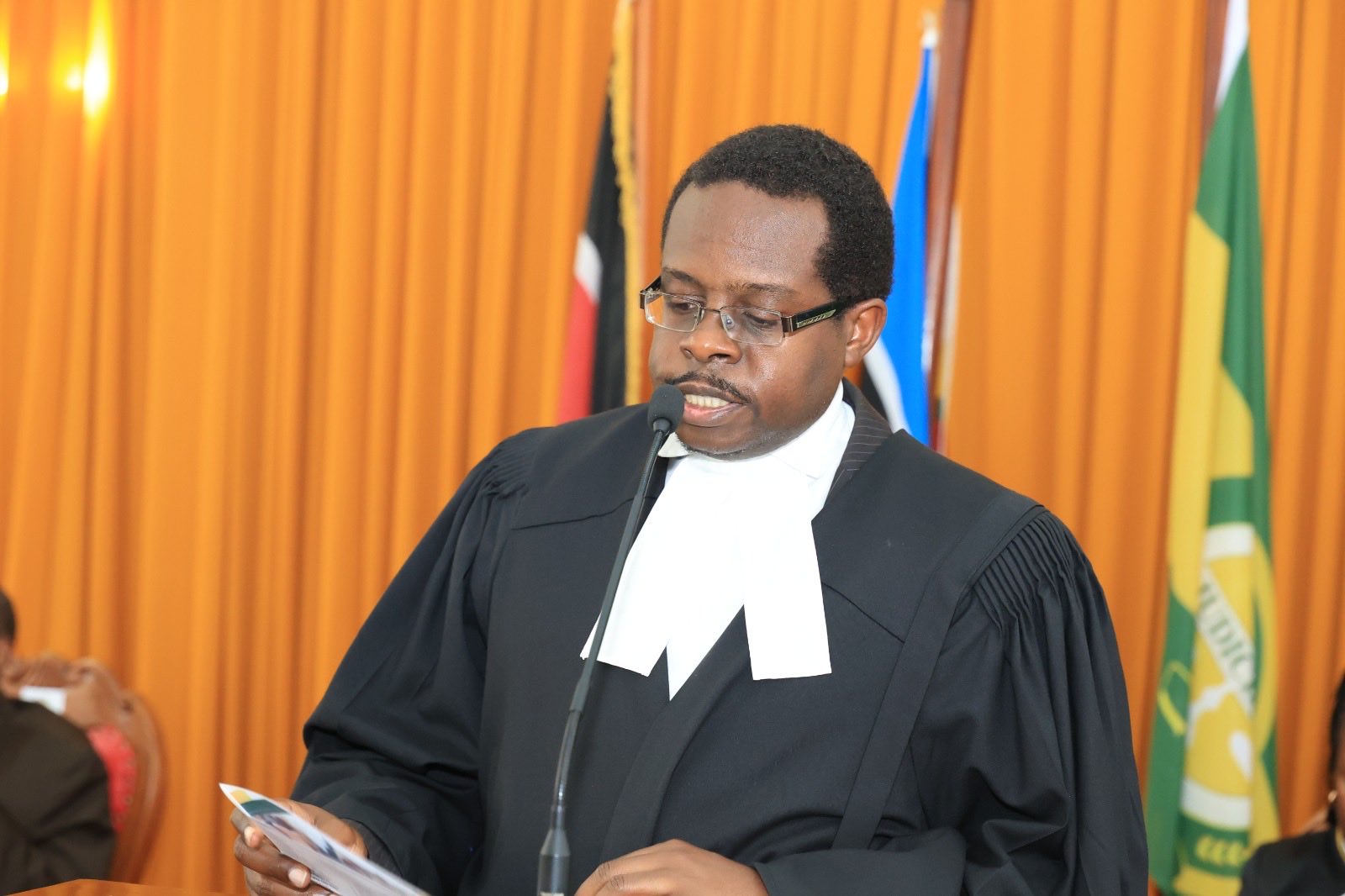
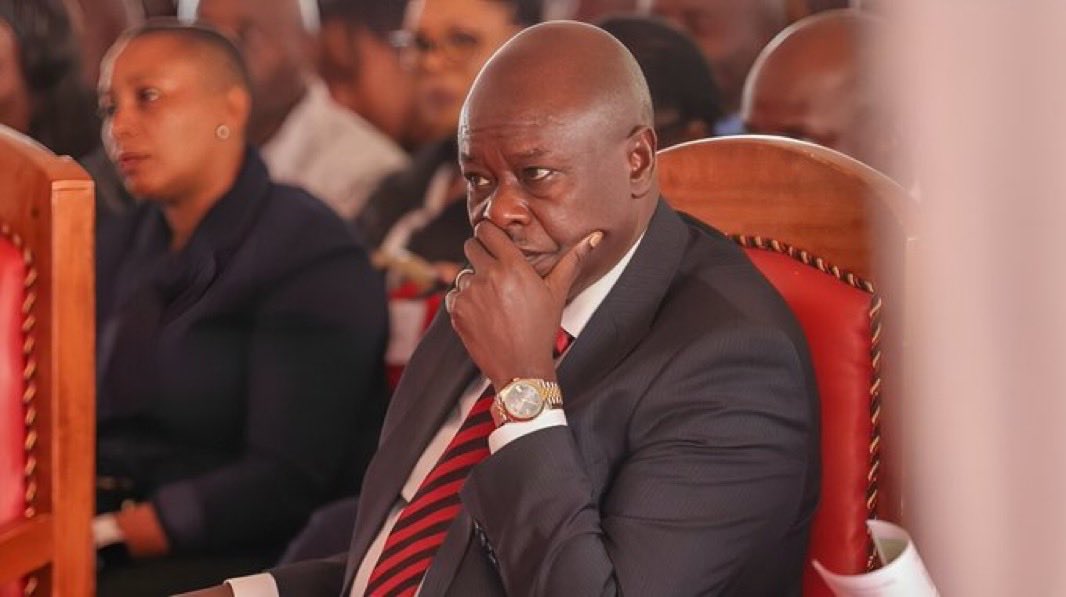 Former DP Rigathi Gachagua



![[PHOTOS] Linda Mwananchi takes Trans Nzoia by storm](https://cdn.radioafrica.digital/image/2026/07/0d132395-ad4b-4671-867e-880c9f8144f5.webp)