Over the last week, one of the most discussed topics in
Kenya was free education, in both Primary and Secondary.
This followed a confirmation by National Treasury Cabinet
Secretary John Mbadi that the government would only disburse Sh16,900 per
learner, far below the promised Sh22,244 annual capitation. These are funds
meant for secondary schools.
Mbadi, appearing before the National Assembly’s
Education Committee, said the reduced capitation was due to budget constraints
and rising student numbers.
“Let us not lie to ourselves. The budget cannot support the
Sh22,000 capitation. We don’t have the capacity to offer free primary and
secondary schools,” Mbadi said.
The cut triggered uproar from MPs, who accused the
government of misleading the public and undermining its pledge to provide free
education.
Many public secondary schools are already struggling with
cash flow problems. Some have sent students home, slashed activities or
launched fundraising appeals to stay afloat.
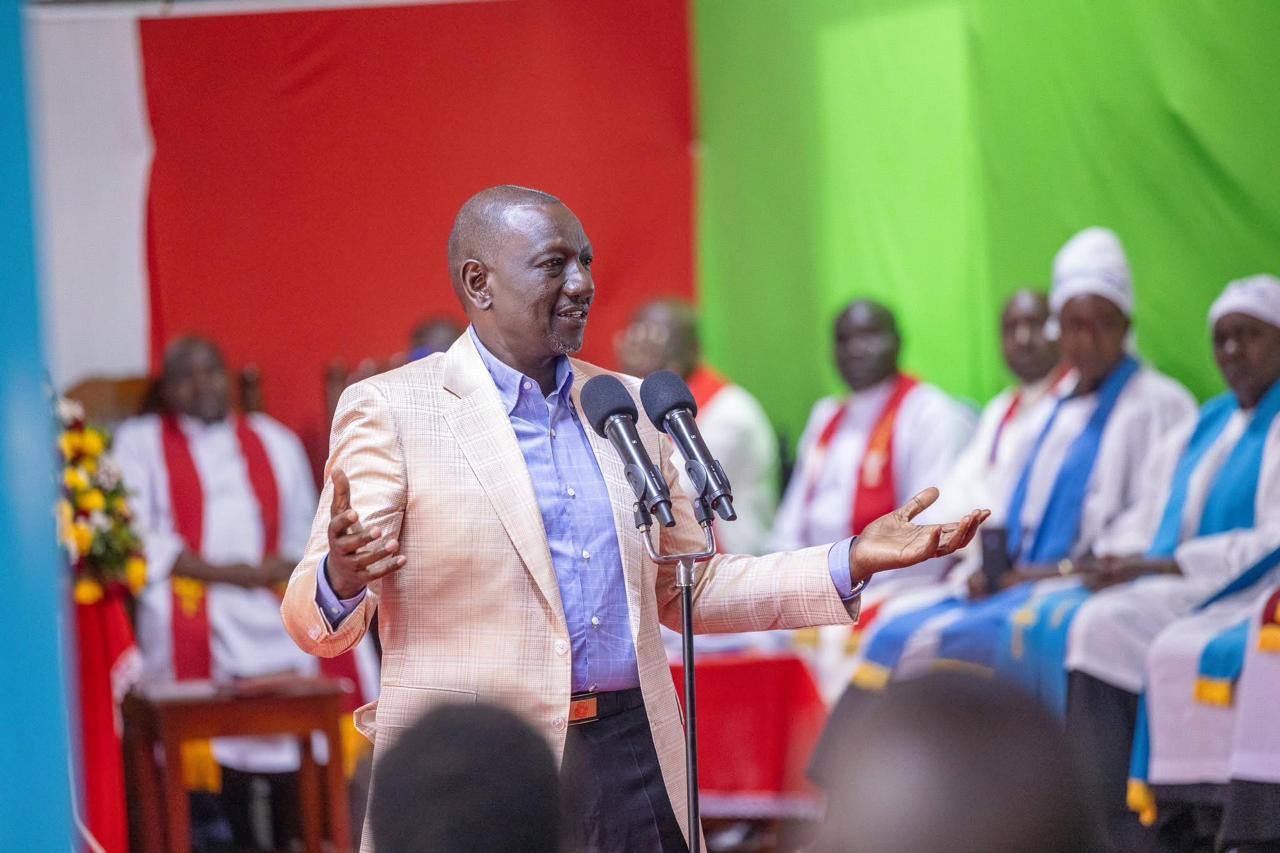
Following the uproar, President William Ruto on Sunday
assured Kenyans that the government remains committed to free, compulsory and
quality basic education.
Recent reductions in capitation had triggered anxiety among
families already struggling with the high cost of living.
“Free primary education is a constitutional right for all
children,” Ruto said.
"In the last two years, we have worked to ensure that
education is truly universal and free."
He was speaking during a service in Kariobangi, Nairobi.
The President reiterated that no child will be denied
education due to financial constraints.
Reforms are underway to seal spending loopholes and ensure
every shilling allocated directly benefits learners, he said.
“Education must be affordable, accessible, good quality and
relevant,” he said.
The same was reiterated by his deputy, Kithure Kindiki, who insisted
that gains made to reform the country’s education system cannot be reversed.
“The incredible gains of the last 22 years' transformation
of the education system are irreversible.”
Free Primary
Education
Free Primary Education has been a cornerstone of Kenya's
educational policy for decades. It is a promise that every child, regardless of
background, has the right to an education.
This journey has been marked by ambition, significant
achievements and persistent challenges over the years.
The dream of universal primary education in Kenya predates
its independence. Post-independence, the 1963 KANU Manifesto, but financial
constraints hampered its full implementation.
In 1971, President Jomo Kenyatta abolished tuition fees for
disadvantaged regions, followed by all learners in Standards 1-4 in 1973.
The move led to a massive surge in enrolment, which led to
a drop in the quality of education as the schools strained.
After coming into office in 1978, President Daniel Arap Moi,
a teacher by profession, scrapped all primary school fees, but economic
recessions in the 1970s and 1980s made it difficult to sustain.
Structural adjustment programs from the World Bank and IMF
in the 1980s further pushed cost-sharing policies, which made enrolment rates
decline in the 1990s as most parents could not afford to pay fees for their
children.
The most impactful re-introduction of free primary education
came in January 2003 after President Mwai Kibaki took charge of the country. This
was a key campaign pledge they kept, and this saw many children going back to
school as well as fresh enrolments.
Following this success, free secondary education programmes
were also introduced in 2008 by the grand coalition government.
After Uhuru came into office in 2013, free primary and
secondary education programmes continued uninterrupted.
Today, FPE remains a fundamental right enshrined in the
Kenyan Constitution.
Article 53 (1)(b) guarantees every child the right to free
and compulsory basic education, and the government continues to allocate
significant funds to the sector.
President William Ruto has recently reaffirmed his
administration's commitment to free and quality education for all.
His administration highlights investments in new classrooms and hiring of more teachers.
Despite these commitments, significant challenges persist.
The term free education masks hidden costs, including
uniforms, books, and activity fees. These charges disproportionately affect
impoverished families.
Many children from marginalised communities still face
barriers to attendance.
Overcrowding in classrooms remains a major issue. Teacher
shortages are prevalent, especially in rural areas, and this strains the
existing teaching workforce.
Reports indicate many students still struggle with basic
literacy and numeracy skills. This is despite increased enrollment.
Funding allocated to schools often falls short of
operational costs, leading to shortages in essential resources.
Infrastructure development has not always kept pace with
enrolment growth.