Details have emerged of
massive irregularities, mismanagement and systemic failures in President
William Ruto’s flagship fertiliser subsidy programme.
A report by Auditor General Nancy Gathungu has exposed how the
infractions left farmers with substandard inputs, crippling their harvests.
The
National Cereals and Produce Board (NCPB) report for June 30, 2024, has cast
doubt on the Sh31.5 billion in taxpayer funds spent in the programme during the
year.
One
of the most shocking findings was the payment of Sh240.4 million to a
supplier that did
not legally exist at the time of the contract.
Fifty-One Capital African Diatomite Industries was supposed to provide organic fertiliser
(GPC Original Plus), but instead delivered products that failed Kenya Bureau of
Standards (Kebs) tests.
Kebs later suspended
the product’s permit after tests confirmed it violated
safety standards, forcing a recall.
Investigations
showed the Kenya Revenue Authority PIN used in the contract belonged to an
entirely different firm.
Auditors
established the firm’s KRA PIN belonged to Fifty-One (K) Capital Limited,
registered in 2020, with no evidence of a name change.
Gathungu
has raised serious questions about
NCPB’s dealings with the firm, saying the engagement bordered on fraudulent
activities.
“It
was not clear how NCPB board got into an agency contract with 51 Capital,
African Diatomite Industries,” the report reads.
The
management has been put on the spot for transacting with a nonexistent company
contrary to the Public Financial Management Regulations, 2015.
“Value
for money of Sh240 million and integrity of the entire procurement process
couldn’t be confirmed. Also, this borders on fraudulent activities,” the
auditor general said.
The
report is the first since the fertiliser scandal that nearly cost Mithika
Linturi his Agriculture CS job - before he was eventually kicked out at the
height protracted Gen Z protests.
It
paints a grim picture of how the scheme meant to cushion struggling farmers
instead became a conduit for embezzlement and negligence.
While
some farmers who bought the defective fertiliser were later offered replacements,
many never received compensation to recover the said losses.
In
Bungoma, Kakamega and Kitale, 1,960 bags of KEL fertiliser had
to be swapped, but farmers were not required to return the original bags,
raising concerns about accountability.
Also
queried is the haphazard manner in which this was done, with no strict
verification process, deepening suspicions of further mismanagement.
The
audit flagged another Sh139.7
million paid to KEL Chemicals for NPK
fertilisers labelled as "planting fertiliser," which Kebs later
declared unsafe
for public use.
Despite
the red flag, Sh98.5
million worth of fertiliser had already been sold to farmers by
the time the government halted distribution.
“In
the circumstances, the value for money of Sh139.7 million and integrity of the
entire procurement process could not be confirmed. It also borders on
fraudulent activities,” Gathungu reports.
The
report further reveals that Sh241.8 million worth of fertiliser and cereals for
Western and Nyanza, where food production is critical, simply vanished.
The
supplies, as per the audit seen by the Star, never reached the depots they were
destined for.
The
worst-hit areas included Kisii (Sh142.5 million), Malaba (Sh47.9 million), Bungoma
(Sh34.4 million), Kakamega (Sh9.6 million), Kitale (Sh4.9 million) and Webuye
(Sh2.4 million).
Possibly,
the farmers were forced to buy fertiliser at exorbitant market prices,
diminishing their hopes of profit.
A
50kg bag of fertiliser costs about Sh6,000 at market prices, far above the
subsidised rate of Sh2,500–Sh3,500.
“No
explanation was provided as to whether a follow-up had been made with the
suppliers to ensure that the fertilisers and cereals not delivered were
actually delivered.”
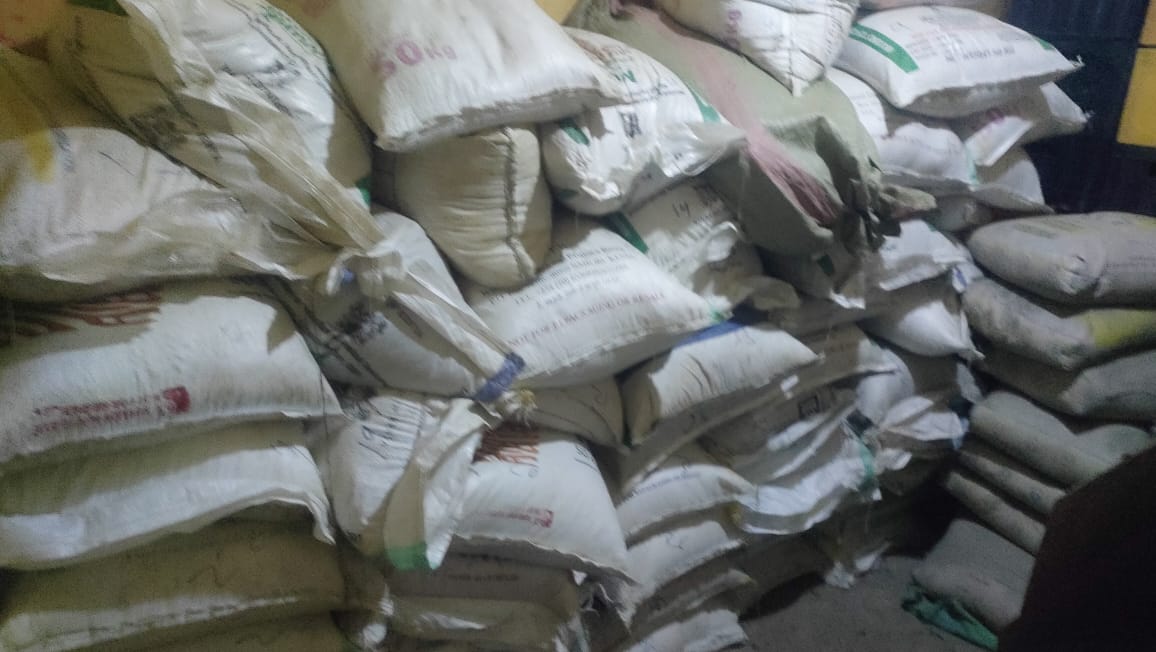
In a bizarre twist, 981 bags
(worth Sh1.57 million) of
fertiliser supplied by the nonexistent 51 Capital were seized by the DCI but left to rot in NCPB
stores.
Gathungu
flagged the situation, pointing out that no action was taken to destroy or
replace them, wasting public funds.
A
procurement process for Urea has also been flagged by the auditor for
disregarding the law.
Gathungu
cited a Sh2.49 billion tender for urea fertiliser that was awarded in its
entirety to a single supplier, MEMS Distributors.
This
was despite two firms tying in the bidding process; hence were required to share
the supplies in agreed proportions.
It
emerged the NCPB’s managing director and head of procurement overruled the
tender committee’s recommendation to split the contract.
The
consequences were immediate as some regions faced artificial shortages, driving
desperate farmers to pay nearly double the subsidised price for fertiliser.
“The
award of tender to one supplier shows impartiality in the award of the tender
and as a result, litigation may be instituted by the other supplier, leading to
the government losing money on legal fees,” the auditor general said.
She
concluded that in the circumstances, value for money and integrity of the
procurement process were in doubt.
President
Ruto’s fertiliser subsidy programme was meant to boost food security and cut costs for farmers.
Instead,
it became a breeding
ground for corruption, leaving farmers with failed crops due
to fake fertiliser.
Gathungu
further highlights loss of stock at the NCPB stores and in transit between
Mombasa port and the stores.
Review
of the records provided for audit by the purchases section of NCPB head office
revealed loss of various stock by NCPB officers totalling Sh2,613,414.
At
least 20 bags of Russian-donated fertiliser were lost during the transfer of
stocks (34,000 tonnes) from Kenya National Trading Corporation to NCPB.
KNTC
had received instructions after consultations that the NCPB be mandated to
oversee procurement, blending and distribution of the Russian fertiliser
donation.
Reports
indicated there was a shortage of 20 bags from the SGR dispatch and quantity
received at Maisha Minerals – the firm which was to blend the fertiliser.
Further,
it was also noted there was an excess of 50 bags in the dispatch from Mombasa and received at SGR Athi River.
“No
explanation was offered on the variances noted, and accordingly, the
recoverability of lost fertiliser and reconciliations of the fertiliser
products could not be ascertained.”
The
audit further reveals the financial mess at the cereals board amid a negative
working capital of Sh3.1 billion.
The
board made a loss of Sh992 million, albeit Sh800 million less than the Sh1.7
billion that was reported in the year to June 30, 2023.
“In
the circumstances, there is a threat to the entity's going concern, and the
financial statements have been prepared on a going concern basis.”
Gathungu
says the conclusion was on the assumption that NCPB would survive on continued support
from the government and other stakeholders.
“My
opinion is not modified in respect of these matters,” she said, further
revealing that past audit queries remain unresolved.
INSTANT
ANALYSIS
Fertiliser
subsidy is at the heart of President William Ruto’s administration's economic
revival plan. The government has been positioning it as one of its success
stories. With the new audit findings, the gains now hang in the balance, to the
woe of farmers seeking to change their stories through the plan.