The CS, who was
attending a graduation ceremony at the Border Police Training Campus in
Kanyonyo, Kitui County, clarified that security agencies are
well-trained and aware not to misuse their authority.
"We have not told police to misuse their
weapons. We are reminding and defending them of their safety. They know well,”
he said.
The ministry came out to explain that he did not issue a shoot-to-kill order.
“He advised police
officers to be alert under situations of criminal acts and when their
stations of duty are attacked or invaded
by criminals,” a statement said.
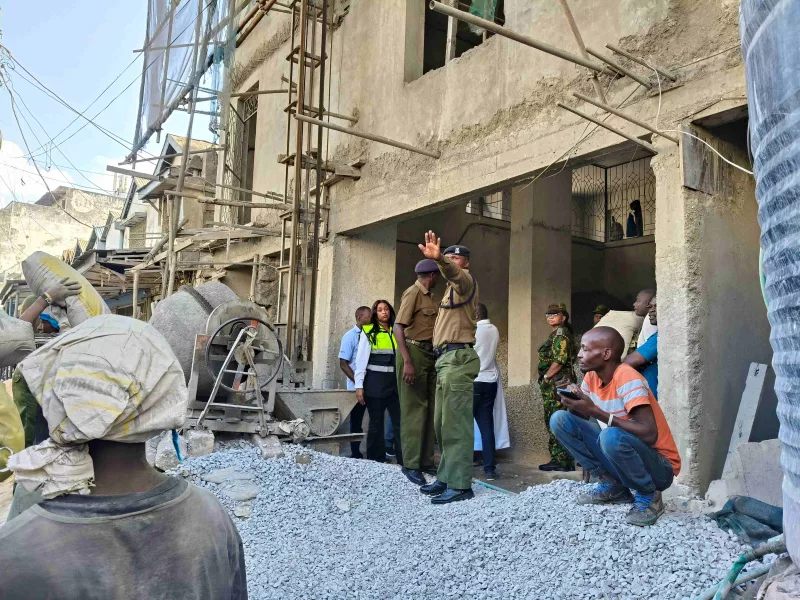
On Wednesday, President William Ruto directed the police to shoot on site criminals who masquerade as protesters to burn and loot businesses and people’s property.
Speaking in Kilimani during the inspection of an ongoing Police Housing project, Ruto said police should only shoot them on the legs, so they can be taken to the hospital and after charged for their criminal activities.
Ruto, however, warned that police must not kill innocent civilians, but criminals must be dealt with in accordance with the law.
“We want peace in Kenya, people to do business. A person who is going to burn another person's business and property, such a person should be shot in the legs, taken to the hospital and then to court. They should not kill him but they should shoot the legs," Ruto said.
The law provides
that police officers can use proportional force to protect lives and
property, whether that property is public or private property, and whether that life is of an
ordinary citizen, a leader, or a police
officer.
“It ceases being a right to demonstrate when
some citizens or criminals depart from
the object or subject of demonstration and engage
in lawlessness and outrightly unlawful endeavours.”
“When this happens, the sixth schedule of the
National Police Service Act (2011)
provides a clear use of firearms framework
that guides police conduct when they are exposed
to risky situations,” the statement added.
According to the Act, police officers are
required to use peaceful and non-violent
means as their first course of action, like talking or warning someone, before using force.
When it comes to
using firearms or live bullets, the law permits an officer to shoot when
their life or a citizen’s life is in immediate
danger.
They can also shoot when protecting citizens, including themselve,s from serious harm
and property, like during a violent robbery or mob attack or when they are stopping someone charged with
a serious crime like murder or armed robbery from escaping
jail or police custody and when trying to
stop someone from rescuing a dangerous criminal.
These provisions
align with both the National Police Service Act and Article 18 of the Penal
Code, which recognise that law enforcement
officers may use force to apprehend individuals resisting arrest, especially where the individual is
committing or has committed a grave
offence.
“When CS Murkomen made his remarks in regards to
shooting, it is not a blanket endorsement
of extrajudicial killings, but a firm reminder
that officers are permitted under the law to use force when they feel attacked or a citizen’s life is on the
line due to criminal activities,” the ministry said.
Officials said Murkomen’s comments were a reminder that while the
police must respect human rights, they
also have a duty to defend Kenyans from
violent criminals and threats to public safety, especially during chaotic protests or riots.
“His remarks emphasise the need for order,
prevention of violent criminal elements,
and protection of both civilians and police officers during unpredictable protests and riots.”
Citizens need the state and have to trust the
state, even when their faith is challenged,
the statement added.
The statement added that the government remains the sole entity with the instruments of providing state security
and protection of all citizens regardless of their background, status or political affiliation.
“That is a responsibility it takes seriously,
especially during times of public unrest
or national tension.”
“While
citizens have the constitutional right to protest peacefully, that right does not include violence towards fellow
protestors, looting and destruction of
property,” the statement added.
Once protests turn
into riots and lawlessness, where lives are threatened and property is
vandalised, they are no longer protected demonstrations
in line with Article 37. They become criminal activities and the constitution does not protect that, the statement
added.
The Law Society of Kenya slammed Murkomen over
his "shoot on sight" order to police against civilians who attack
police stations.
The LSK termed the statement reckless, warning
it could fuel more extrajudicial killings. Murkomen has since clarified that police
are well aware of their limits in the use of force
LSK President Faith Odhiambo began by dismissing
the authority of the CS to issue such operational directives to the police.
"The Cabinet Secretary has no authority
under the law to issue such an order," she noted.
The lawyers' body issued a stern warning to
police officers against misusing their firearms, adding: "Any unjustified
act of aggression, disproportionate use of force, or extrajudicial killing
carried out under such illegal directives will be deemed a premeditated
crime."
"We sound our unequivocal warning to the
National Police Service, that they are legally prohibited from acting upon and
complying with the ultra vires, illegal, and unconstitutional shoot-to-kill
order.