In 1983, renowned Nigerian novelist Chinua Achebe asserted in
his book The Trouble with Nigeria, “The trouble with Nigeria is
simply and squarely a failure of leadership.”
He attributed the blame for
underdevelopment to the country’s
leadership, which focused on corruption and the inefficient use of public
resources.
Achebe argued that those
in power lacked the vision and integrity to use the nation’s resources
to benefit its people.
Achebe was
right. Nevertheless, he neglected to
mention that the leadership crisis in
Nigeria was, and remains, strikingly
relevant across Africa and beyond.
More than 40 years later, his words
poke the conscience of pan-Africanists and well-wishers of the continent, who keep asking pertinent
questions: who bewitched Africa
with poor leadership? For how long
will she lament under bad governance?
Despite being endowed with vast
resources, Africa remains in extreme poverty, political instability
and economic stagnation.
How can
a continent so rich in resources—
cobalt, gold, oil, diamonds, cocoa,
a hard-working young population,
fertile agricultural land and many
other advantages—continue to struggle while supplying the raw materials that power global industries and
economies?
Take, for instance, the Democratic
Republic of Congo, one of the world’s
largest suppliers of cobalt and copper, essential components for mobile
phones, laptops, electric vehicles and
other modern technologies.
Despite these rich endowments,
the poverty rate in the DRC remains
alarmingly high, with more than
73 per cent of the population living
in extreme poverty, according to a
Unicef report from 2022.
A World
Bank report further indicates that the
DRC is among the five poorest nations
in the world, with its citizens living
below $2.15 (that’s an equivalent of
Sh278) a day in 2024.
Nigeria, Africa’s largest oil producer, should also be one of the
continent’s wealthiest nations. Yet,
decades of mismanagement, corruption and poor governance have
ensured that oil profits benefit a small
percentage while millions continue
to suffer in poverty.
Similarly, Côte d’Ivoire and Ghana
are among the largest cocoa-producing countries in the world, with industries generating billions of dollars
annually.
Yet, their farmers remain
some of the poorest workers globally.
South Sudan has vast reserves of gold
and oil but continues to suffer from
civil strife. At the same time, Kenya’s
mineral resources, agriculture and
tourism have not succeeded in uplifting millions from economic hardship.
On the other hand, the Central African Republic is recognised for its gold
and diamonds, yet little is being done
with these resources.
Each African
country is endowed with rich minerals and resources that can propel it into sustainable wealth and economic
prosperity.
The recent withdrawal of United States Agency for International
Development funding exposed its
over-reliance on donor support to
sustain critical sectors of its economy.
It has concealed a deeper issue: the
failure of African leaders to leverage
the continent’s vast resources for the
benefit of their people or the outright
embezzlement of those resources.
Therefore, the most urgent change
needed is in the political leadership
of African nations. Africa needs selfless leaders who prioritise national
development over personal gain.
Are
Africans electing “entrepreneurs” instead of well-meaning leaders?
Pan-Africanists remember leaders
such as Tom Mboya of Kenya, whose
airlift programme in the 1960s provided scholarships for bright but underprivileged students.
Many of these
students became influential figures
in Kenya’s development. Similarly,
Julius Nyerere of Tanzania’s concept
of Ujamaa (African socialism) transformed the country’s social justice
and education and made it self-reliant.
Thomas Sankara of Burkina Faso
transformed his country by prioritising local production, gender equality
and anti-corruption measures before his assassination.
Ahmed Ben
Bella of Algeria led his nation to
independence, spearheading social
reforms focused on self-sufficiency.
Kenneth Kaunda of Zambia promoted African unity and championed
developmental projects.
Osagyefo
Kwame Nkrumah of Ghana was
hailed as the champion of African
independence. He later became the
president of Ghana and led efforts
to industrialise the country before
being overthrown.
Unfortunately, the leaders who
came after these founding fathers
were more concerned about political
mergers and re-alignments aimed at
self-gain. No wonder they remain in
power but in different positions.
They
are in power today, and tomorrow,
they will be in the opposition.
Therefore, there is an urgent need
to invest in leadership programmes
that nurture future leaders with integrity.
Educational institutions must
provide training in civic responsibility from an early age. Children
should learn the importance of rejecting corruption and theft from a
young age.
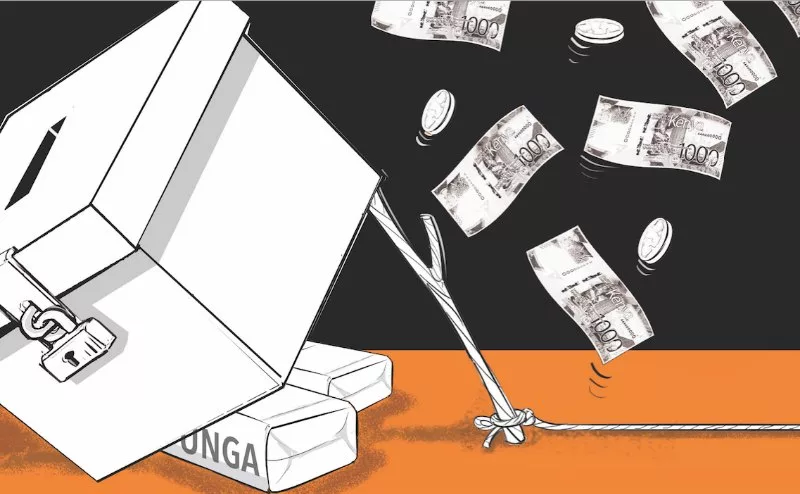
Citizens must also exercise their right to vote thoughtfully
and intelligently, ensuring they do
not elect “entrepreneurs” instead of
visionary leaders who can transform
the continent. Good leaders exist; we
must ensure they are elected, or else
Africa will continue to face its many
challenges.
Perhaps former Tanzanian President John Magufuli put it better in
a speech about his drive to root out
corruption: The way to treat a boil is
to squeeze it out, and I have made it
my responsibility to do that.
I know
squeezing out a boil hurts, but unfortunately, there are no two ways
about it. Let us squeeze out poor and
incompetent leadership!
The writer is a communication specialist