The county boss, through the Council of Governors (CoG), lamented in the wake of a damning expenditure report that exposed how counties are splashing billions in salaries as growth suffer.
In an interview with the Star, COG vice chairperson Ahmed Abdullahi (Wajir) and Baringo Governor Benjamin Cheboi revealed that Treasury has constantly been delaying release of cash to counties, sometimes for more than three months.
As such, the devolved units have been forced to make financial arrangement with financial institutions to pay salaries – to avoid strikes and disruption of services – pending disbursement.
“Most counties frontload payment of salaries that is, make arrangements for payments of salaries ahead of receiving the disbursement,” Abdullahi reckoned.
In the process, the counties are forced to ‘disregard’ their development plans due to a cash crisis occasioned by the delays by the Treasury.
“Controller of Budget approves budgets before the money is spent. She does not take into account the late disbursement of funds by the National Treasury,” Abdullahi said.
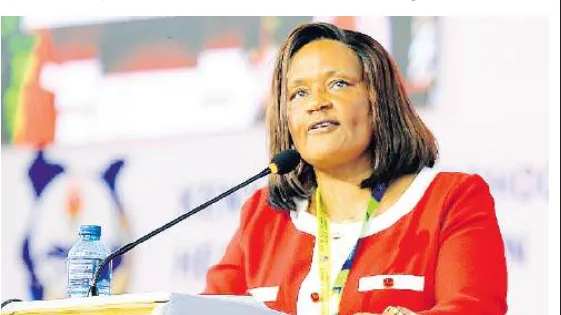
Last week, COB Margaret Nyakang’o released her quarterly Budget Implementation Review Report for the counties for the first nine months of the current financial year.
The revealed that counties spent a paltry Sh44.89 billion on development over the period against. This translates to 16 per cent of the budgets of the devolved units.
This is compared to Sh146.53 billion or 54 per cent splashed on personnel compensation – wages, salaries and allowances.
“This expenditure (personnel emoluments) increased from Sh135.85 billion incurred in a similar period in FY 2022-23,” the report states.
But Abdullahi said at March 30, 2024 – the third quarter – the counties had received funds for six months – up to December last year.
“Here controller is comparing nine months of expenditure against six months of receipts. But remember, most counties had made arrangement with banks and salaries had been paid up to date.”
“So, in the report, what will come out is that counties have spent more in personnel emolument. That is why the report is showing a disproportionately higher spend on recurrent,” Abdullahi, who is also the Wajir Governor, said.
The COG vice chair added, “The COB include riders in the reports taking into account several interventions that Counties have put in place to cushion their workers in the event of funds delays.”
“You can imagine if Wajir was to delay salaries by three months that is almost Sh1.2billion ‘less’ on recurrent. The COB report will look super but is it logical? Would I rather starve my workers so as to look good in the COB report or pay the workers in time and get a bad report?” the governor posed.
The Governors say that for the COB reports to ‘make sense,’ disbursements must be timely and that OCBOB must reduce bureaucracies and allow the devolved units to operate smoothly.
“There are inherent delays in approving budgets from the Counties. COB must reduce the bureaucracies in the approval of budgets,” Cheboi said.
“In fact, COB demands all payment vouchers before she approves the budgets yet we are operating on a cash basis and not accrual basis,” he added.
According to the COB report, only one county – Narok – has spent 50 per cent and above of its development budget in the nine months.
“Only Narok County reported an absorption rate of development expenditure above 50 per cent at 54.4 per cent,” the report states.
Shockingly, 19 counties have spent less than 20 per cent of their budgets on development.
They are Kisii (5.7 per cent), Nairobi (nine per cent), Mombasa (7.7 per cent), Taita Taveta (seven per cent), Embu (16.1 per cent) and Busia (15.3 per cent).
Others are Kericho (14.6 per cent), Baringo (17.8 per cent), Nyeri (14.5 per cent), Bungoma (11.7 per cent), Kakamega (14.6 per cent) and Turkana (20.4 per cent),
Siaya (18.8 per cent), Nyandarua (16.4 per cent), Murang’a (17.1 per cent), Migori (18.8 per cent), Machakos (18.7 per cent) and Kisumu (14.0 per cent) have also absorbed less than 20 per cent of their development budgets.
“A review of cumulative expenditure by economic classification showed that Sh146.53 was spent on Personnel Emoluments, Sh82.65 billion on Operations and Maintenance, and Sh44.89 billion on Development Expenditure,” the report states.