If you are a police officer and get embroiled in domestic squabbles with your spouse, Independent Police Oversight Authority could soon get jurisdiction to come for you if a new regulation is adopted.
The new regulations published last month says that the police watchdog will have jurisdiction to investigate police officers’ domestic affairs, including conflicts that degenerate into violence with their spouses.
In exercising this power, the authority will be free to move on its own motion or act on complaints alleging an officer engaging in the impugned action.
“[The authority shall commence investigations] on a complaint or allegation of domestic violence or sexual violation by a member of the service,” the regulations read.
“[It shall act] upon receipt of a complaint or allegation by a member of the Service of domestic violence or sexual violation pursuant to the Protection Against Domestic Violence Act and Sexual Offences Act committed by a member of the Service,” it adds.
The regulation also says that it deems anybody employed by National Police Service as a police officer to be on duty at all time, meaning that their action remain under the purview of the authority’s oversight.
“A police officer shall, for the purposes of the Act and these Regulations, be considered to be always on duty,” it says.
The regulations does not get the force of law until they are subjected to parliamentary approval processes, including public participation by the National Assembly’s committee on delegated legislation before eventual consideration by the whole house.
Further, the regulations seek to strengthen the hands of the Ipoa investigations by having a designated officer in charge of any particular probe to accord it full attention.
The officer, named as designated officer in the regulations, will have power to summon the accused police officer in the probe, order any material they may need and take any such further action that helps getting all the facts.
For example, the proposed regulations say, “for purposes of obtaining confessions and recording statement, a designated officer shall have all powers, privileges and immunity of an inspector of police provided under section 25A of the Evidence Act. Cap. 80.”
A designated officer in the given investigation, the proposed regulations say, may require a member of the service suspected of having committed a serious offence, to undergo a DNA sampling procedure if there is reasonable ground to believe that the procedure might produce evidence likely to confirm or disprove that the suspect committed the alleged offence.
“For furtherance of the objects and purposes of the Act, these Regulations and any other written law, a designated officer shall, have all powers necessary to remove, or transport, or cause to be removed or transported any firearm or ammunition from one place to another in Kenya,” it says.
Further, in seeking to strengthen the arm of the authority in the ongoing tiff between it and the Internal Affairs Unit, the regulation says that the body shall have a virtual supervisory power over the unit.
For example, the designated officer shall have powers to do impromptu visit and inspection of the IAU premises and monitor their operations.
“The authority shall undertake routine and spontaneous monitoring of the Unit. Cap. 89. A designated officer shall upon monitoring operations of the Unit fill monitoring checklist in accordance with the IPOA Form 27 set out in the First Schedule,” it says.
If the regulations get the force of law, the authority could get formidable power in shutting down an investigation by IAU or overturn the determination the entity reaches on a matter.
“... in reviewing decisions of the Internal Affairs Unit, consider, the duration taken to investigate a complaint; sufficiency of evidence collected; findings of the Unit; action taken on the complaint; the frequency and trends of complaints, status of complaints received; or reasonableness of any decisions taken,” it says.
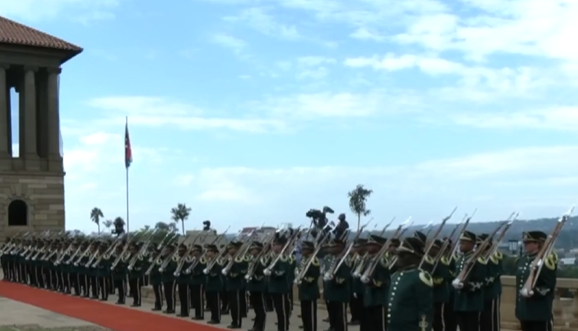




![[PHOTOS] Red carpet in Pretoria as Ruto begins South Africa visit](https://cdn.radioafrica.digital/image/2026/06/abe3e750-6e5a-4394-a45c-899768be6240.jpeg)