Then on Thursday night, September 14, the Energy and Petroleum Regulatory Authority announced new fuel prices, which saw the price of petrol go up by about Sh17, to an all-time high of Sh211. The 14th of the month has become a dreaded day for many Kenyans, for that is the day that EPRA announces its monthly reviews of fuel prices.
By Friday morning, September 15, the outrage was expected. Except that it came in two different ways. There was the section of Kenyans irked by the unprecedented highs in petroleum prices, which would effectively raise the cost of every imaginable commodity in the country.
Then there was the other section; the one that was angry that the Supreme Court had supposedly “fallen prey to foreign agenda” by allowing certain rights for the LGBTQ community.
For this latter group, it seems, the alarming rise in the cost of living and the economic downturn suffered by the citizens apparently weren’t the bigger worry. I saw clips of vehicles with mounted loudspeakers driving around certain towns mobilising residents to come out and protest against the court and the LGBTQ community. It was mind boggling.
There is a paragraph from the Supreme Court’s earlier ruling in February 2023 that I like to revisit. It avers that “Given that the right to freedom of association is a human right, vital to the functioning of any democratic society as well as an essential prerequisite to enjoyment of other fundamental rights and freedoms, we hold that this right is inherent in everyone irrespective of whether the views they are seeking to promote are popular or not”.
Perhaps we should find a way to paste this quote on every wall and tree in this republic so that those who mobilise hate against others are reminded daily.
The global concern that the world is dangerously drifting towards a culture of hate cannot be gainsaid. This manifests largely in the electoral cycles of different countries, where the rise of right-wing extremism feeds on the growing affinity for discrimination based on ethnicity, religion, skin colour and class.
Indeed, when I saw vehicles with loudspeakers in one of the cities in Kenya sounding out people to come out and protest against certain demographics, my first thought was “Today they’ll have loudspeakers against the LGBTQ community, then tomorrow it may just be tribe mobilising against tribe”. After all, the culture of hate has never been known to have boundaries.
The anti-LGBQT movement likes to harp on the old line that “it is a foreign concept which is against our religion and our African culture”, which is ironical. First, because all major religions in this nation actually have foreign origins, and two, those religions and Western civilisation have played a great role in diminishing the so-called African culture.
At any rate, the major reason courts and police stations exist is because humanity is unable to stick to the narrow paths espoused by our Christian beliefs, Muslim ideologies and African culture. The hypocrisy of routinely breaking the law, while demanding saintly standards from others has in fact become our real culture.
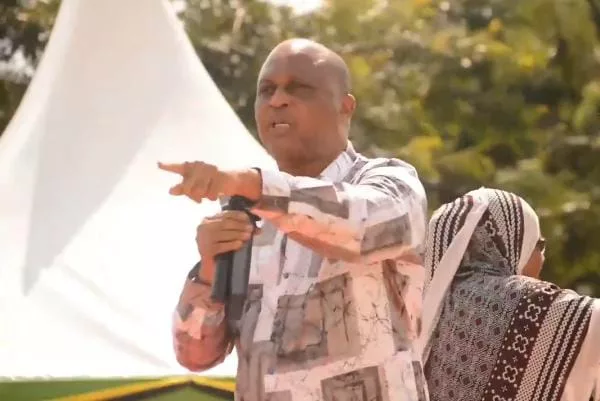
Talking of hypocrisy, one of the elected leaders who turned up to rabidly propagate the anti-LGBQT message last week, is an elected MP, who was over the moon when the Supreme Court threw out the Azimio coalition’s petition in September last year. His view was that the highest court in the land had made a binding ruling and petitioners must move on. But his view in September this year is that the same court has erred in allowing certain rights to the LGBTQ community and must review its own ruling.
My advice to the honourable member is that the Supreme Court is not a roadside hotel, where one can walk in, pick only what they like in the menu and reject all else. In dispensing justice, the court wouldn’t function if it was to first check the views of every one of the 50 million Kenyans. In any case, if it is okay to review the ruling in the LGBTQ case, would it then follow that the court can be asked to review its ruling in the Azimio election petition of 2022? You simply can’t have your cake and eat it.
The common cliché that nobody is born carrying hate in their hearts holds true. It is an emotion founded on conditioning and training. Over the years in our own country, we are witnesses to how marginalisation based on mobilised hate can stagnate an entire population and burn up collective objectives.
Wars are fought on philosophies whose foundations the foot soldiers may not even understand. Many years after World War II, students of history may have assumed that we would never again have to be sold the ideology where one set of humans is not worthy of basic dignity, but here we are.
I am an advocate for the “live and let live” mantra. Until the day we collectively accept that our diversity doesn’t have to be our weak point, we will remain slaves to this culture of hate that seeks to place our perceived divisions at the forefront of every national conversation, so that we are unable to see the destiny that binds us together.
Needless to say, those who benefit from these divisions exist, and they tend to fund them very generously. But without building bridges between people whom we consider different, there would never be an opportunity to understand them.
I like to tell the story of Nelson Mandela’s narration of how his initial talks with the apartheid regime spooked his ANC buddies. It was summarised in words which expressed his belief that there was no knowing how the “other side” worked, without getting the opportunity to understand their minds, their fears and their aspirations. According to the freedom icon, most of our prejudices are based on how we have been conditioned, without any attempt to walk in the other’s shoes.
The LGBTQ debate will be here for a long time. And so will be the more dominant conversation centred around other tools of marginalisation like tribe, race and religion. Ultimately however, when we all stop nit-picking over what is acceptable within our tribal and religious prisms, we will have to face up to the reality that to sustain the existence of the human species, we will have to embrace our diversity and spread love rather than hate.
While at it, silence will no longer be a viable solace. Simply because hate does not have brakes. Like a dragon that one feeds in the belief it will spare his children, hate graduates from the neighbours and then grows an appetite for what is local.
In a nutshell, leaders and the security apparatus may look the other way as some people mobilise anti-LGBTQ demos and hate caravans all over town, but as history has taught us very well, the hate always moves on to the next group, on and on. We can’t afford it. Not now, not ever.
The writer is a political commentator