Kenyans would today be paying significantly more for fuel were it not for the Government-to-Government (G-to-G) fuel supply arrangement that has insulated the country from the worst effects of the renewed conflict in the Middle East.
As geopolitical tensions around the Strait of Hormuz intensify, global oil markets have once again been thrown into uncertainty.
Reduced tanker traffic through one of the world's busiest oil shipping routes and rising freight and insurance costs sparked by attacks on commercial vessels have pushed international oil benchmarks upwards, piling fresh pressure on fuel-importing countries.
Yet despite the worsening crisis, Kenya has avoided supply disruptions and been shielded from the full impact of soaring import costs.
The path to today's pump prices can be traced through four pricing decisions, each reflecting the government's efforts to cushion consumers from rising global oil prices through a combination of the G-to-G arrangement, tax relief and targeted subsidies.
The sharpest increases came during the April-May pricing cycle when the Energy and Petroleum Regulatory Authority (Epra) raised the maximum pump price of Super Petrol by Sh28.69 per litre and Diesel by Sh40.30.
Pump prices in Nairobi rose to Sh206.97 for Petrol and Sh206.84 for Diesel, while Kerosene remained unchanged at Sh152.78 per litre.
A day later, on April 15, the National Treasury reduced Value Added Tax (VAT) on imported petroleum products from 13 per cent to eight per cent, prompting a recalculation of pump prices.
The revision lowered Super Petrol to Sh197.60 per litre and Diesel to Sh196.63, while Kerosene remained unchanged.
The next pricing review, announced on May 14, again reflected mounting pressure from international markets.
Super Petrol rose by Sh16.65 per litre and Diesel by Sh46.29, pushing prices in Nairobi to Sh214.25 and Sh242.92 respectively, while Kerosene remained unchanged.
The increase sparked outrage among public transport operators, triggering a three-day nationwide strike that forced the government back to the negotiating table.
The current pump prices trace their origin to Epra's recalculation of the May-June pricing cycle on May 18 following consultations with public transport operators over concerns that the widening price gap between Diesel and Kerosene could encourage fuel adulteration.
Diesel prices in Nairobi were reduced by Sh10.06 per litre, while Kerosene was increased by Sh38.60 to narrow the gap. Petrol prices remained unchanged.
Those recalculated prices have since remained unchanged through both the June-July and the current July-August pricing cycles.
In Nairobi, Super Petrol, Diesel and Kerosene continue to retail at Sh214.03, Sh222.86 and Sh191.38 per litre respectively.
The government's explanation for that relative stability came on Tuesday when Energy Cabinet Secretary Opiyo Wandayi attributed it largely to the Government-to-Government fuel import arrangement.
According to Wandayi, the arrangement has enabled Kenya to maintain stable fuel supplies, contain import costs and cushion motorists from the volatility gripping global oil markets.
His explanation offers one of the clearest insights yet into how the model has worked during one of its biggest tests since its introduction.
At the heart of the arrangement is one major advantage: Kenya has been insulated from the sharp swings in freight and insurance costs that typically accompany global crises.
Unlike buyers exposed to volatile spot markets, Kenya has remained insulated from rising freight and insurance charges by maintaining fixed shipping terms under the G-to-G arrangement.
"This is precisely the environment in which the value of the Government-to-Government arrangement is felt most," Wandayi said.
"While importers who depend on spot purchases and open tenders have watched their freight and insurance costs climb again with each fresh disruption, Kenya has continued to pay the same fixed freight and premium."
That single feature has proved crucial in preventing even steeper increases in the total cost of importing fuel into Kenya, commonly referred to as the landed cost.
"The fixed cost, held constant while benchmark prices swing, is what has kept our landed costs in check and our deliveries on schedule," Wandayi said.
Beyond containing freight costs, the arrangement has also given suppliers greater flexibility to source petroleum products from regions outside the Gulf.
The arrangement has also enabled suppliers to source fuel from different regions, reducing reliance on shipments passing through the Strait of Hormuz even as tensions continue to disrupt one of the world's busiest oil transit routes.
"It has allowed our suppliers to load from alternative regions without passing the cost of that flexibility on to the Kenyan motorist," Wandayi said.
That diversification has become increasingly important as shipping through the Strait of Hormuz remains constrained by the renewed conflict.
"Kenya's fuel supply has held firm throughout," Wandayi said.
According to the CS, every scheduled cargo destined for Kenya has continued arriving and offloading on time despite the uncertainty in global shipping.
"Every scheduled cargo has arrived and offloaded on time, and fuel has remained available at the pump throughout the country."
Beyond stabilising pump prices, the uninterrupted deliveries have helped Kenya avoid the supply shortages that often trigger panic buying and sharp price spikes during periods of global disruption.
"The continued success of the Government-to-Government fuel supply arrangement has strengthened Kenya's energy security while reducing pressure on foreign exchange demand," he added.
The government, however, acknowledges that the arrangement cannot completely shield Kenya from movements in international crude oil prices.
Wandayi said international benchmarks have begun rising again following the renewed Middle East crisis and warned that the pressure could gradually be reflected in future pricing cycles.
"The ministry will continue to work closely with the industry to keep supply consistent and uninterrupted, to defend the fixed terms of our Government-to-Government arrangement and to keep Kenyans fully and openly informed as the picture continues to develop," he said.
To cushion consumers further, the government has extended the reduced eight per cent VAT on petroleum products for another three months until October 14, 2026.
It has also committed Sh945 million from the Petroleum Development Levy during the July-August pricing cycle to help sustain current pump prices.
"These interventions reflect our broader commitment to protecting consumers, supporting businesses and safeguarding the economy from external shocks," Wandayi said.
While global oil markets remain on edge, the renewed Gulf crisis is providing one of the clearest demonstrations yet of the role the G-to-G arrangement plays in Kenya's fuel market.
Rather than shielding motorists from higher prices altogether, the model has helped moderate import costs, maintain uninterrupted fuel supplies and cushion consumers from the full force of international market shocks.

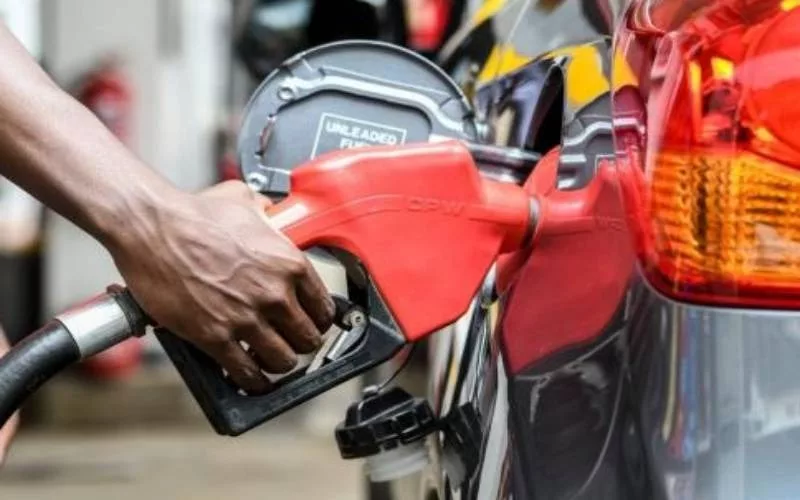
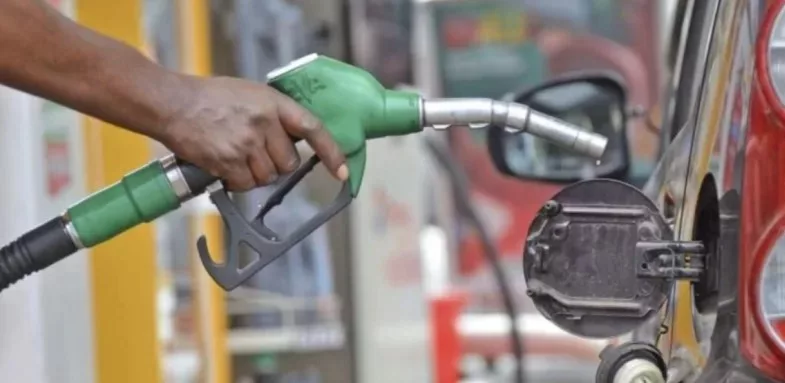 A petrol station pump attendant prepares to fuel a car. /FILE