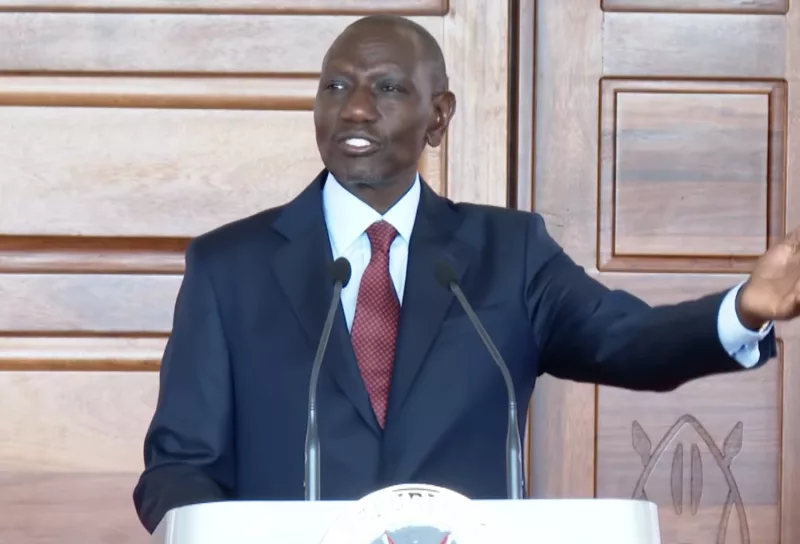
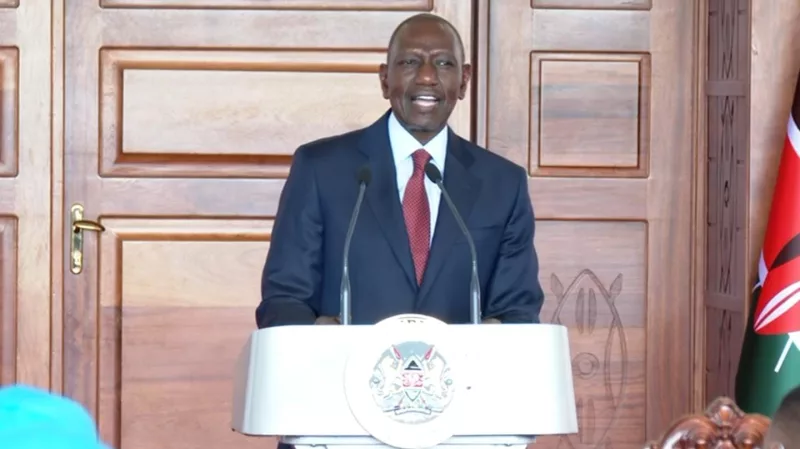
President William Ruto on Wednesday left the audience in stitches after he greeted the AFC Leopards delegation at State House in a Luhya-Swahili accent.
As he took to the podium to give his address, the President warmly welcomed the delegation and inquired whether they had been served tea on arrival at State House.
"Nimefurahi sana kuwaona. Mulipateko kachai? Nitasema waongeze chai ingine," Ruto said, sparking laughter from the audience.
This is translated to mean, "I'm very happy to see you all. Were you served tea? I will ask them to serve you more tea."
The expression, delivered in a blend of Luhya and Swahili, was seen as a move by the Head of State to connect with the club’s strong support base, which is largely drawn from the Luhya community.
The meeting brought together AFC Leopards players, technical staff and club officials as the government continues engaging stakeholders in Kenyan football.
Ruto’s light-hearted greeting quickly became the highlight of the event, with clips and photos circulating widely on social media.
AFC Leopards is one of Kenya’s most successful and popular football clubs, boasting a rich history and a large following across the country.
The State House reception comes as the government seeks closer collaboration with sports organisations in efforts aimed at promoting football development and supporting local talent.
While the meeting focused on football matters, the President’s “Mulipateko kachai” greeting generated the biggest buzz online.
During the meeting, Ruto handed AFC Leopards Sh10 million, directing that Sh5 million be shared among the players while the remaining Sh5 million be used to recruit new players ahead of the new football season.
He said the donation was intended to reward the team and strengthen its competitiveness.
"I will give them the Sh10 million. Players will get Sh5 million to sort themselves out and the other Sh5 million they can sign in new players so that these players can get something to go home with," he said.
The President said his administration views sports as a key economic sector capable of creating jobs and empowering young people, rather than simply a recreational activity.