The Kenya Medical Practitioners and Dentist Union (KMPDU) termed the agreement as ‘spectacular corruption' that is yet to be exposed.
“If there is a particular corruption that is yet to be unraveled [then it is this one],” KMPDU secretary general Devji Atellah said.
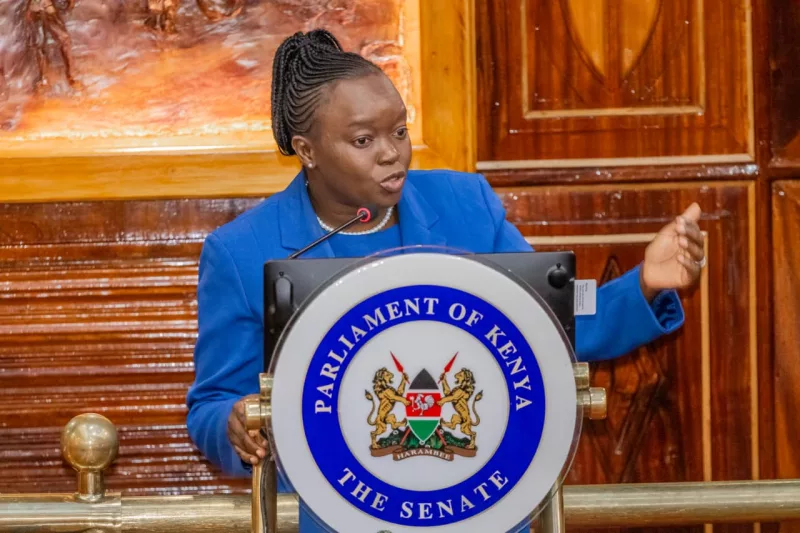
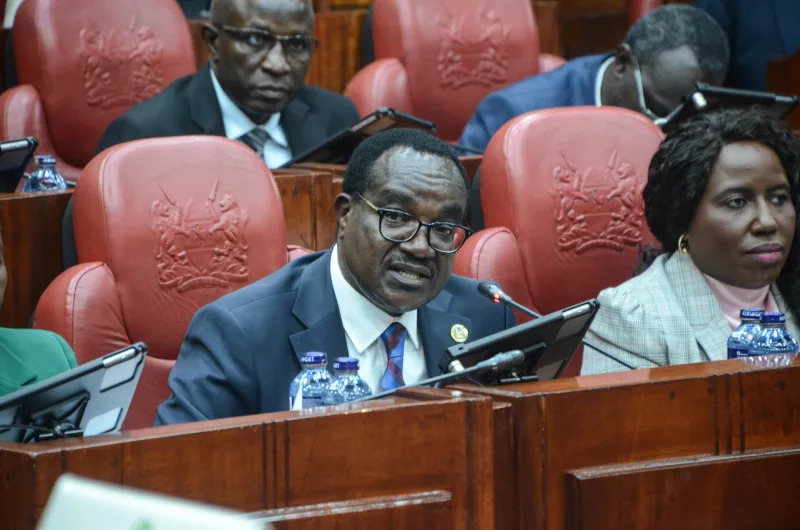
Appearing before the Senate health committee on Tuesday, Atellah asked the panel to order an audit of the exchange programme.
“We will ask the committee to actually ask for an audit on a cost and value analysis between that period and now,” he added.
The union claimed that Kenyan taxpayers got a raw deal in the exchange programme in which Kenya imported 100 medical specialists from Cuba and Kenya exported 50 medics there.
Atellah claimed that the government brought into the country specialists who were readily available locally.
“We need to know what value has it (the programme) brought to the country and what expenses the country incurred,” he told the panel chaired by Uasin Gishu Senator Jackson Mandago.
Atellah also disclosed that foreign doctors were paid up to four times salaries earned by local doctors.
On June 2, 2018, Kenya brought in doctors from Cuba to bridge the medics gap that existed at the time.
The doctors were distributed to the 47 counties with each devolved units getting at least one doctor.
“The aim of my ministry is to bring forward critical care physicians at that level - family physicians, physicists, oncologists and surgeons dealing with plastic reconstructive surgery, dealing with orthopedic surgery and dealing with neurosurgery,” former Health CS Sicily Kariuki said in 2018.
But yesterday, Atellah said 60 per cent of the medics were family doctors – who were already locally available in the country – and 40 per cent other medical specialists.
A majority of Kenyan doctors sent to Cuba, he claimed, were forced to cut short their programme and return home due to frustrations and deplorable working conditions.
One doctor, he claimed, passed on because of the frustrations.
“In essence the project of Kenya-Cuban agreement was not beneficial to the country,” he said.
Atellah had appeared before the panel to shed light on the controversial policy by the Ministry of Health to stop Kenya health workers from working in other countries.
He said the development of the policy was shrouded in secrecy, with the ministry only engaging the union at the tail-end of the process – validation stage.
“The reason why doctors are leaving the country to the tune of 40 or 50 per cent is because of poor remuneration in this country,” Atellah said.
“In South Africa the remuneration is triple what doctors get in Kenya. Even in Botswana, they are paying better. The ministry wants to curtail the movement of doctors to greener pastures.”
About 4,000 doctors are said to be jobless in the country. Some of them are seeking jobs abroad.
“Kenya in the recent past has witnessed emigration and migration of the health workforce,” a memo by acting Health Director General Patrick Amoth dated February 7 reads.
“Many countries continue to seek Kenyan health workers while, on the other hand, the country cannot offer employment to all our health worker cadres who graduate from our training institutions.”
The Senate team is inquiring into the draft policy that has triggered uproar among healthcare specialists.