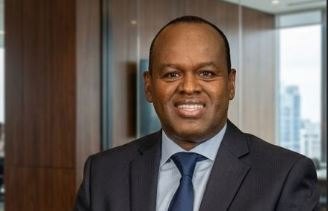
Blue Economy and Maritime Affairs Cabinet Secretary Salim Mvurya said registering the BMUs into Saccos will make it easy to manage them and have access to funding from the government, donors and financial institutions.
Mvurya, who is the immediate former Kwale governor, said his ministry targets to empower the artisanal fishermen to be able to fish in the deep seas by providing good size boats and cold storage facilities and ice-making machines to them.
“We also plan to give required training to coxswain as well provide them with modern fishing equipment,” the CS said.
Marine fisheries has the potential to create at least 60,000 direct jobs and 180,000 indirect jobs in the next five years, according to Mvurya.
He said that the government is looking at the value chain approach which is critical and should be inculcated in all the ministry’s programmes.
“Our agendas should therefore be directed towards real transformation, avoid duplication of roles and programmes and also be in tandem with what each county government wants,” the CS said.
“We have to keenly relook at what exists, fine-tune it in line with the government’s agenda together with the agendas of the county governments.”
Mvurya said that as a government, they have to consider the products fishermen are producing, where the market is, who provides what services within the value chain and finally to be able to give concrete solutions to the existing challenges.
“To achieve this we need to attract investment in fishing, value addition and mari-culture,” he said.
The CS added that the investments in landing sites require to be harmonised to inculcate a business-like management system.
Mvurya said that management and research should be reorganised to be investment-oriented and mwananchi-demand driven.
He was speaking in Mombasa after opening a two-day consultative meeting with the Council of Governors’ Blue Economy Committee and other development partners.
Lamu Governor Issa Timamy, who also chairs the CoG Committee on Blue Economy, said that the sector is a priority area for the counties.
He said the sector already supports an estimated two million people directly and indirectly as fishermen, traders, processors, input suppliers, merchants of fishing accessories and providers of related services.
The governor further said that the Blue Economy also plays an important role in job creation, income generation and food and nutrition security.
“Therefore, as we sail towards a sustainable Blue Economy, this meeting is a prime opportunity for all of us to gather our collective efforts and capitalise on the opportunities that exist within the Blue Economy in Kenya and beyond for the benefit of our people,and future generations,” Timamy said.
He said that since the Blue Economy conference held in 2018 in Nairobi, county governments have noted with appreciation that a lot of research and capacity-building activities have gone into the sector. However, he said that more action was needed now.
“Whereas we laud these efforts which are very important, it is now time to prioritise investments that will address the challenges that affect communities that rely on our blue resources,” Timamy said.
“It is imperative that we put the research into action to ensure that our investments are translated into concrete results on the ground.”
He urged that as the two levels of government and development partners look into the implementation of projects and investments in the counties, they should also strive and prioritise the conservation of endangered species and high-value fish stocks.
Key to this goal, he said, is empowering fishers and rural coastal communities to take ownership of the resources while making sure that they find complementary income sources to counter lost revenues.
Busia Governor Paul Otuoma reiterated the need to align county and national government to objectives as far as the Blue Economy is concerned.
Otuoma said that there was a need of working together so that resources being used in the Blue Economy sector are used to achieve the social economic well-being of citizens.
He said that landing sites in coastal and inland water fisheries need to be improved to be able to support fishermen.
"I support the move to transform BMUs into Saccos because when you put value chain and addition programmes there, then they can be economically viable entities to trade and be supported to be able to fully exploit the blue economy sector,” the governor said.
He called for changes in policies, especially those affecting fishing in our exclusive economic zones, saying that foreign vessels have been overfishing in the area at the expense of local fishermen.
“We are now even getting farmed fish from China which should not be the case. Our people need tools and inputs required in terms of seedlings, fish and extension services to produce food,” Otuoma said.
“Kenya is still a protein-deficient country, the money we use to get fish from outside can be used to help our fishermen become economically viable.”
(edited by Amol Awuor)


![[PHOTOS] The new Ngong –Naivasha Road viaduct](https://cdn.radioafrica.digital/image/2026/06/64d4f771-4432-4aee-ba3c-2f304c4436ec.jpg)