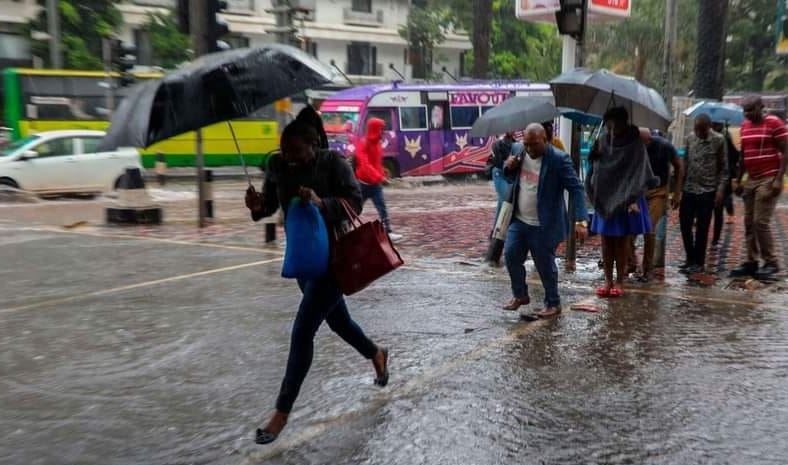


The weatherman says some rain is expected at the end of this week however northern Kenya, which is ravaged by drought, will not benefit.
A principal meteorologist at the Kenya Meteorological Services Andrew Njogu said the coming rain will only reach a few places around Lake Victoria and in Rift Valley highlands.
He said Mt Kenya area will remain cloudy in the morning and afternoon, with a few places receiving showers.
Njogu said Turkana and Samburu counties could also benefit.
“There is a possibility of morning rain and night showers occurring over few places during the second half of the forecast period,” he said in a statement on Tuesday.
The met said the rest of the country will remain sunny and dry.
The forecast however noted a general decrease in rainfall amounts over much of the country in the last one week, with the exception of the highlands west of the Rift Valley.
Daytime temperatures also increased.
According to the National Drought Management Authority at least 4.35 million Kenyans will be in need of food aid by October, if the drought crisis continues unabated.
Last week, the authority said the situation is worsening faster than was earlier projected. In their estimation, the drought situation has deteriorated in 20 of the 23 ASAL counties.
These are Isiolo, Mandera, Samburu, Turkana, Wajir, Laikipia, Marsabit, Embu, Garissa, Kajiado, Kitui, Makueni, Meru, Narok, Nyeri, Tharaka Nithi, Taita Taveta, Tana River, Kwale and Kilifi counties.
The authority attributed the situation to the poor performance of the 2021 long rains, coupled with previous three failed consecutive seasons.
Kenya is also among the most drought-hit countries in the Igad region. The others are Djibouti, Ethiopia, Somalia, South Sudan, Sudan and Uganda.
This is according to the 2022 edition of the Inter-Governmental Authority on Development Regional Focus on Food Crises released two weeks ago.
The report showed that Ethiopia, Kenya, Somalia, South Sudan and Sudan are facing the largest food crises in the region.
“The number of people affected in 2022 is 50 million to 51 million people and this is a dramatic increase from 2021 when 42 million people suffered from high levels of acute food insecurity," the report read.
Igad executive secretary Workneh Gebeyehu said the region has been hit like never before.
He said the combination of climate extremes, conflict and macroeconomic challenges makes it almost impossible for resilient communities to sustain multiple shocks.
“The current food security situation across the Horn of Africa (Ethiopia, Kenya, and Somalia) is dire after four consecutive rainy seasons failed. A climatic event not seen in at least 40 years, or since the beginning of the satellite era,” Gebeyehu said.
World Food Programme’s regional director for Eastern Africa Michael Dunford said conflict, climate extremes, economic shocks, rising costs and now the impact of the conflict in Ukraine on food and energy prices are pushing millions towards starvation in Eastern Africa.
(Edited by Bilha Makokha)
“WATCH: The latest videos from the Star”