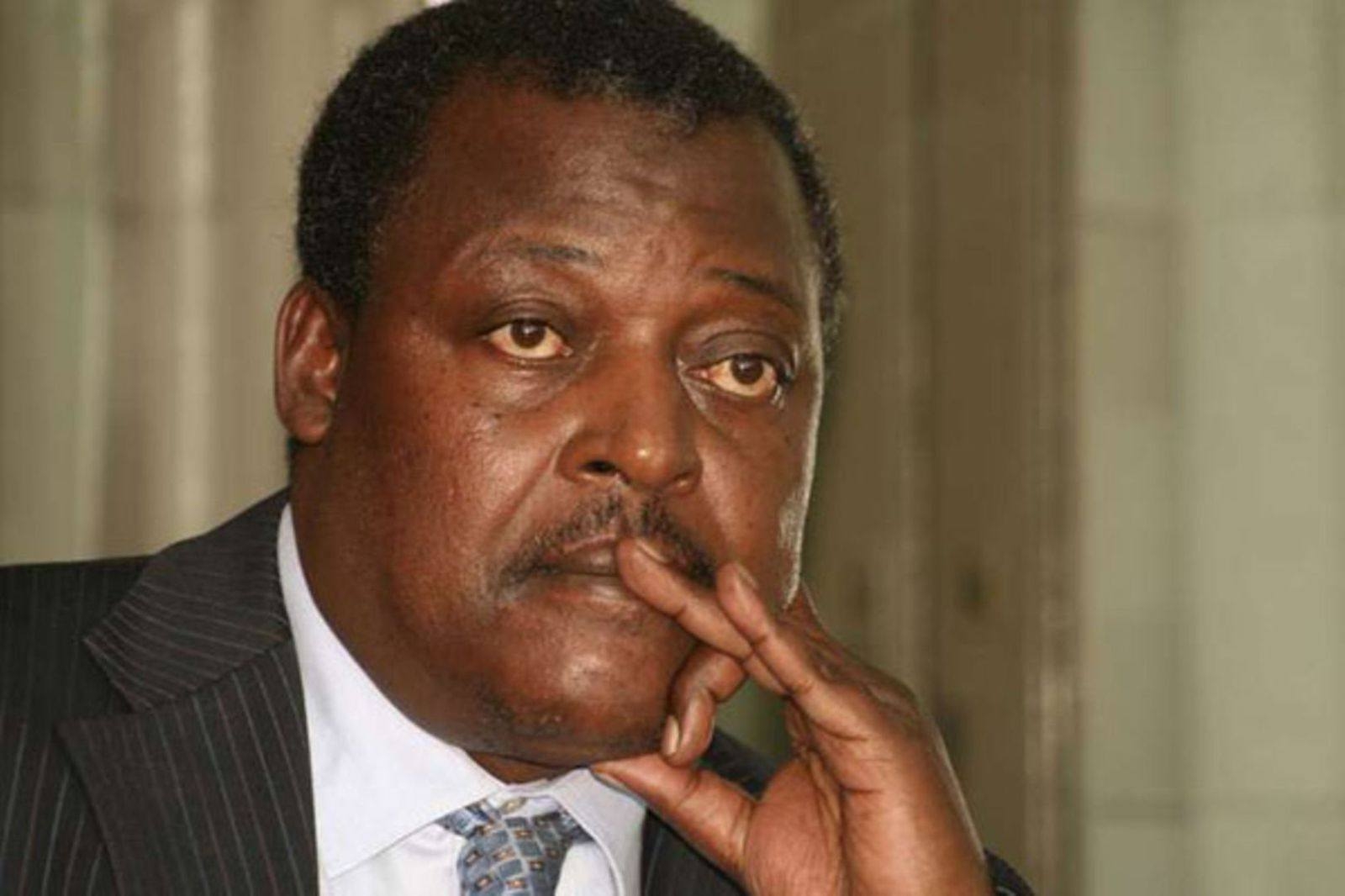


Members of Parliament now want the National Police Service Commission to prepare a detailed report on the progress of reforms.
Led by Suna West MP Peter Masara, the legislators said the song of police reforms has been sung from the early 2000s but it seems little has been achieved.
According to the legislator, it is unfortunate that in the current society, the national police is still being accused of brutalising, killing and harassing ordinary citizens.
The government embarked on implementing radical changes in the NPS mainly to increase NPS’s effectiveness and efficiency in delivering services by closing the gap between the twin services of APS and the KPS, and to demystify perceptions of brutality and abuse of human rights.
“The changes will clarify and simplify command and control to increase accountability and performance,” he said.
The comprehensive changes are meant to deepen the transformation of the police and overall national security but they have rattled many officers and there are already casualties occasioned by the restructuring of the command structure.
The reorganisation since then has caused anxiety within the Administration Police Wing, the Kenya Police and DCI.
The reforms have seen the abolition of the APS Regional Commander, KPS Regional Commander, DCI Regional Commander, County Coordinating Commander, KPS County Commander, APS County Commander and DCI County Commander.
Some senior officers have lost lucrative duties and others, prestigious offices and powers.
There has been a parallel command in APS and KPS as well as DCI. But the changes are setting one command which eliminates the two lines in command of APS and KPS, and officers in both services are placed under one command in each jurisdiction.
This saw some officers lose their positions.
More than 24, 572 APS officers joined the KPS’s 39, 680 in the general duties that were previously a reserve of the KPS only, to raise the number of cops in GD to 64, 252. And as a result, the officers in GD now focus on public safety and security.
The APS were left with slightly over 7,000 officers who are tasked with border control and security, as well as combating cattle rustling and banditry.
But Masara said, “Mr Speaker we need to know were these police officers offered any form of training since the service was transformed from a force to a service”.
He said the report should also detail whether police officers across the country are receiving any form of psychological support to address psychological stress affecting the officers.
“We need to know what is the success so far of the said police reforms among many other aspects that we need to know Mr Speaker,” he said.
Masara said in addition, the National Police Service Commission should move swiftly and put mechanisms in place that will ensure they have established the root cause of police brutality and killings.
“As we condemn these acts by police we need to interrogate the contributing factors by reaching out and talking to different actors including the victims, their families, perpetrators of these abuses, human right defenders as well as the police and other state actors
In 2019, a report indicated police brutality, extrajudicial executions and forced disappearances were still rife in 2019 despite the heavy state investment in reforming the police service.
Missing Voices — a website that documents cases of police brutality — 82 people were killed or disappeared in 2019 and police were accused of playing a role.
The site said the figure was the highest since 2007.
The website was founded by human rights watch groups that monitor police and security operations and advocate for fair and rights-based policing.
According to the website, 550 cases of forced disappearance and police killings had been recorded since 2007.
in 2018, 75 people were killed or disappeared at the hand of the law enforcement officers.
Of the recorded cases, 52 per cent arose from shootings, including crime, torture and tear-gassing, the site says.
By March 2020, the established at least 210 extrajudicial killings had happened in the last 15 months. Of these, 146 cases involve direct police action, while 39 deaths occurred in police cells.
The statistics came from executions in broad daylight, forced disappearances or death in police cells. These cases are on the rise, especially in slums and informal settlements, where youths aged 14-30 are killed nearly on a daily basis.
Slums bear the brunt of these killings with residents saying there are two or three killer cops stationed in the slums. They operate with impunity, arrest their targets and drain them in torture rooms before executing them.
While some are killed and others left with serious injuries, others disappear, never to be seen.
Wilfred Olal, a social justice coordinator, told the Senate Justice Legal Affairs and Human Rights Committee that after executing their targets, officers threaten the communities of dire consequences if they speak about what happened.
What is even more shocking is that families whose relatives are killed are asked to pay for bullets that killed them. A bullet, Olal said, is sold between Sh3,000 and Sh7,000, depending on the value the officers will impose.
To add salt to injury, the families are not allowed to mourn or bury their loved ones. Funeral gatherings are regarded as illegal and mourners teargassed, all in a bid to instill fear and confusion.
According to Ipoa, within five months (January and June last year), 77 deaths were recorded, all involving youth aged 18-30.
The authority’s chairperson Anne Makori told our investigations desk that while 54 deaths had occurred as a result of police shooting, 23 occurred in police custody.
Makori said within the same period, they recorded 25 shooting incidents, where victims had been seriously injured.
She said the authority has completed investigations into 110 of the 210 cases registered. Of these, 75 are currently before courts, 34 are pending at the ODPP and 20 files are set to be submitted to the ODPP.
“There have been six convictions over the same period, with two cases being sentenced to death,” she said.
Makori said the authority’s view of the increasing cases is because the police have become unprofessional to an extent they opt to kill their targets as a shortcut to the lengthy investigation and prosecution processes.
“This is impunity and criminality within the service. It is evident that police officers are involved in crime and cover-ups,” she said.
She said historically before the establishment of police accountability, the service had police officers being a law unto themselves.
“We are of the view that there is lack of progressive training. The Service Standing Orders provide that all police officers shall be proficient in the use of firearms and must also attend an annual Musketry Training,” Makori said.
"The orders further provide that before the annual musketry training, officers will have firing range practice. However, this does not happen as it should. This results in stray bullet fatalities and injuries in incidents of a firearm discharge."
Ipoa has received more than 12,000 complaints about police officers and operations since it was established in 2012.