
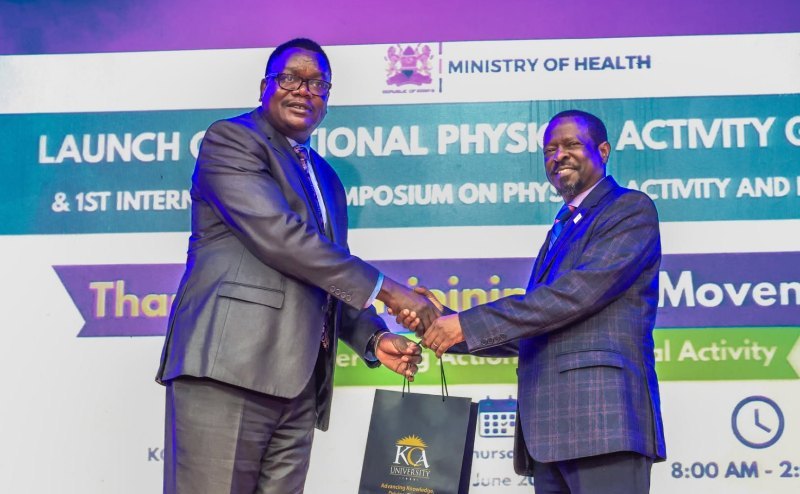
 Director of Primary Health Care Dr Joel Gondi with KCA University Vice Chancellor Prof Isaiah Wakindiki during the launch of Kenya's first National Physical Activity Guidelines at KCA University in Nairobi on Thursday,
KCA University Vice Chancellor Prof Isaiah Wakindiki has challenged Kenyans to embrace physical activity as a daily habit, saying the country's newly launched National Physical Activity Guidelines offer an important opportunity to reverse the growing burden of lifestyle diseases.
Speaking during the launch of Kenya's first National Physical Activity Guidelines at KCA University in Nairobi on Thursday, Prof Wakindiki said universities and other institutions have a responsibility not only to educate learners but also to promote healthy living.
"Physical activity is essential in creating healthy minds and productive citizens. As universities prepare learners for the job market, we must also invest in their physical wellbeing," he said.
The launch, organised by the Ministry of Health and partners during the First International Symposium on Physical Activity and Public Health, comes at a time when non-communicable diseases (NCDs) such as heart disease, diabetes, cancer and chronic respiratory illnesses are becoming a major health challenge in Kenya.
According to Kenya's National NCD Strategic Plan, non-communicable diseases account for about 39 per cent of all deaths in the country, while other reports show the conditions are increasingly affecting younger adults in their most productive years.
Physical inactivity, unhealthy diets, tobacco use and harmful alcohol consumption are among the leading drivers of the epidemic.
Prof Wakindiki said KCA University has been promoting active lifestyles through its annual cycling event over the last four years, bringing together students, staff and communities to encourage fitness, road safety awareness and social engagement.
He also revealed that the university plans to introduce programmes in sports science and human movement studies to equip young people with skills for careers in the growing sports and wellness sector.
The newly launched guidelines provide evidence-based recommendations on the amount of physical activity needed by different population groups, including children, adolescents, adults, older persons, pregnant women and persons living with disabilities.
Drawing from internationally recognised recommendations adopted in the guidelines, children and adolescents should accumulate at least 60 minutes of moderate to vigorous physical activity every day, while adults should undertake between 150 and 300 minutes of moderate-intensity activity each week or 75 to 150 minutes of vigorous activity. The guidelines also encourage reducing sedentary behaviour and prolonged sitting. (NCBI)
Director of Primary Health Care Dr Joel Gondi said the guidelines were developed to help every Kenyan understand the level of physical activity required to maintain good health.
"The guidelines provide information that will enable every Kenyan to engage in physical activity according to their age, physical condition and health status," said Dr Gondi.
He noted that the framework adopts a whole-of-government and whole-of-society approach, emphasising that promoting healthy lifestyles requires collective action.
"Health promotion is not the responsibility of the health sector alone. Individuals must take responsibility for their health by understanding the level of physical activity required to remain healthy," he added.
Dr Gondi warned that sedentary lifestyles are contributing to rising rates of obesity, hypertension, diabetes and other chronic illnesses, placing a heavy burden on families and the healthcare system.
The World Health Organization welcomed the guidelines, describing them as a major step in strengthening disease prevention efforts.
WHO representative Dr Christine Kisia said regular physical activity helps prevent heart disease, high blood pressure, certain cancers and mental health conditions such as anxiety and depression.
She noted that physical inactivity remains a global concern, with an estimated 80 per cent of adolescents worldwide failing to achieve recommended activity levels.
Globally, the WHO estimates that non-communicable diseases account for about three-quarters of all deaths. The organisation identifies physical inactivity as one of the leading behavioural risk factors, alongside tobacco use, unhealthy diets and harmful alcohol consumption.
Unesco representative Hugue Ngatta Ngandeu said sport and physical activity are powerful tools for improving health, promoting inclusion and empowering vulnerable groups, including women and persons with disabilities.
Health experts say the success of the new guidelines will depend on how effectively they are implemented in schools, workplaces, communities and public spaces. They argue that creating environments that encourage walking, cycling, recreation, and active living could significantly reduce the country's growing burden of preventable diseases.