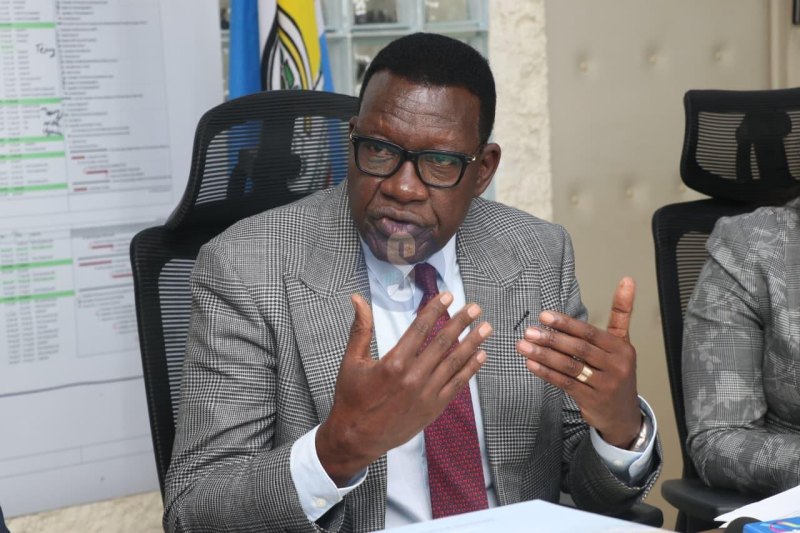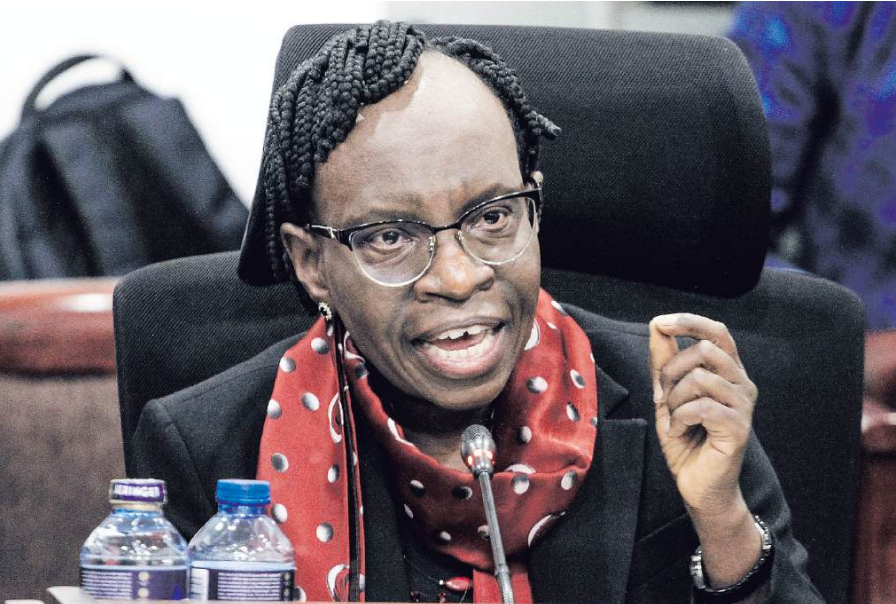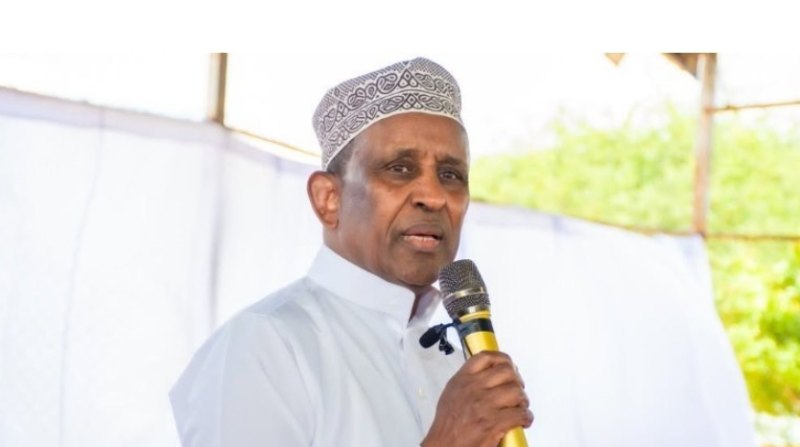
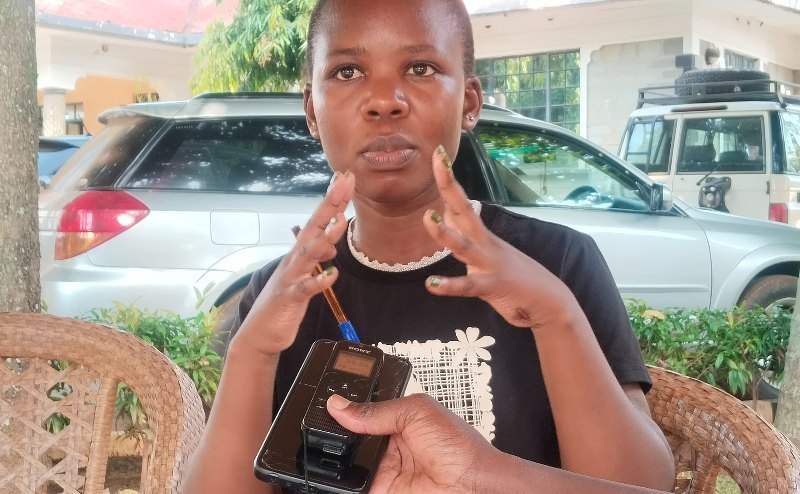
 Dinah Awuor of Muungano Rural Empowerment Centre /Faith Matete
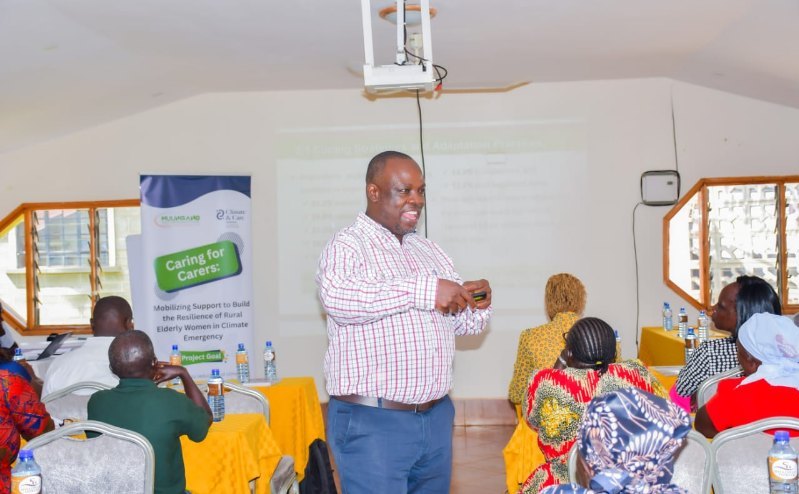 Edwin Ochieng from Move on Africa, who conducted the study on the nexus between Climate change effects and care responsibility for elderly women in Siaya County, speaking during a stakeholders' engagement for the study / FAITH MATETE
When floods sweep through her village, Jacinta Akoth's worries go far beyond the rising water.
The elderly grandmother must find food for her grandchildren, secure drinking water and ensure the family has a safe place to sleep.
During prolonged droughts, she walks longer distances in search of water and struggles to put meals on the table.
"We suffer a lot when floods come. Sometimes our crops are destroyed and we have no food. The children depend on us, yet we have nothing to give them," she said, appealing for government support to help families survive recurring climate shocks.
Jacinta's experience mirrors the findings of a recent study by consulting firm Move on Africa for the Muungano Rural Empowerment Centre, which found that climate change is significantly increasing the care burden carried by elderly women in Siaya county.
Dinah Awuor of the Muungano Rural Empowerment Centre said the organisation has been implementing programmes that promote sustainable and resilient livelihoods, particularly among women.
She explained that over the past few months, Muungano has been implementing a project examining the climate-care nexus for elderly women aged 60 years and above during climate-related emergencies in Siaya.
Awuor said the project focuses on understanding how climate variability affects older women in four subcounties and identifying solutions to the challenges they face.
"One of the key reasons we undertook this study was the neglect of elderly women and the existing gap in linking climate change and care," she said.
Awuor noted that discussions around climate change often focus on food security, yet little attention is paid to the care needs of older persons during climate shocks such as floods and droughts.
"Through this project, we wanted to understand the broader impacts of climate change on elderly women, including their health, safety, caregiving responsibilities, access to essential services and overall wellbeing," she added.
The findings, she said, are intended to inform policies and interventions that ensure older women are not left behind in climate adaptation and disaster response efforts.
The study revealed how elderly women are bearing an increasing burden of caring for their families as climate change intensifies droughts, floods and extreme heat.
The study examined how climate change affects the care responsibilities of older women and how existing policies respond to their unique needs.
Researchers found that climate-related disasters are worsening the vulnerability of elderly women, many of whom are already grappling with age-related illnesses while caring for grandchildren, spouses and other dependants.
According to the findings, about 90 per cent of elderly women surveyed said they were responsible for caring for their grandchildren.
During periods of drought and flooding, these responsibilities increase significantly as families struggle to access water, food and healthcare.
The study's lead researcher, Edwin Ochieng, noted that climate shocks often force elderly women to spend more time fetching water, searching for food, preparing meals and caring for family members affected by climate-related hardships.
“Climate change is not only an environmental issue. It has a direct impact on care responsibilities and disproportionately affects elderly women who are already vulnerable because of age and health conditions,” Ochieng said.
The study, conducted between April and May 2023, reached 382 elderly women through household surveys across the subcounties of Siaya, Bondo, Rarieda and Ugunja.
Researchers also held focus group discussions and interviewed government officials and civil society organisations.
Health challenges compound vulnerability
The findings indicate that many elderly women are battling chronic illnesses that become more difficult to manage during climate crises.
About 55 per cent of respondents reported suffering from arthritis, while 33 per cent said they had hypertension.
Nearly 20 per cent reported living with diabetes.
Women living in flood-prone areas such as Alego, Usonga and West Yimbo were found to be particularly vulnerable, as recurring floods disrupt livelihoods, limit access to healthcare and increase household responsibilities.
Ochieng observed that many elderly women find themselves in what they described as a “double burden” situation.
“While they serve as caregivers to grandchildren and spouses, they also require care themselves due to age-related illnesses and declining health.”
The study further revealed significant information gaps. Nearly 60 per cent of respondents said they do not receive climate-related information.
“Even when information is available, many reported that it is not presented in a format that they can easily understand or use to prepare for climate-related emergencies.”
Negative coping mechanisms emerging
Faced with worsening economic conditions, Ochieng noted that many elderly women have adopted coping mechanisms that sometimes worsen environmental degradation.
One of the most concerning findings was the increasing reliance on charcoal burning as a source of income.
He warned that cutting trees for charcoal contributes to deforestation, which in turn exacerbates the impacts of climate change.
The study also found that 82 per cent of respondents reduce the number of meals they consume during climate-related crises, while an equal proportion reported feeling unsafe during periods of drought, flooding or extreme weather.
However, some positive coping strategies have also emerged.
Many elderly women have embraced kitchen gardening, joined savings groups and started small businesses to supplement household incomes and improve food security.
“These initiatives are helping women build resilience and support one another during difficult times,” the researcher noted.
Policies exist but gaps remain
While Kenya has several climate-related policies, including the Climate Change Act and county climate action plans, the study found that the specific concerns of elderly women remain largely overlooked.
He said existing policies rarely address the intersection of climate vulnerability, ageing, disability and caregiving responsibilities.
Among the key recommendations was the establishment of vulnerability registers at county and national levels to improve the targeting of support programmes.
The study found that about 45 per cent of respondents receive government cash transfers averaging around Sh2,000.
However, many felt the support does not adequately reflect the varying levels of vulnerability experienced by older persons.
Researchers recommended that governments consider introducing top-up payments for elderly women facing multiple challenges, including disability, chronic illness and climate-related hardships.
Other recommendations included strengthening community support systems, expanding mobile health clinics for elderly populations, improving access to climate information and increasing public participation opportunities for older women.
The study also called for greater investment in programmes targeting elderly women, arguing that policy commitments must be backed by adequate funding if meaningful change is to be achieved.
“Policies alone are not enough. Resources must be allocated to ensure elderly women's concerns are addressed and that they can build resilience against climate change,” the researcher said.
Awuor also stressed that the study should serve as a wake-up call for policymakers to recognise elderly women as a vulnerable group within climate action planning.
As climate change continues to intensify across Kenya, the findings highlight the often-overlooked experiences of elderly women who remain at the centre of family care despite facing some of the greatest risks themselves.
Instant analysis
The study highlights how climate change is deepening social inequalities by placing a disproportionate caregiving burden on elderly women. As floods and droughts intensify, older women are forced to balance family care with their own health challenges, often with limited support. The findings expose critical policy gaps and underscore the need for targeted interventions that integrate climate resilience, social protection and care.
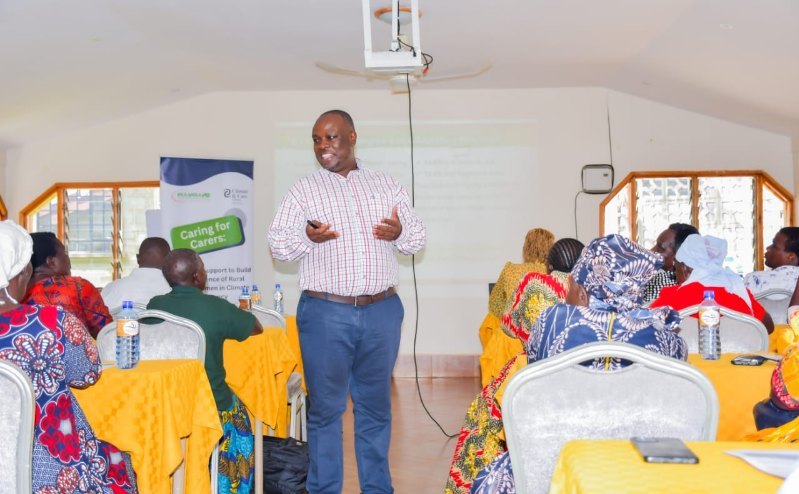 Edwin Ochieng from Move on Africa, who conducted the study on the nexus between Climate change effects and care responsibility for elderly women in Siaya county, speaking during a stakeholders' engagement for the study /FAITH MATETE
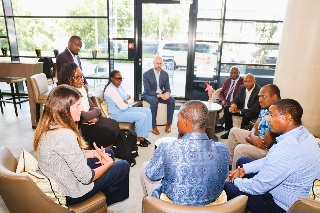
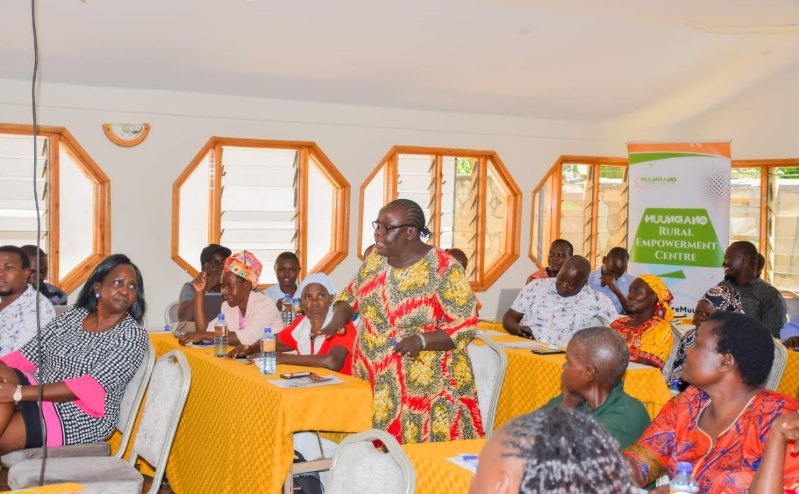 Participants during stakeholders engagement on the study on the nexus between Climate change effects and care responsibility for elderly women in Siaya county /FAITH MATETE