Rice farmers in Kisumu count millions in losses as birds ravage West Kano scheme
At least 94 acres of rice have been damaged over the past one week
by FAITH MATETE
Audio By Vocalize
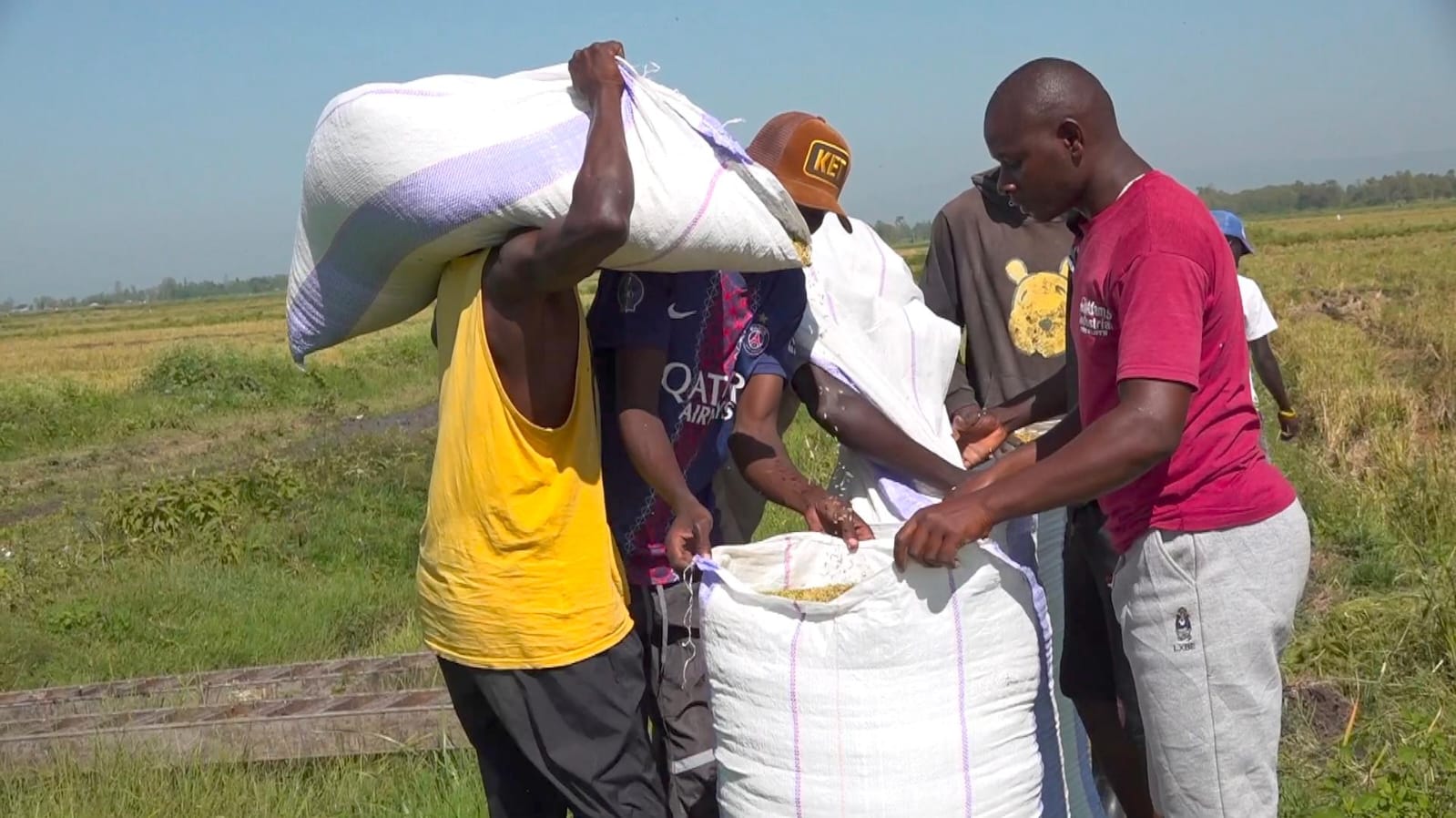
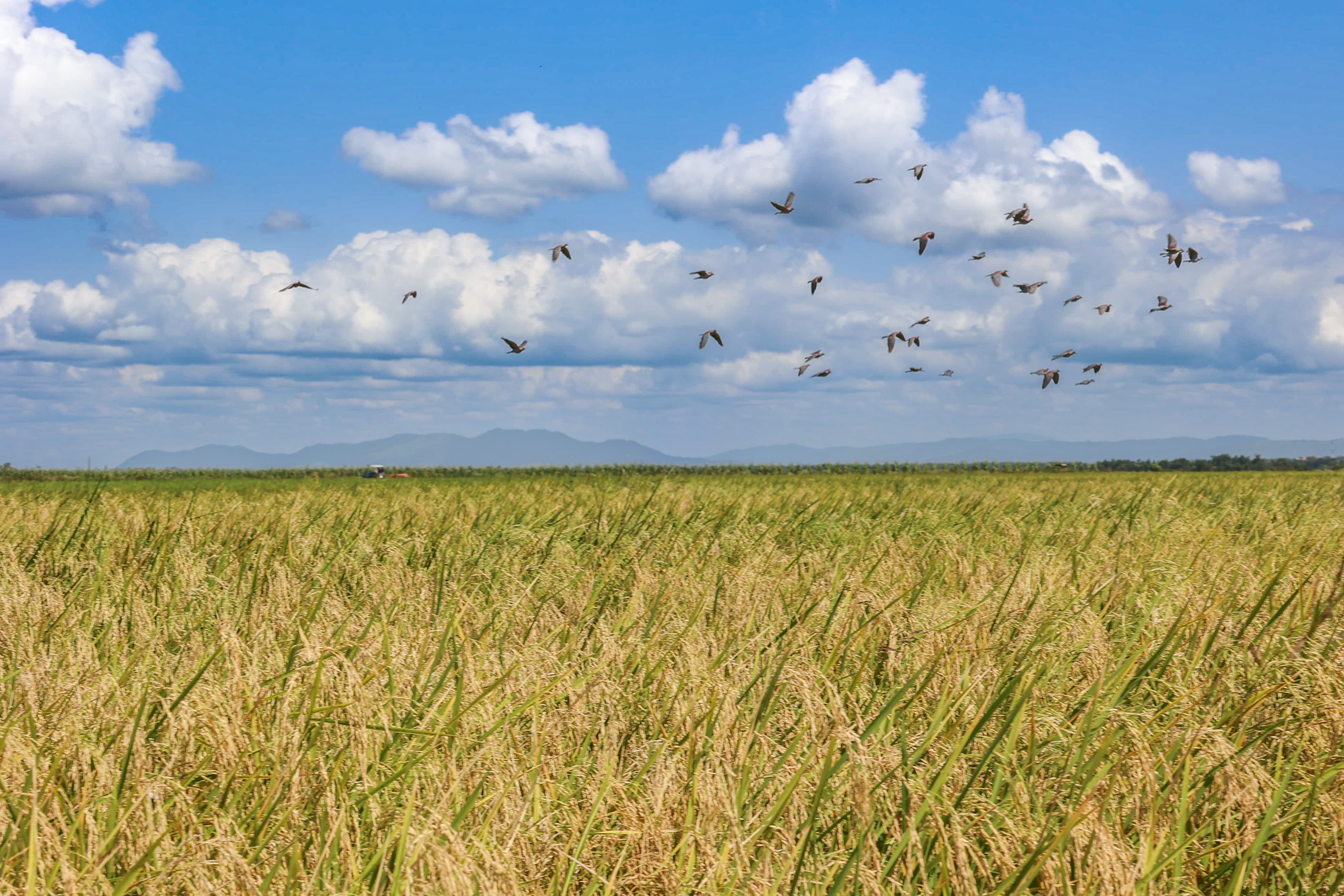
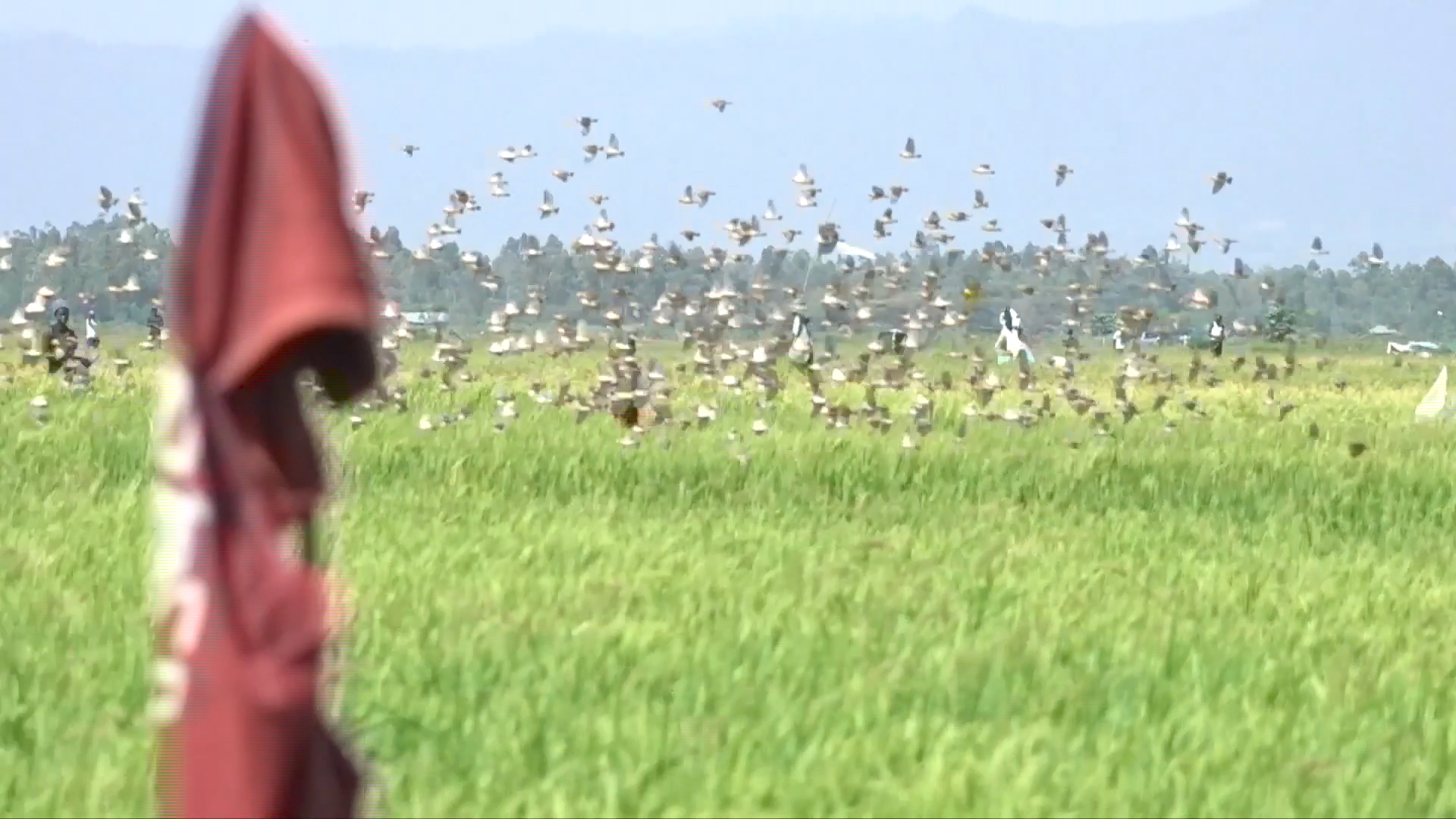
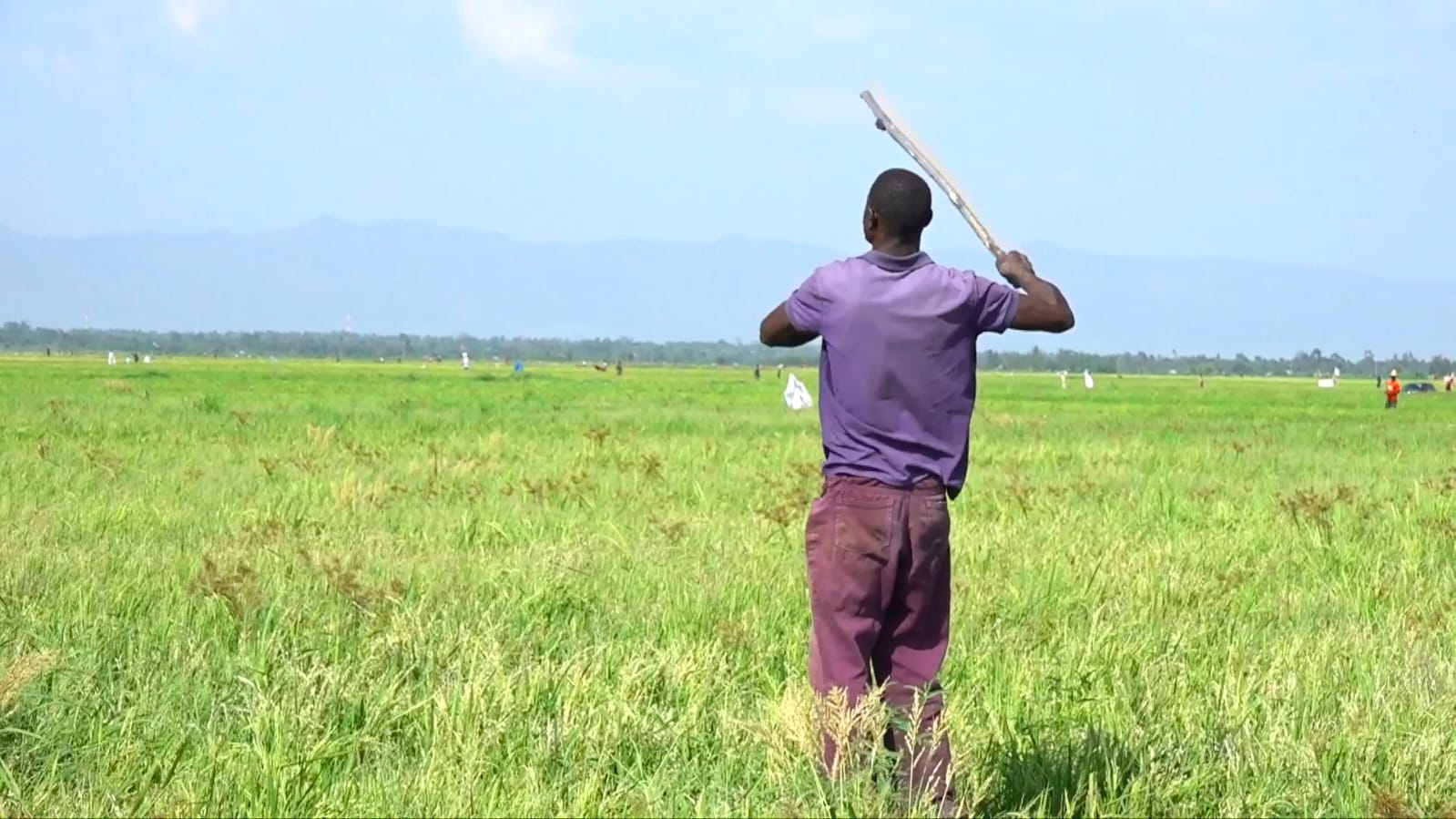
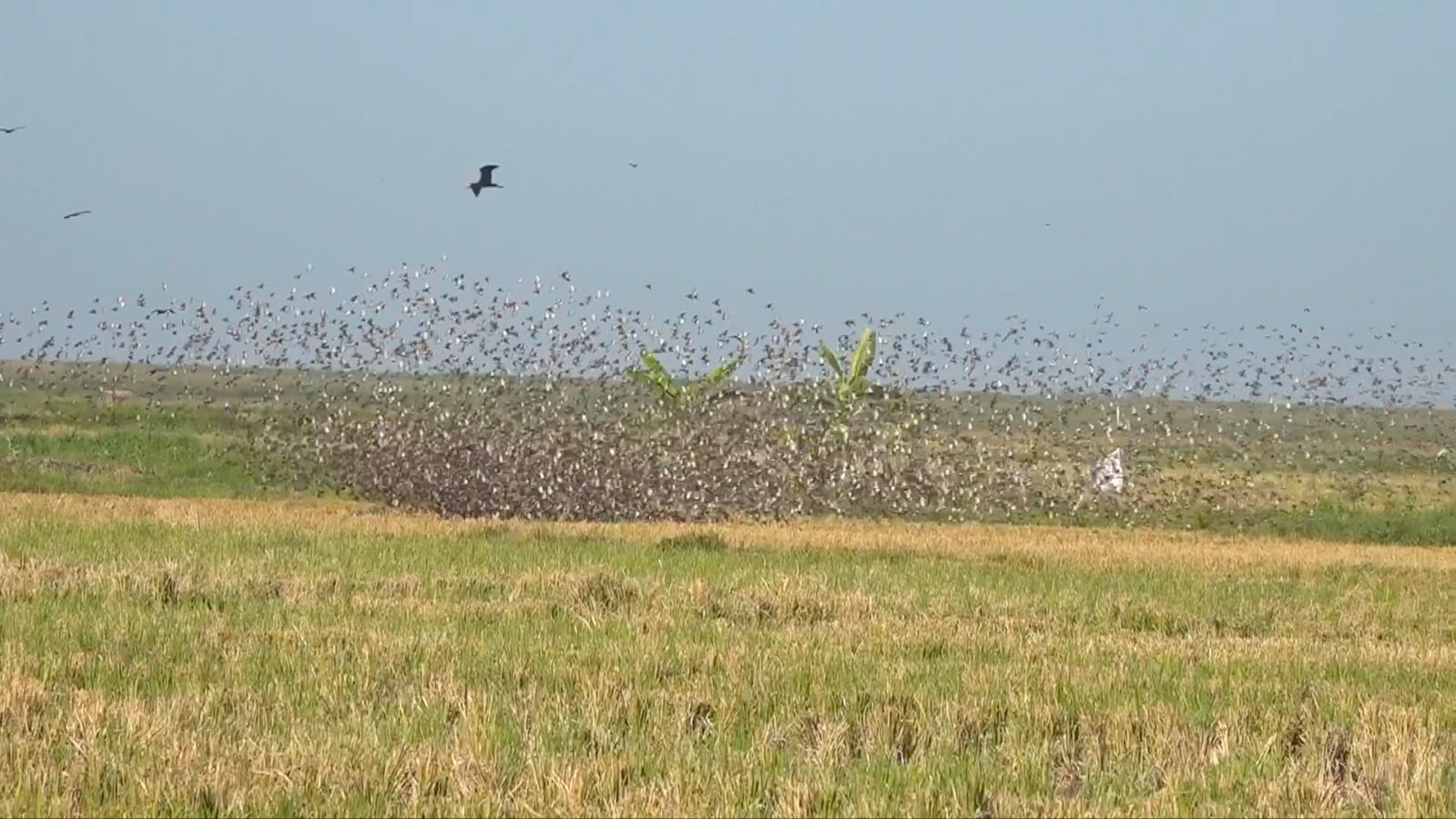
Rice farmers in Kisumu count millions in losses as birds ravage West Kano scheme. Faith Matete A rice farmer chases away birds as Rice farmers in Kisumu count millions in losses as birds ravage West Kano scheme. Faith Matete Rice farmers in Kisumu count millions in losses as birds ravage West Kano scheme. Faith Matete Rice farmers in West Ahero Irrigation Scheme forces to harvest their rice as huge swarms of birds descended on the scheme, wiping out crops that were nearing harvest/FAITH MATETE
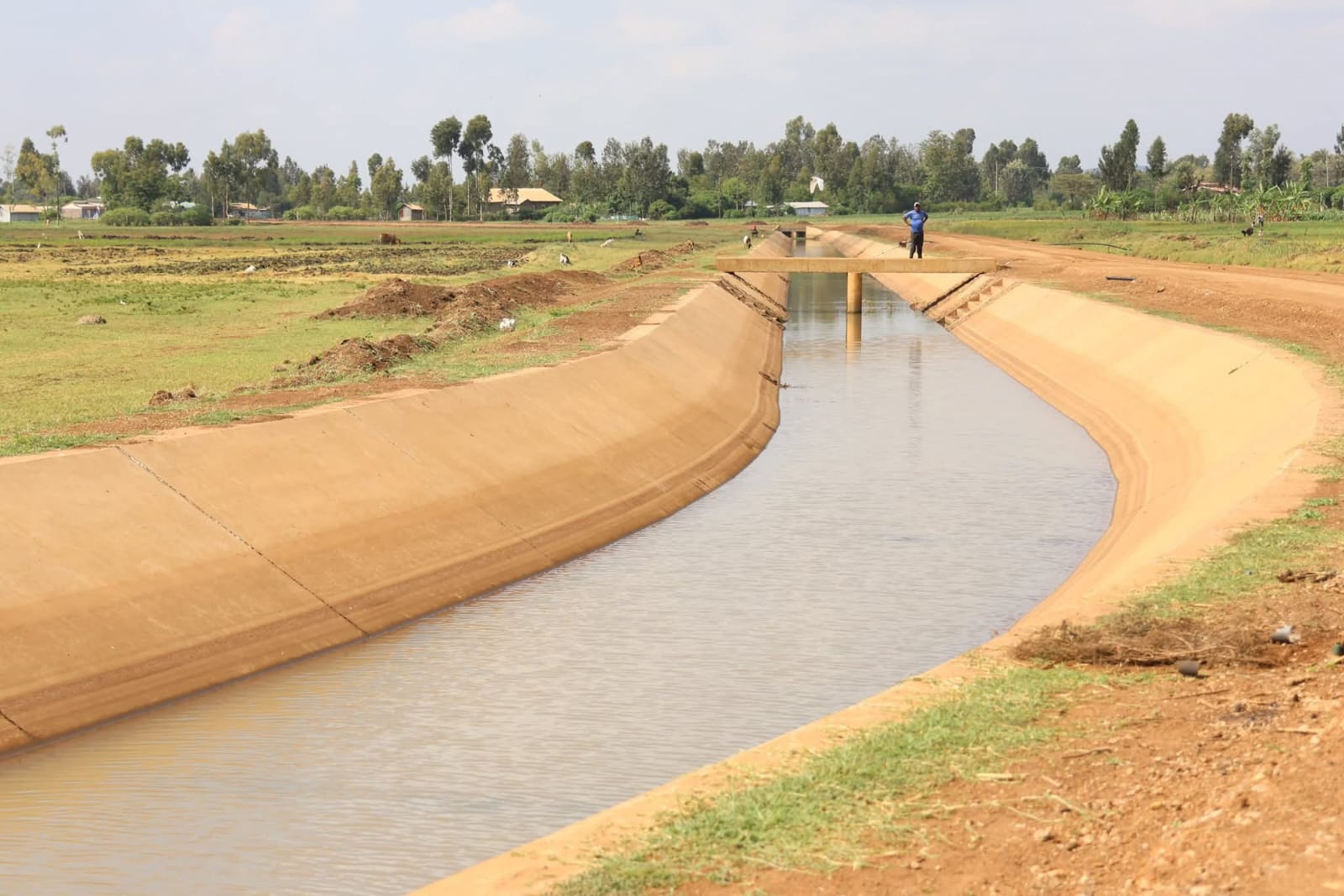
Rice farmers at the West Kano Irrigation Scheme in Kisumu county
are counting losses running into millions of shillings following a severe
invasion of birds that has destroyed large sections of their crops.
The farmers say at least 94 acres of rice have been damaged
over the past one week as huge swarms of birds descended on the scheme, wiping
out crops that were nearing harvest.
Every morning, the farmers are forced to abandon other
duties to chase away the birds, clapping, shouting and throwing stones in a
desperate attempt to save what remains of their fields.
But the efforts have
yielded little success.
“In a few minutes,
they clear an entire section. You chase them from one farm and they move to the
next. When you return, they are back again,” said Samwel Owino, a farmer.
Owino decried the frustration of trying to scare away the
birds.
“Even when you throw
stones, they don’t fly away. They just sit there and stare at you. It has
become impossible to control them,” he added.
According to the farmers, the destruction has intensified
over the last 10 days, with losses mounting daily.
Many now fear total crop failure.
As the country grapples with concerns over food security,
affected farmers say the invasion has forced some of them to harvest their rice
prematurely to avoid further losses, a move that significantly reduces yields
and income.
One farmer, Odindo,
said he lost produce worth about Sh60,000 in just a few days.
“I was expecting to
earn about Sh200,000 per hectare, but that will not happen anymore. The birds
have destroyed almost everything,” he said.
Another farmer,
Cosmas Anyango said his losses are estimated at Sh200,000.
“I am going home with nothing. We have lost everything. It
is very painful,” he said.
Emanuel Randa, a rice farmer in Block H at the scheme, said
he has been farming for the past six years and has faced numerous challenges,
including bird invasions, but noted that this year’s situation is the worst.
“We lose crops year in, year out, and we have been calling
on the government to come to our aid, but nothing has been done so far,” Randa said.
Randa, who farms two hectares of rice, said the losses have
drastically reduced his harvest.
“Normally, I would get about 100 sacks, but because of the
bird invasion, I am now getting only 35. One hectare gives me about 16 sacks
and the other 17, which is very low compared to what I used to harvest,” he
said.
The farmers are now calling on the government to urgently
intervene, including reconsidering chemical control of birds, a method that has
previously been restricted due to long-term environmental concerns.
“There are many restrictions now, and we are told not to use
chemicals to spray the birds anymore, yet we are suffering huge losses,” said
one farmer.
Randa said “We are even appealing to the President to come
to our aid before everything is destroyed.”
Kenya produces an average of about 230,000 tonnes of rice
annually against a national demand of more than one million tonnes, making the
country heavily dependent on imports.
The government has in recent years focused on revamping
irrigation schemes such as West Kano to boost local rice production.
However, farmers warn
that continued bird invasions threaten to undermine these efforts.
For now, they are relying on mechanical methods such as
noise-making and constant farm patrols to protect the little crop that remains,
even as they appeal for urgent government support to prevent further losses and
safeguard the country’s food basket.


 Rice farmers in Kisumu count millions in losses as birds ravage West Kano scheme. Faith Matete