
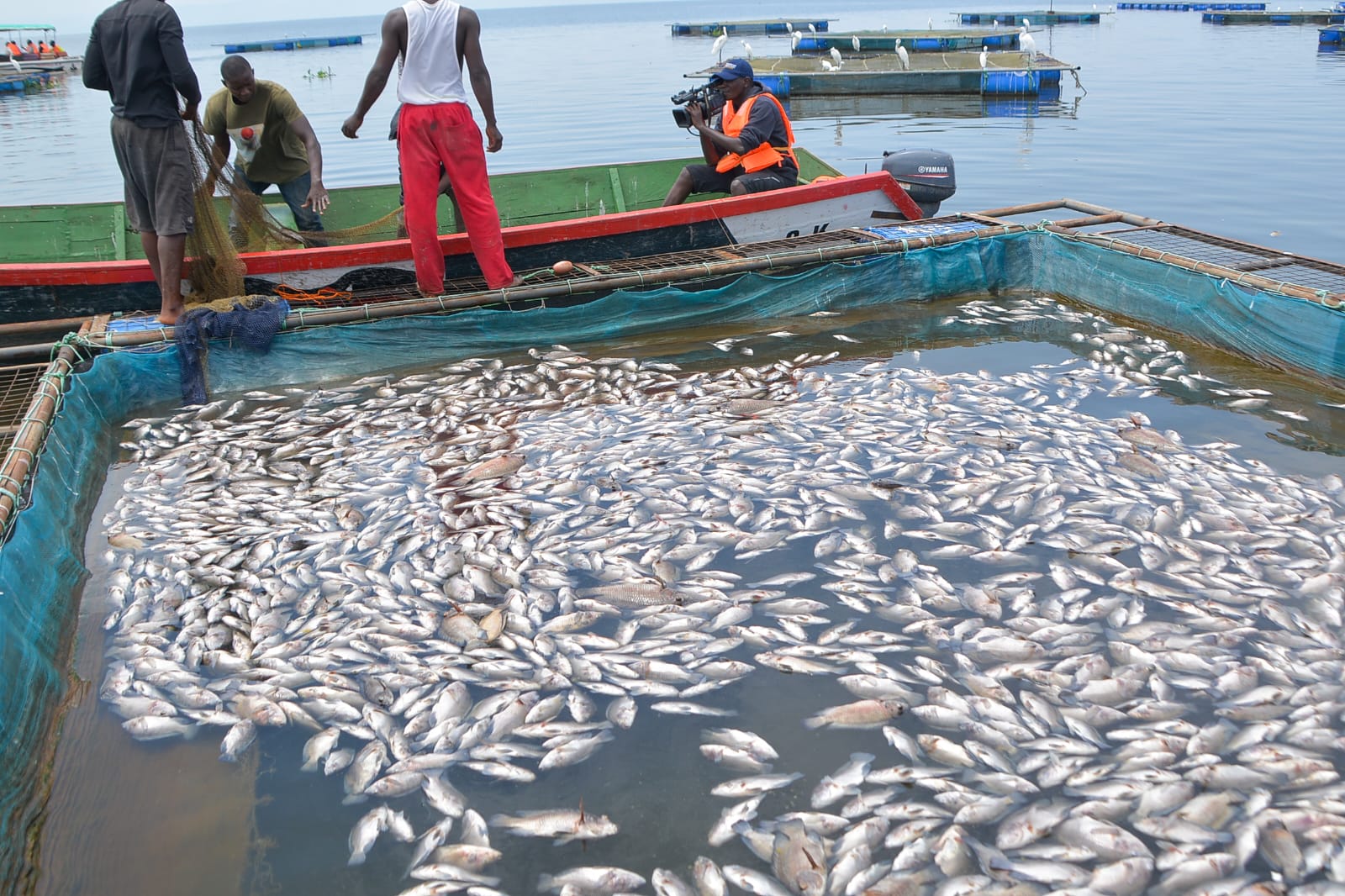
At Dunga Beach in Kisumu, what should have been a season of plenty has turned into despair. More than a dozen cages filled with tilapia have been wiped out in a mysterious mass death, leaving fish farmers staring at losses running into millions of shillings.
For the affected families, the sight
of dead fish floating on the lake is more than just a tragedy of
nature—it is the collapse of livelihoods painstakingly built over years.
Joel Otieno, one of the hardest hit,
says each cage can fetch nearly Sh800,000 at harvest. With 12 cages gone, the
estimated loss soars past Sh9 million.
“We have done everything by the
book. KMFRI experts tested and certified this area before we began. Seeing the
fish die in such numbers is devastating,” he said, adding that fish in open
waters remain unaffected, deepening the mystery.
Some farmers, desperate to recover a
fraction of their investments, were forced to sell part of their stock at throwaway
prices. “Unless we get urgent support, many of us might abandon this business
altogether,” another farmer lamented.
Nicholas Owiti, chairperson of
the Dunga Beach Management Unit, confirmed the incident, saying members
quickly mobilised to collect the dead fish for safe disposal.
“Videos online showing fish being
picked from the lake were from our cleanup. None of it was fit for human
consumption,” he clarified.
Owiti noted that some fish were seen
gasping for air before dying, pointing to oxygen depletion—an increasingly
frequent phenomenon experts link to climate change.
Kisumu CEC for agriculture and livestock, Kenneth Onyango, assured residents that strict measures were being taken
to protect public health.
“Our priority is ensuring no dead
fish reach the market. All affected stock has been collected and buried
safely,” he said.
Onyango confirmed that the Kenya Marine and Fisheries Institute has
launched investigations, with pollution still a possible factor. He advised
farmers to move their cages deeper into the lake as a precaution.
Nyalenda B MCA James Were said the
matter would be raised in the county assembly. “We don’t know the cause yet,
but we want accountability and preventive measures so this disaster does not
repeat itself.”
Currently, Dunga Beach hosts more
than 150 cages, a thriving venture that has offered steady income to families
and youth. With a single stroke, the death of fish in 12 cages has shaken
confidence in the enterprise and left farmers staring at empty nets.
For now, their only hope lies in swift investigations and government support to salvage businesses—and restore faith in cage farming on Lake Victoria.
INSTANT ANALYSIS
The mass fish deaths at Dunga Beach expose both the promise and fragility of cage farming on Lake Victoria. What was once hailed as a solution to dwindling wild fish stocks now faces questions about sustainability in the face of climate change, water pollution, and weak regulatory oversight. Losses running into millions highlight the financial risks borne by small-scale investors with limited safety nets. Unless investigations yield swift answers and practical safeguards—such as better monitoring, early warning systems, and insurance—confidence in the venture could crumble, threatening not just livelihoods but also Kenya’s broader push to expand its blue economy.