 National Counter Terrorism Centre (NCTC) representative
Sangale Chorontoi speaking to the press./STEPHEN ASTARIKO
National Counter Terrorism Centre (NCTC) representative
Sangale Chorontoi speaking to the press./STEPHEN ASTARIKO
Garissa residents have been encouraged to remain vigilant and promptly report any early signs of radicalisation to security agencies.
The call came during a one-day stakeholders' sensitisation workshop organised by the National Counter Terrorism Centre held at the Garissa government guest house.
The North Eastern region has for years borne the brunt of attacks and recruitment by the al Shabaab terror group, largely because of its proximity to the Kenya-Somalia border.
This geographical position has made counties such as Garissa, Wajir and Mandera vulnerable to cross-border infiltration and radicalisation, particularly targeting young people through extremist networks.
Speaking to the press on the sidelines of the meeting, National Counter Terrorism Centre (NCTC) representative Sangale Chorontoi said the county continues to experience cases of youth recruitment and radicalisation, underscoring the need for stronger collaboration between communities and security agencies.
“It is for this reason that the government has intensified efforts to curb terrorism and violent extremism,” he said.
“This we have been doing by engaging wananchi at the grassroots level to help them understand their role in preventing terrorism by sharing information with the relevant authorities. Terrorism remains a global challenge, and communities are the first line of defence."
Chorontoi emphasised the importance of creating awareness on the warning signs of radicalisation so that families, community leaders and other stakeholders can intervene before vulnerable individuals are drawn into extremist groups.
He said some of the common indicators include sudden isolation from family and friends, drastic behavioural changes and unexplained disappearances from home or the community.
"If someone suddenly disappears without informing family or close friends, it is important to be concerned. If the absence was for genuine reasons such as work or travel, they would ordinarily communicate," he said.
Participants at the forum welcomed the initiative, saying it had equipped them with knowledge on how to identify and respond to early signs of radicalisation.
Samuel Nyandoro, a resident of Garissa, said the training had empowered parents to better protect their children from extremist influences.
"We are now more informed about the warning signs of radicalisation. As parents, it is our responsibility to safeguard our children by passing this knowledge down to our families and educating them about the dangers and consequences of terrorism," he said.
Nyandoro urged parents to remain actively involved in their children's lives by monitoring their movements and maintaining open communication.
"Our responsibility as parents goes beyond providing for our children. We must know where they are, who they interact with and take keen interest in everything that affects their lives," he said.
Another resident, Mohamad Gedi, called on parents to introduce children to religious teachings from an early age, saying strong moral and spiritual guidance can help protect young people from extremist ideologies.
"It is through sound religious teachings and proper guidance that we can shield our children from the growing threat of radicalisation and recruitment into terror groups," he said.
Garissa has in recent years witnessed several cases of mysterious disappearances involving young people.
While some residents have accused security agencies of carrying out abductions, the police have consistently denied the allegations.
At the same time, cases of human trafficking and recruitment into terrorist networks remain a major concern among residents.
The latest incident involved two schoolboys whose disappearance was reported at Garissa police station last week.
Investigations later revealed that the boys had allegedly been lured into joining the al Shabaab terror group by an uncle who had travelled from Mombasa.
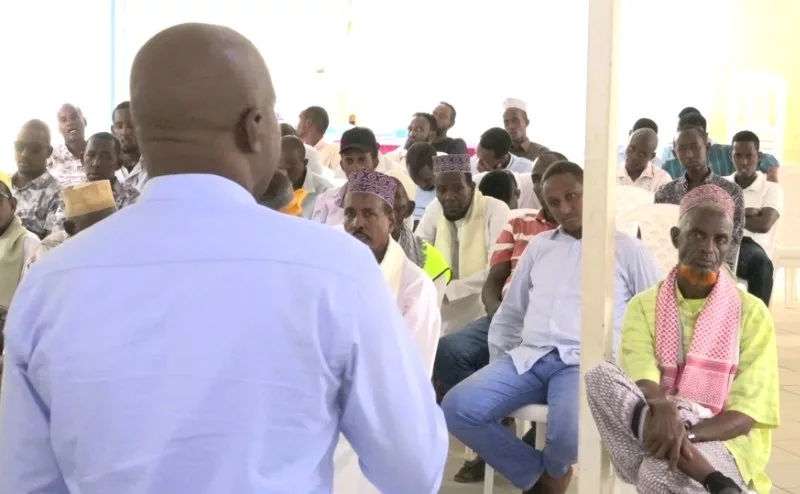 Stakeholders from Garissa during one-day sensitisation workshop. /STEPHEN ASTARIKO
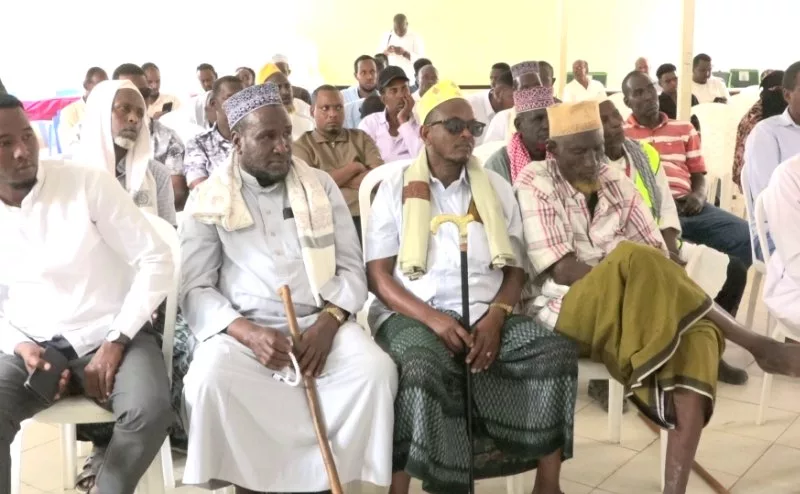 Stakeholders from Garissa during one-day sensitisation workshop. /STEPHEN ASTARIKO