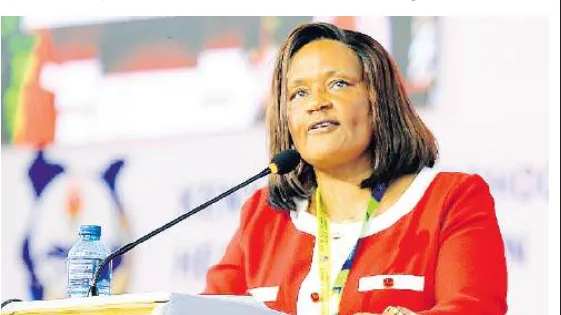
 Wajir Governor Ahmed Abdullahi speaking at the meeting. /STEPHEN
ASTARIKO
Wajir Governor Ahmed Abdullahi speaking at the meeting. /STEPHEN
ASTARIKO
Governor
Abdullahi rallies chiefs to boost ID registration and voter enrolment ahead of elections
Wajir
Governor Ahmed Abdullahi has called on chiefs and local administrators to
intensify public awareness campaigns aimed at increasing the uptake of national
identity cards and voter registration across the county ahead of the 2027 general election.
The
governor said the success of the ongoing national identity card registration
exercise depends largely on grassroots leaders, urging them to ensure that
every eligible resident obtains an ID card, collects any unclaimed document,
and registers as a voter.
“Closer
collaboration between chiefs, national government agencies, and the county
administration will significantly improve registration numbers. That is why we
are gathered here to chart the way forward,” he said.
He spoke
during a meeting with chiefs from all the 30 wards across Wajir County's six
constituencies convened to strengthen efforts to increase the issuance of
national identity cards, mobilise eligible residents to register as voters,
facilitate the collection of unclaimed IDs, and improve coordination among
government agencies to make the services more accessible.
The
meeting brought together several political leaders, among them Wajir Senator
Abass Sheikh, Deputy Governor Ahmed Muhumed, the County Commissioner Ronald Enyakasi, Assistant County
Commissioners, representatives of the Independent Electoral and Boundaries
Commission (IEBC), and officials from the Office of the Registrar of Persons.
Governor
Ahmed said the abolition of the extra vetting process for Kenyan Somalis
seeking national identity cards had removed a decades-old barrier that had
unfairly discriminated against residents of North Eastern Kenya.
"The
removal of extra vetting by President William Samoei Ruto in the issuance of
national identity cards marked a significant step towards ensuring equal
treatment for all Kenyans. For the people of North Eastern Kenya, it lifted a
longstanding barrier and reaffirmed their right to access government services
without unnecessary hurdles," he said.
The
governor was referring to President William Ruto's 2025 proclamation in Wajir
that abolished the extra vetting process previously imposed on Kenyan Somalis
seeking national identity cards.
For
decades, applicants from the region were subjected to additional verification
requirements that other Kenyans did not face, including producing extensive
family documentation before being issued with identity cards.
"Let
it be clear that the president did not remove vetting. He only abolished extra
vetting to end discrimination in the issuance of national identity cards.
Today, the process is the same across the country. The only important
requirement is for your chief to know you and your parents," the Governor
explained.
Despite
the policy change, Governor Ahmed expressed concern that the number of eligible
residents applying for identity cards remains significantly low.
"We
used to complain that our people could not obtain ID cards because of the extra
vetting. Unfortunately, despite the removal of that barrier, the numbers remain
extremely low. We still have many of our people who are yet to apply for this
important document," he said.
The
Governor revealed that county data paints a worrying picture, with thousands of
eligible youths yet to acquire national identity cards.
"Today,
we have more than 5,000 students in our secondary schools who have attained the
age of obtaining national identity cards but still do not have them. Most are
in Form Three and Form Four. Instead of waiting until they complete school and
subjecting them to unnecessary struggles, why can't registration officials move
to schools and facilitate the issuance of IDs there?" he posed.
He added
that county records also indicate that hundreds of thousands of residents aged
18 years and above are still without national identity cards, describing the
situation as one of the biggest challenges facing the county.
Governor
Ahmed also linked the identity card registration exercise to voter
registration, saying political representation and equitable allocation of
national resources are closely tied to population numbers reflected in the
electoral register.
"We
all agree that we want development. But one truth we must face is that
development is influenced by politics, and politics is driven by numbers. Those
numbers are acquired through voter registration," he said.
"Let
us face each other and tell ourselves the hard truth—we have a problem as a
community. Statistics show that we are the sixth largest community among
Kenya's 45 tribes, yet we are not fully utilising our numbers to our advantage
because many eligible people are not registered," he said
He assured
residents that the county government of Wajir will support the national
registration exercise by providing logistical assistance to registration
officers serving remote and hard-to-reach areas.
"As
the county government, we will support this exercise by providing logistical
assistance to registration officers serving remote and hard-to-reach areas so
that no eligible resident is left behind," he said.
He
concluded by urging chiefs to take the lead in civic education and public
mobilisation to ensure that every eligible resident participates in the
exercise.
"I
urge our chiefs to continue creating public awareness and assisting residents
to obtain their national identity cards. This document is the gateway to
government services, economic opportunities, and full participation in our
country's democratic process," added.
He also
appealed directly to residents to embrace the exercise.
"I call upon every eligible resident of Wajir County to apply for a national identity card, collect any unclaimed ID, and register as a voter. These are not only civic responsibilities but also important expressions of citizenship, inclusion, and our collective future," he added.
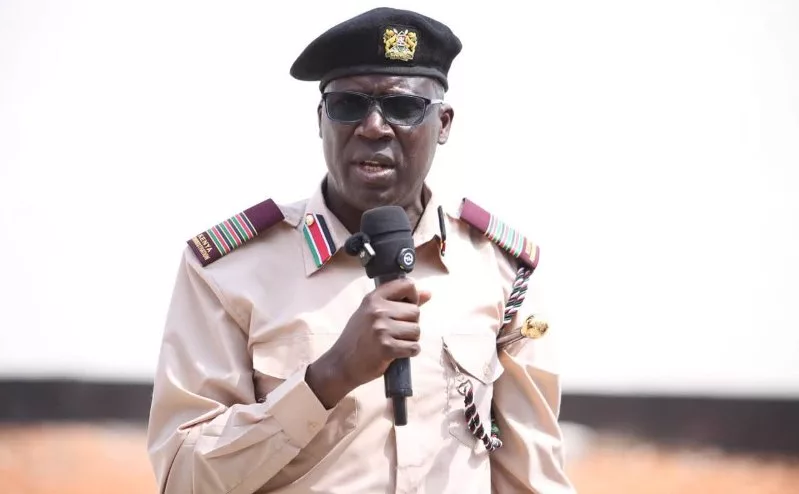 Wajir County County Commissioner Ronald Enyakasi speaking
at the meeting. /STEPHEN ASTARIKO
Wajir County County Commissioner Ronald Enyakasi speaking
at the meeting. /STEPHEN ASTARIKO
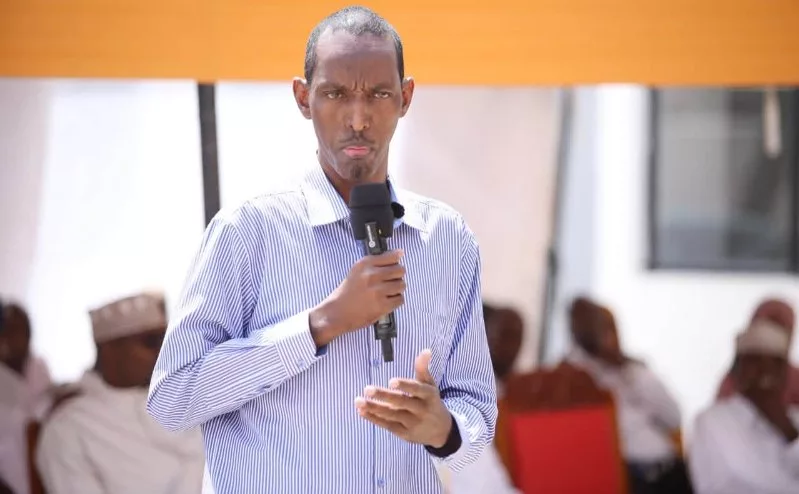 Wajir deputy governor Ahmed Muhumed at the meeting./STEPHEN
ASTARIKO
Wajir deputy governor Ahmed Muhumed at the meeting./STEPHEN
ASTARIKO
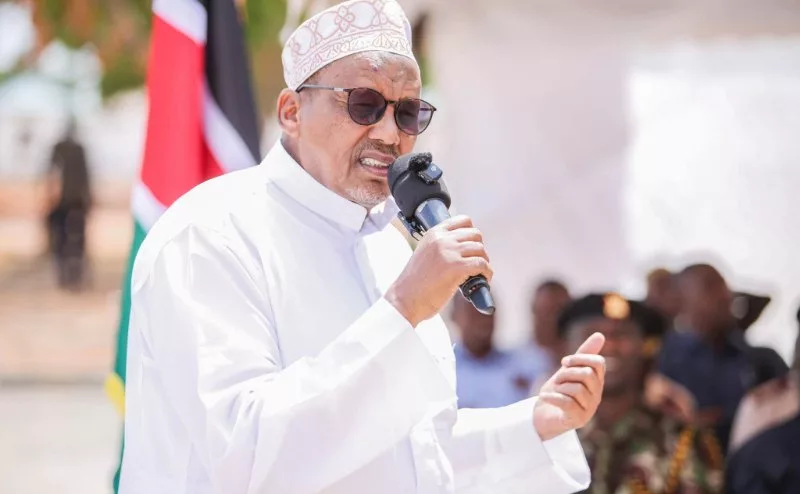 Wajir Senator Abass Sheikh speaking at the meeting. /STEPHEN
ASTARIKO
Wajir Senator Abass Sheikh speaking at the meeting. /STEPHEN
ASTARIKO
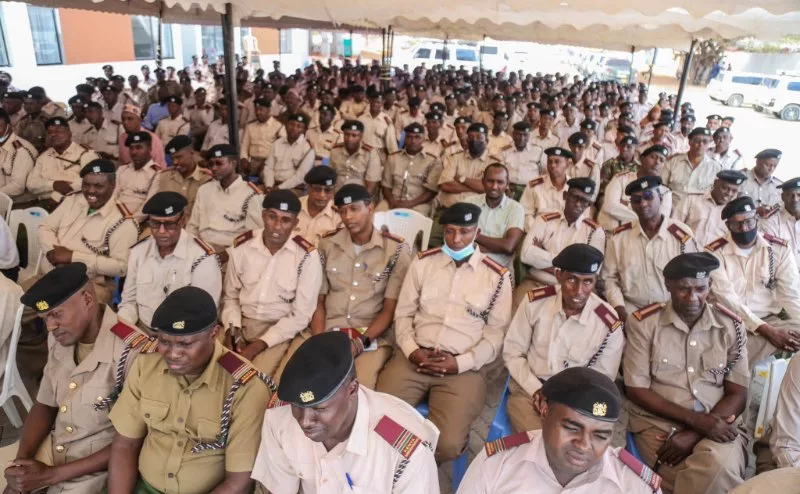
Local administrators at the meeting. /STEPHEN ASTARIKO