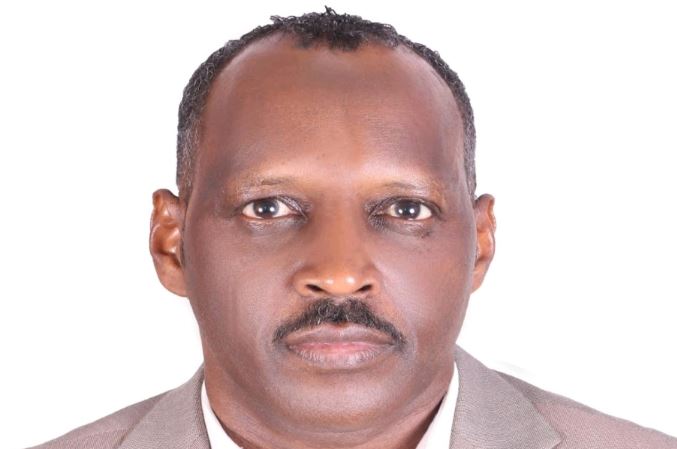
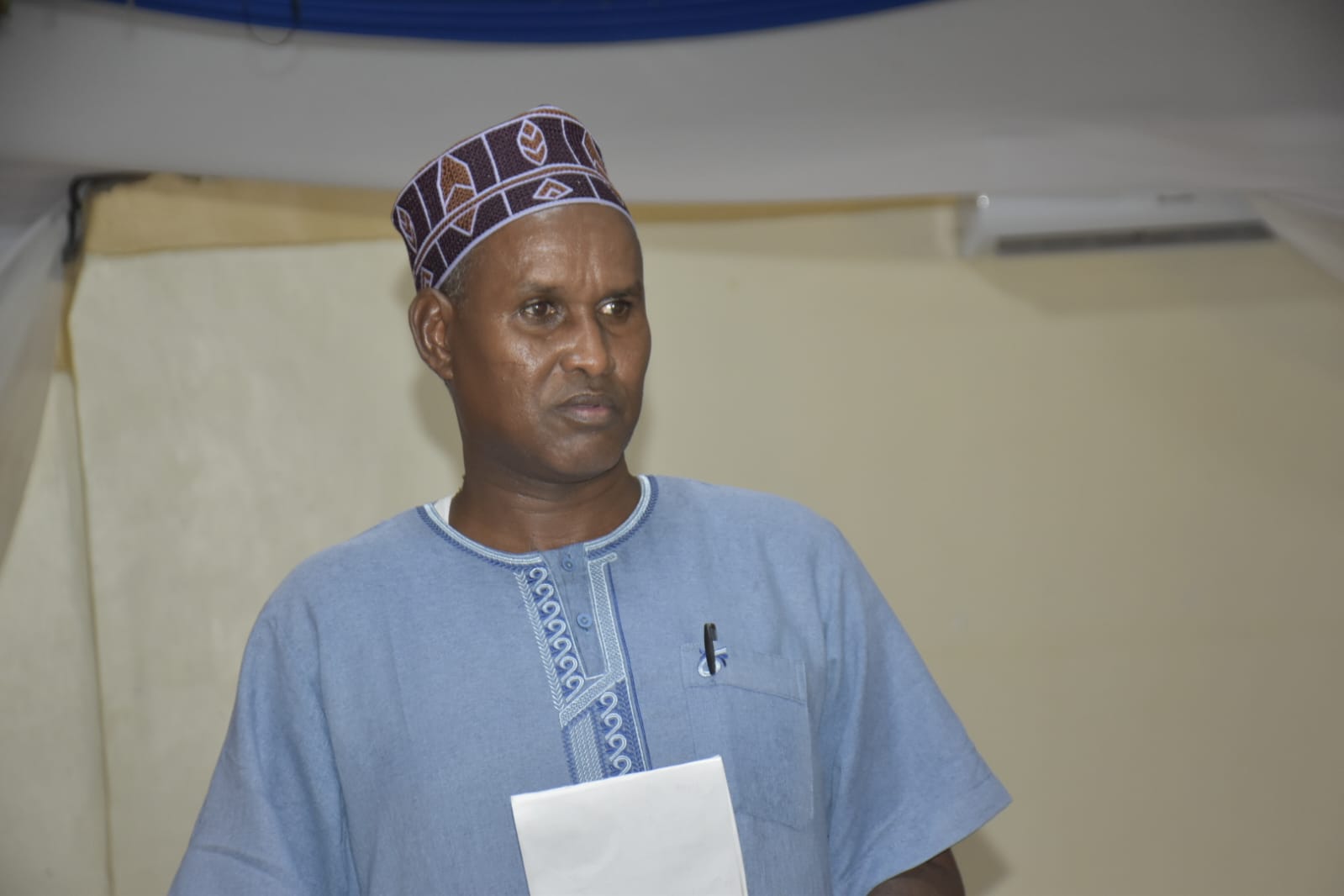
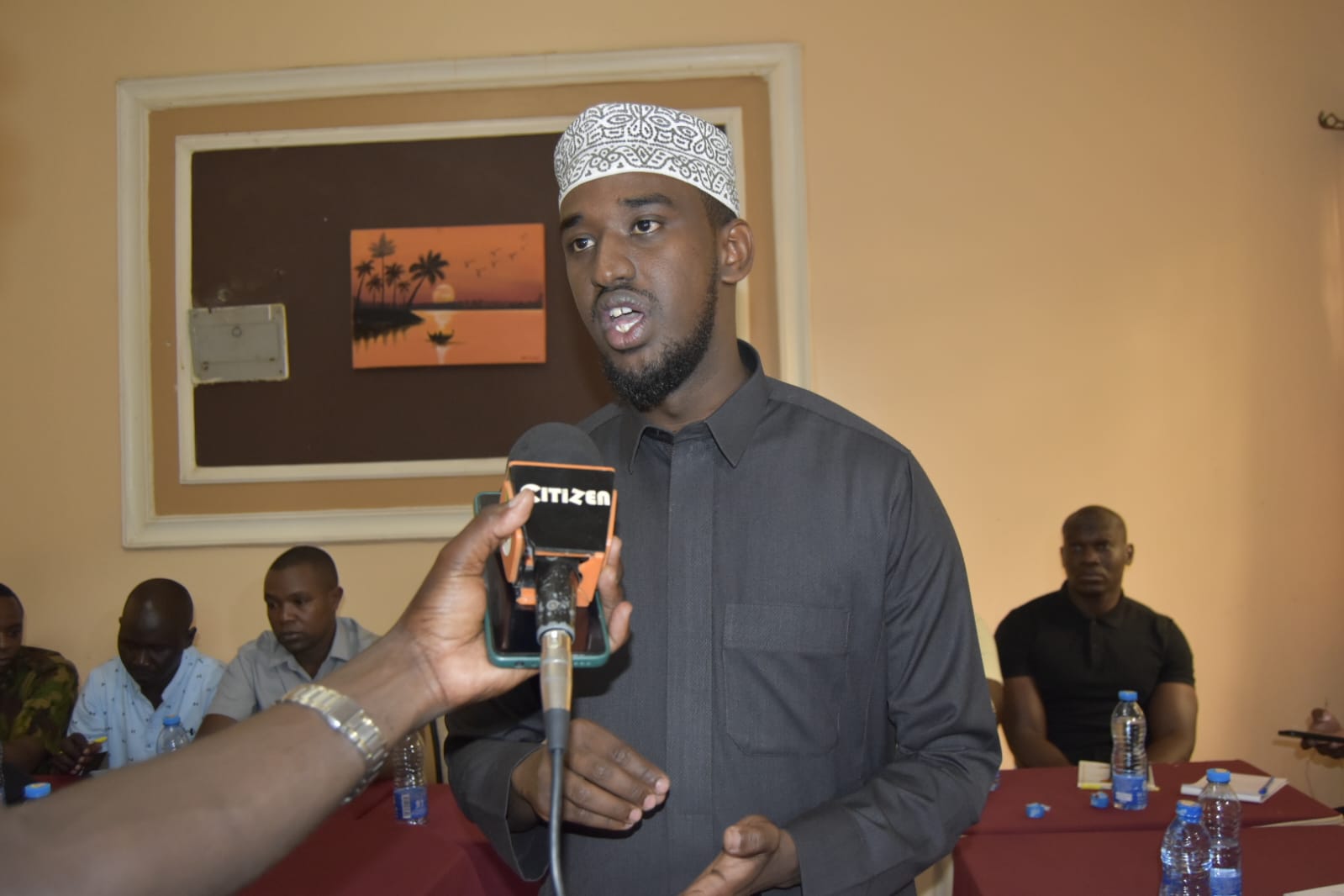
 Muktar Dahir, Garissa County Human Rights Defenders Network, speaking to the press at a Garissa hotel./STEPHEN ASTARIKO
Human rights groups in Garissa have challenged President William Ruto to back his promises with action.
They urged the President to ensure the newly established National Infrastructure Fund is fully operationalised and that Northern Kenya becomes its first beneficiary.
Speaking to journalists in Garissa town on the sidelines of a training forum, the activists said the President’s recent acknowledgement of decades of marginalisation in Northern Kenya was welcome, but stressed that residents now expect tangible development outcomes.
Led by Garissa County Human Rights Defenders Network coordinator Muktar Dahir and Garissa county MUHURI coordinator Abdihakim Shurie, the activists were responding to remarks made by Ruto during a recent visit to Eldas in Wajir county.
During the visit, the President defended the National Infrastructure Fund as a key vehicle for financing transformative infrastructure projects and unlocking the economic potential of historically underserved regions.
He said the fund would support large-scale investments in water harvesting, storage and irrigation to transform Northern Kenya into a major food production zone.
“This fund was created with the sole purpose of, among other development projects, ensuring the new 2.5 million acres of land is utilised in water harvesting, water storage and irrigation,” Ruto said.
“This will make sure that Eldas, Wajir and other parts of Northern Kenya and the country at large become the country's breadbasket, as well as help in livestock production so that we become a food-secure country.”
The National Infrastructure Fund became law in 2026 following parliamentary approval and presidential assent. It is designed to mobilise resources for major infrastructure projects without increasing taxes or relying heavily on external borrowing.
The government intends to leverage investments from pension funds, private investors, privatisation proceeds and strategic partnerships to finance projects in transport, energy, water and agriculture.
Reacting to the President’s remarks, Dahir welcomed the acknowledgement of historical neglect but said communities in the region are now looking for implementation rather than rhetoric.
“The President has done something many leaders before him were unwilling to do — publicly admit that Northern Kenya was marginalised by successive governments and even apologise on behalf of the state. That acknowledgement was important and long overdue,” he said.
“However, apologies alone cannot change the lives of our people. What will make a difference is ensuring the National Infrastructure Fund is actualised and that the first beneficiaries are the communities that have borne the brunt of historical neglect.”
Dahir said Northern Kenya possesses enormous untapped potential in agriculture and livestock production but has been held back by decades of underinvestment in water infrastructure.
“If the government is serious about correcting historical injustices, then Northern Kenya should be at the front of the queue when these funds begin to flow. This is where transformative projects can have the greatest impact on livelihoods, food security and economic growth.”
Shurie echoed the sentiments, saying the President’s vision of transforming Northern Kenya into a food production powerhouse could only be realised through deliberate investment and adequate financing.
“We have heard a bold vision from the President, and it is a vision many people in this region support. But visions must be backed by resources and timelines,” he said.
“The National Infrastructure Fund should not remain a policy on paper. It must become an instrument that delivers dams, irrigation schemes, roads and other infrastructure capable of unlocking the potential of this region.”
According to Shurie, the President’s admission that only a small portion of Kenya’s land currently contributes to food production highlights the urgency of investing in arid and semi-arid regions.
“If the government follows through on its commitments, this region can become a major contributor to the country’s agricultural output and livestock industry.”
The activists further urged the government to prioritise water infrastructure projects, saying they would be key to unlocking the region’s economic potential.
Their appeal comes amid the government’s ambitious plan to construct 50 mega dams and more than 1,000 smaller dams across the country to support irrigation, food production and climate resilience.
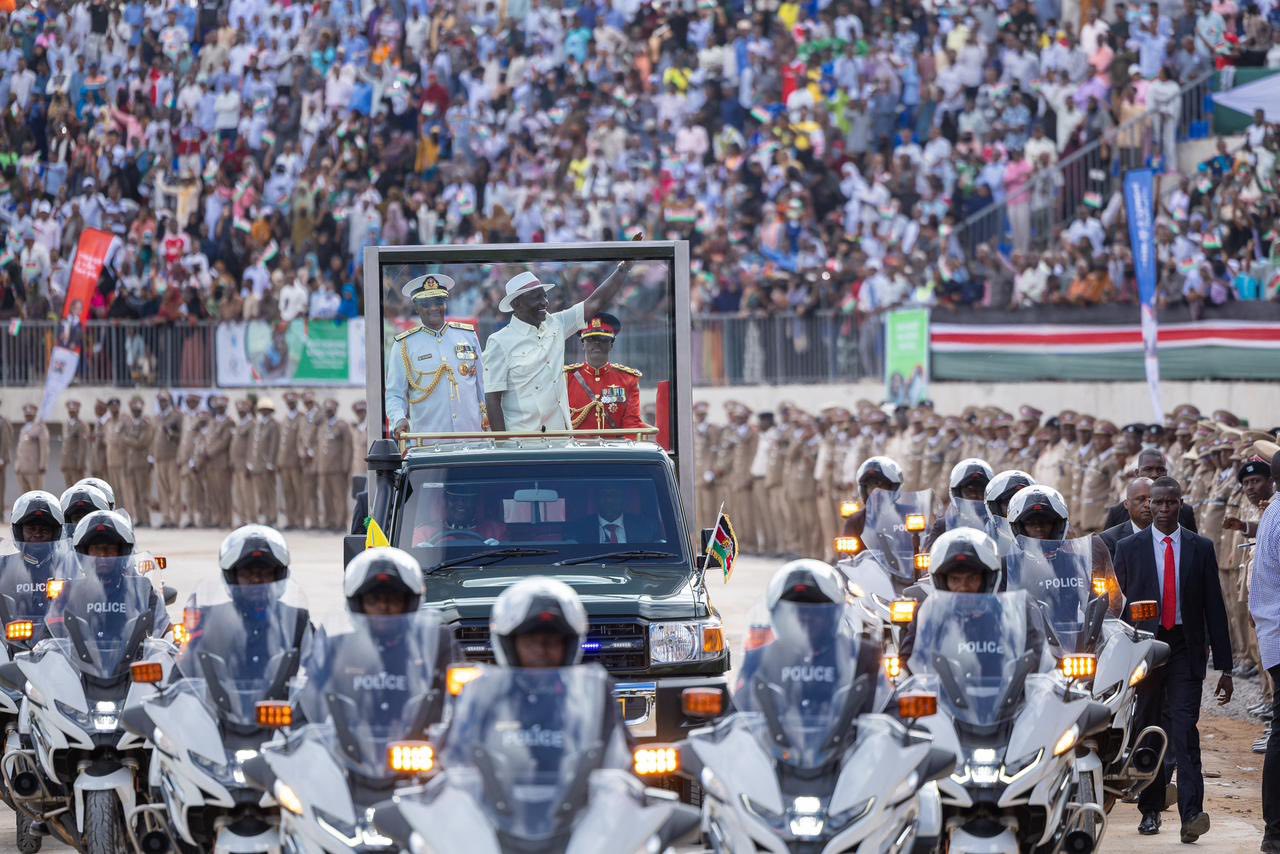
During a visit to Garissa in February, President Ruto said the planned investments would fundamentally transform the economic fortunes of Northern Kenya.
Among the flagship projects is the High Grand Falls Dam in Ijara, which is expected to become Kenya’s largest dam upon completion.
The President said the project will support large-scale irrigation on hundreds of thousands of acres of land, creating new opportunities for food production, employment and economic growth.
INSTANT ANALYSIS
The call by Garissa human rights groups reflects growing public demand for accountability and delivery of development promises in historically marginalised regions. While President Ruto’s acknowledgement of Northern Kenya’s exclusion was widely welcomed, residents are increasingly seeking concrete investments rather than political assurances. The National Infrastructure Fund presents an opportunity to address long-standing gaps in water, irrigation, transport and agricultural infrastructure that have constrained the region’s economic potential. However, the fund’s credibility will depend on transparent implementation and equitable allocation of resources. If prioritised effectively, Northern Kenya could emerge as a key contributor to national food security and economic growth.
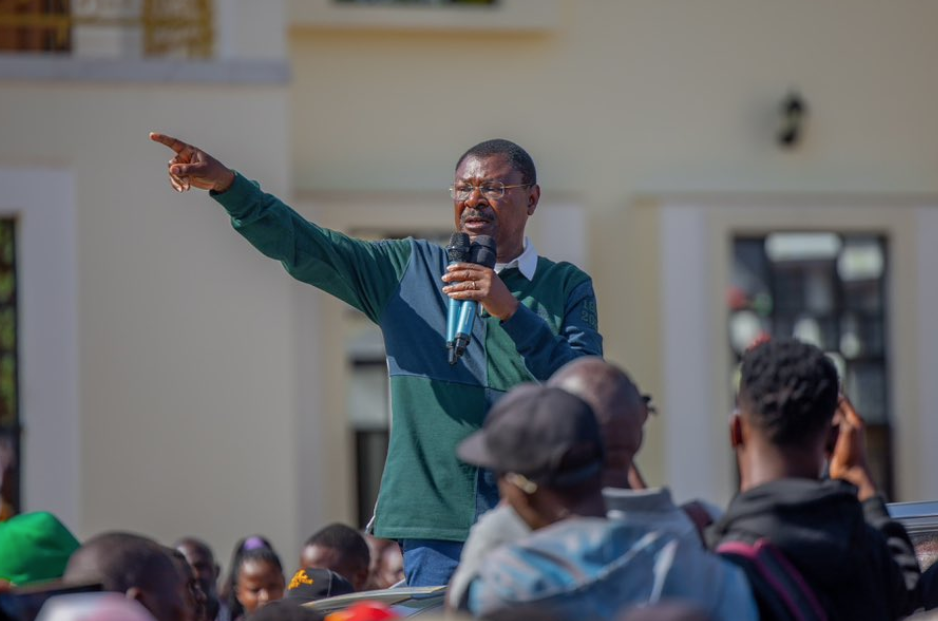
 Garissa County MUHURI coordinator Abdihakim Shurie speaking
to the press /STEPHEN ASTARIKO
Garissa County MUHURI coordinator Abdihakim Shurie speaking
to the press /STEPHEN ASTARIKO