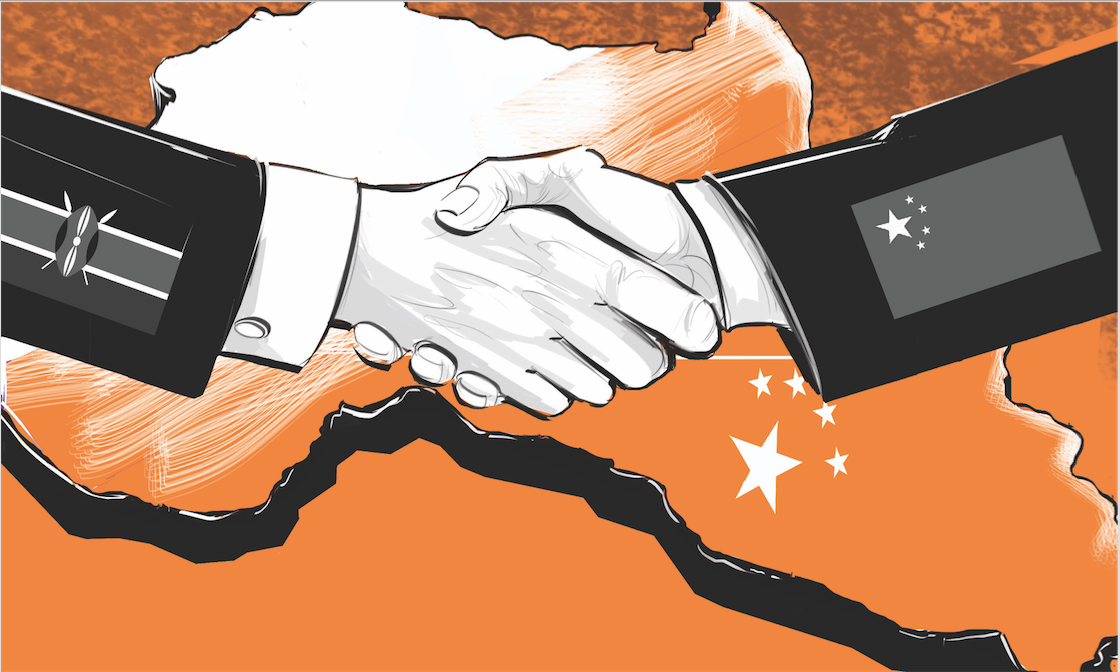
ADHERE: Africa needs strong AI governance framework to harness technology
By learning from China, the continent can avoid being a passive consumer of technology. Instead, it can become a co-creator of solutions.
by CAVINCE ADHERE
Audio By Vocalize
Across
Africa, a quiet revolution is underway. From Nairobi to Accra and Kigali,
governments are drafting national AI strategies, recognising that artificial
intelligence is not a futuristic luxury but a practical tool for tackling
poverty, improving agriculture, enhancing healthcare and delivering public
services to millions.
Kenya’s recent launch of its National AI Strategy
2025-2030 exemplifies this momentum, positioning the country as a potential
continental hub for AI innovation.
Kenya
is not alone. At least 16 African countries have launched national AI
strategies, including Egypt, Ghana, Rwanda, Mauritius, Nigeria and Zambia.
The
African Union Continental AI Strategy aims to promote an Africa-centric,
development-focused approach, emphasising ethical practices, capacity building,
investment and regional cooperation.
These
efforts reflect growing recognition of AI’s potential. With the AU’s
Continental AI Strategy endorsed in 2024 providing a unifying vision, the
continent can harness AI for inclusive growth aligned with Agenda 2063.
Estimates
suggest AI could add billions of dollars to Africa’s economy by 2030 through
productivity gains in key sectors. Local innovations such as AI for crop
disease detection in agriculture or predictive analytics in healthcare, are
emerging.
Contrast
this with China’s trajectory. In 2017, China released its New Generation
Artificial Intelligence Development Plan, aiming to become the world leader by
2030.
Through massive state investment, public-private partnerships and
integration into national planning, China has made extraordinary strides;
becoming one of the most successful state-driven AI transformations in history.
AI is now embedded in governance, smart cities, manufacturing and public
services.
Systems
in cities like Hangzhou use AI for traffic optimisation, resource allocation
and emergency response, reducing congestion and improving efficiency.
AI-powered chatbots and digital civil servants handle administrative queries.
Surveillance and predictive policing maintain social stability.
Economically,
China’s approach leverages vast data resources, focused R&D and rapid
iteration. Breakthroughs like DeepSeek models demonstrate cost-effective
innovation, challenging assumptions about the necessity of massive compute.
Open-source elements and affordability clearly have global appeal.
Internationally, China promotes AI as a global public good via initiatives like
the Global AI Governance Initiative and capacity-building with the Global
South, while advancing standards and infrastructure through Belt and Road
digital extensions.
Three
pillars are key
to China’s success: strategic state direction combined with market dynamism,
long-term planning, heavy investment in talent and infrastructure and a
pragmatic balance of innovation with control. This has elevated its
technological standing and geopolitical influence.
Africa
can draw several targeted lessons from China. First, prioritise infrastructure
and data as foundations. Kenya and the AU rightly emphasise digital
infrastructure and data governance. China shows the power of scale, investing
in data centres, connectivity and green energy.
African countries should pool
resources regionally for shared compute facilities and sovereign clouds. Data
strategies must ensure local ownership, addressing the continent’s rich but
fragmented datasets in diverse languages.
Partnerships with China for
affordable hardware and models could accelerate this, provided strong data
localisation and privacy safeguards are in place.
Second,
build talent and foster homegrown innovation. China’s emphasis on AI education from
schools to vocational training, created a skilled workforce. Africa’s youthful
population is an asset; integrating AI literacy into curricula, as Kenya plans,
and expanding vocational programmes is essential. Support innovation hubs and
public-private R&D to solve local problems rather than importing generic
solutions.
Third,
integrate AI into governance and public services strategically. China
demonstrates AI’s role in efficient service delivery and urban management.
African governments could pilot AI for revenue collection, service personalisation,
disaster response and agricultural extension services. Start with low-risk applications
that build trust and generate data. Public sector leadership, as China
advocates, creates demand and refines systems.
Fourth,
develop balanced governance and ethics. The AU and Kenya stress ethics,
inclusion and human rights. China offers lessons in agile regulation but warns
against over-regulation that stifles innovation.
Africa should adopt tiered,
risk-based approaches with regulatory sandboxes, while prioritising bias
mitigation and transparency suited to diverse societies.
Fifth,
pursue pragmatic international partnerships. China’s South-South cooperation
provides infrastructure and affordable tech without heavy ideological strings,
complementing Western investments in research and capital. Hedging between
partners maximises benefits. Engage in global standard-setting to amplify
African voices.
Implementation
requires political will, sustained funding and multi-stakeholder coordination.
Challenges like energy access and digital divides must be addressed
concurrently.
By learning from China, the continent can avoid being a passive
consumer of technology. Instead, it can become a co-creator of AI solutions
that reflect its realities and aspirations.
The
writer is a scholar of international relations with a focus on China-Africa
development cooperation. X: Cavinceworld.
This is premium content
Subscribe to Continue Reading
Help us continue bringing you unbiased news, in-depth investigations, and diverse perspectives. Your subscription keeps our mission alive and empowers us to provide high-quality, trustworthy journalism. Join us today to make a difference!